Manufacturing Guide
Custom Jewelry Manufacturing Process: From Brief to Bulk Production
A practical 2026 guide for jewelry brands planning CAD, sampling, revisions, quality control and bulk production with a custom jewelry manufacturer.
TL;DR
The short answer
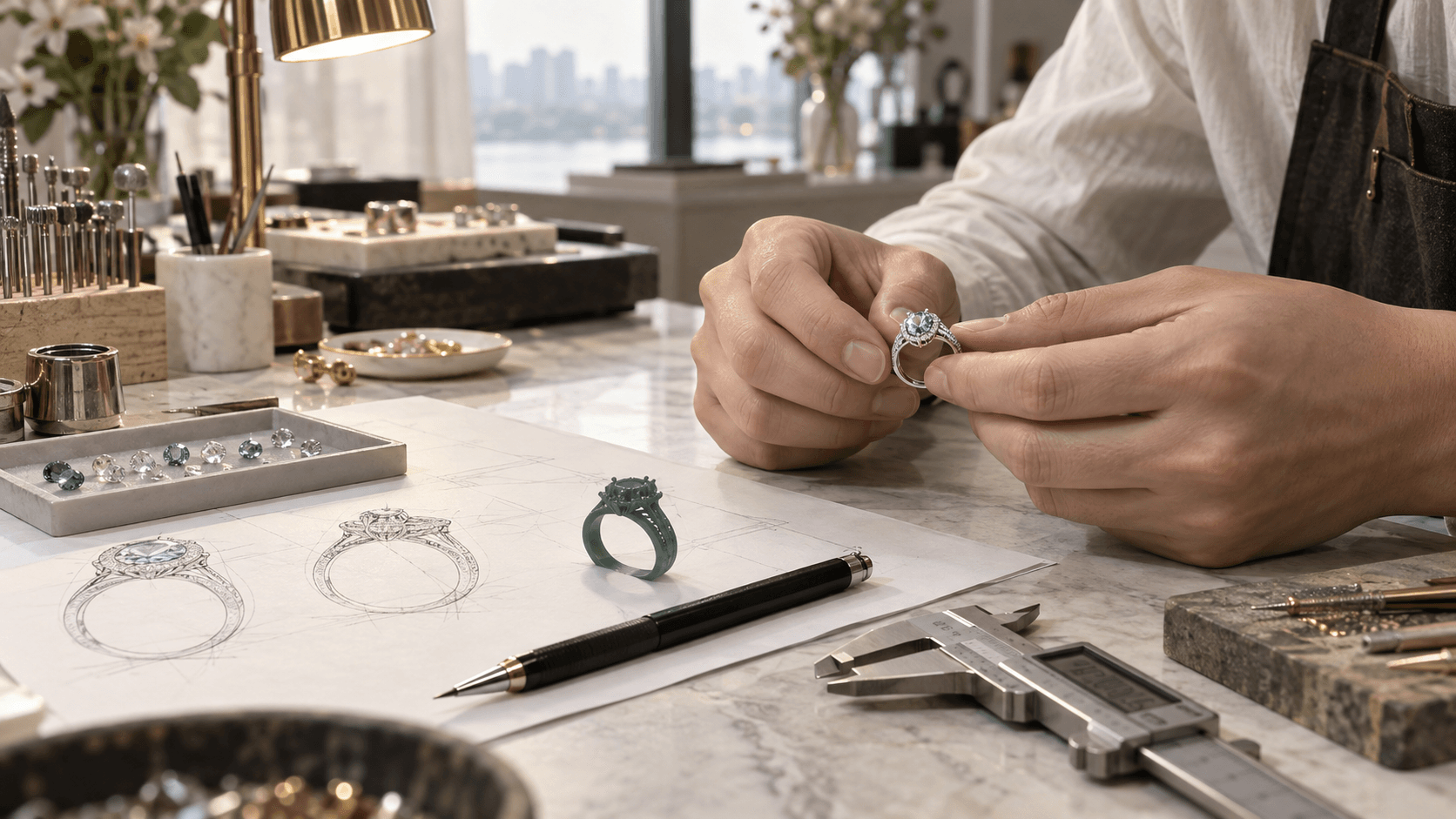
A reliable custom jewelry manufacturing process is a chain of approvals: define the brief, choose the right development route, approve CAD, inspect a physical sample, freeze specifications, manufacture the batch, complete quality control and retain an approved master record. Zalson Jewelry can begin from a sketch, reference image, CAD drawing or existing sample. The minimum production order is 30 pieces per style. Typical sampling is about 7 business days and typical production is about 30 business days, with the final timing confirmed for each project.
Decision summary
Key takeaways
- Treat CAD, sample comments and the approved master sample as controlled production inputs.
- Choose OEM, ODM or private label according to who supplies the design and how much development is required.
- Approve measurable details—not only appearance—before bulk production begins.
- Ask for a project-specific timeline, MOQ, quote scope and QC plan before paying for development.
- Keep material and gemstone claims aligned with the evidence available for the exact item or batch.
Start with decisions
What a production-ready jewelry brief contains
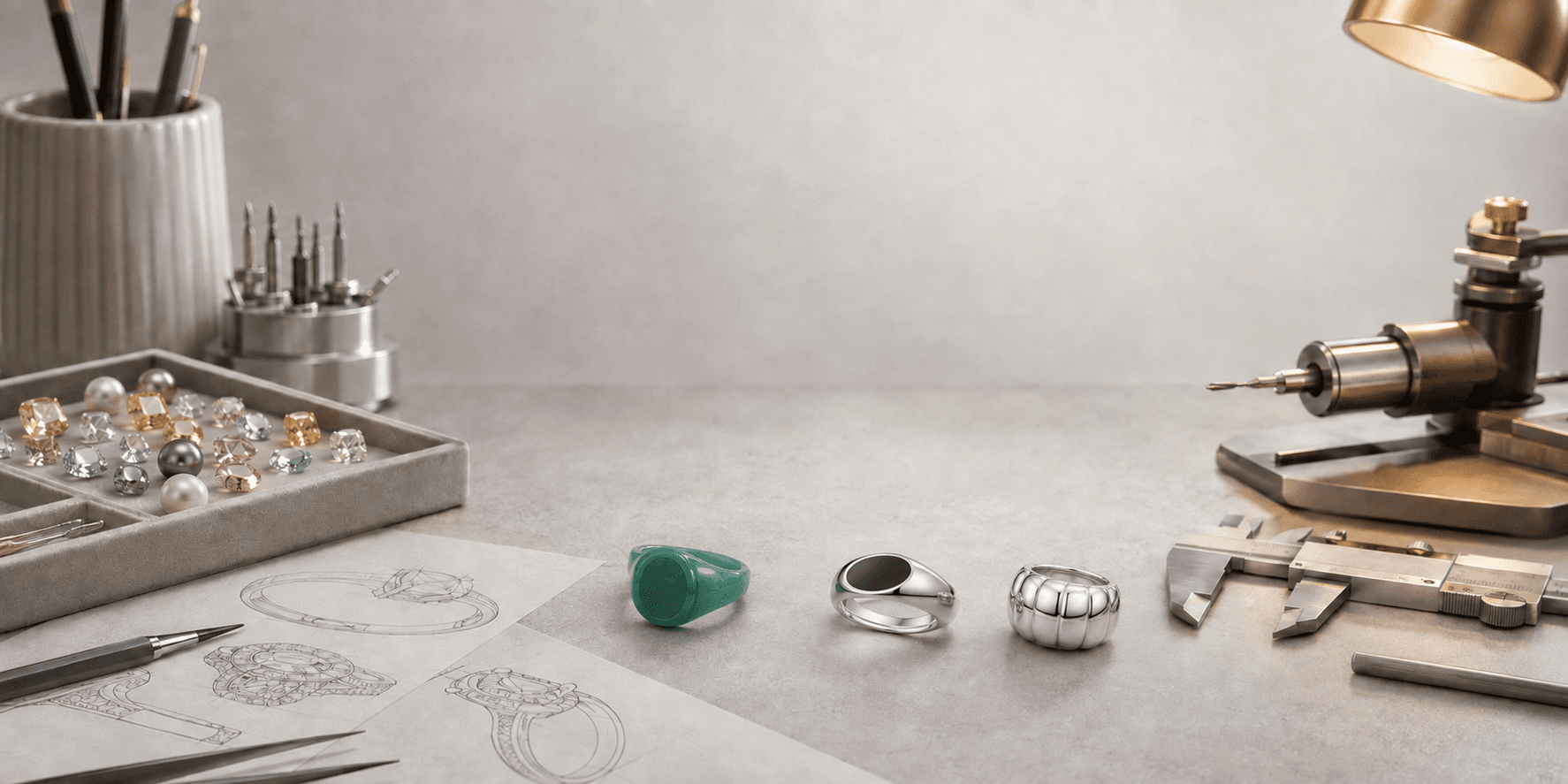
A mood board communicates taste, but a manufacturing brief must communicate decisions. The stronger the brief, the fewer assumptions enter CAD, costing and sampling. A useful starting package can be a sketch, reference image, CAD file or physical sample, provided it is paired with the commercial and technical information the factory needs.
For a brand, the objective is not to specify every engineering detail alone. It is to make the intended customer, target price, visual priorities and non-negotiable features clear enough for the manufacturer to identify unanswered questions before development begins.
- Product category, target customer and intended wear occasion
- Reference dimensions, target weight range and size range
- Base metal, fineness, plating color and desired surface finish
- Stone type, shape, size, color direction, setting style and acceptable substitutions
- Logo placement, marks, packaging needs and destination market
- Estimated quantity, launch date, target cost and reference files
Choose the route
OEM, ODM or private label: which model fits the project?
These terms are often used loosely. The practical difference is the starting point and the amount of design ownership, engineering and customization required. Contract terms should define design ownership, exclusivity, tooling and reuse; the labels alone do not settle those questions.
| Route | Typical starting point | Best suited to | Clarify before work starts |
|---|---|---|---|
| OEM | Buyer-owned design, CAD, tech pack or sample | Brands with a defined design language | File ownership, tolerances, tooling and permitted design changes |
| ODM | Manufacturer concept or development direction | Teams that need more product-development input | Exclusivity, design rights, modification scope and market use |
| Private label | Existing or adaptable product platform | Faster assortment building and market testing | Customization limits, logo options, packaging, MOQ and channel restrictions |
Process map
The eight-stage custom jewelry manufacturing workflow
A factory may combine or rename stages, but the decision gates should remain visible. Skipping a gate transfers an unresolved question downstream, where corrections usually cost more and affect timing.
1. Brief review
Confirm intended design, materials, stones, quantity, market, target and missing information.
2. Feasibility and quotation
Review structure, process route, estimate, MOQ, development cost and provisional timing.
3. CAD and engineering
Translate the concept into manufacturable geometry and define dimensions, stone seats and assembly.
4. Prototype or master
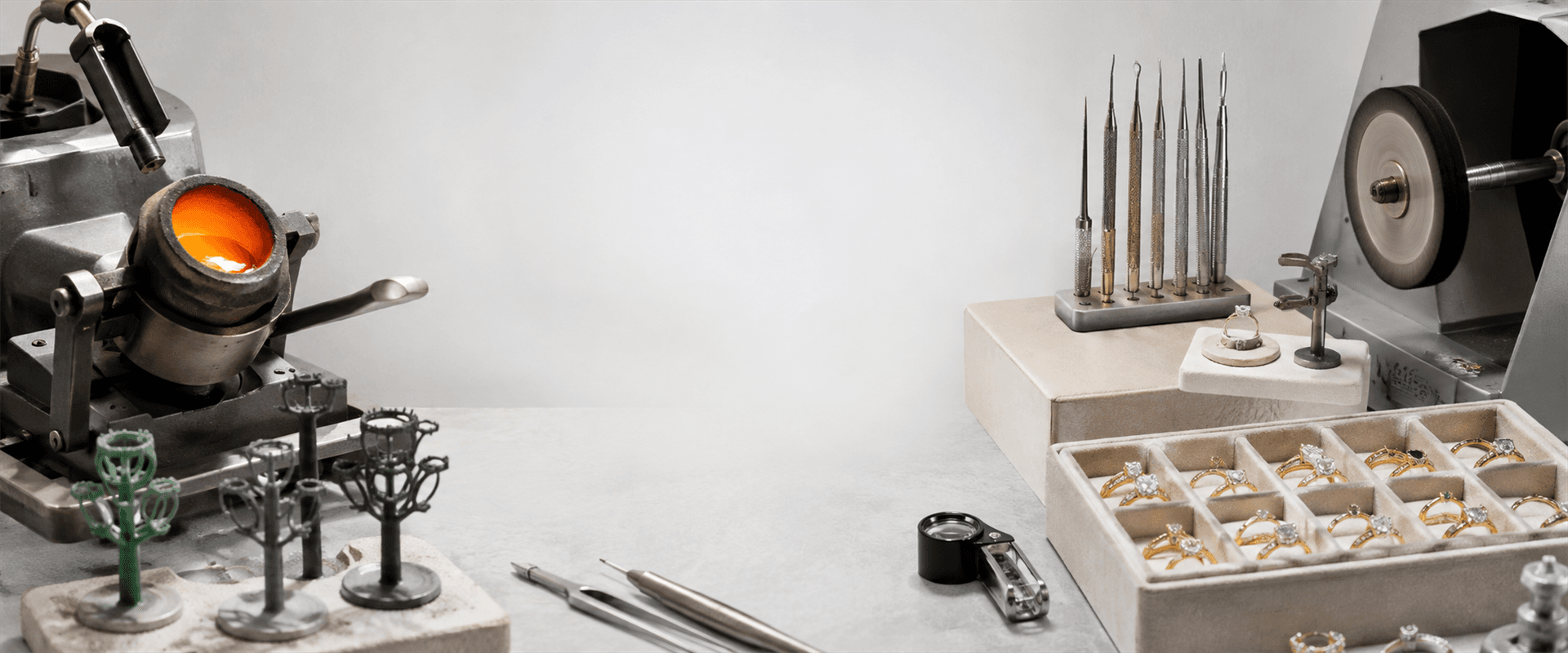
Produce resin, wax or a process-appropriate master when required before metal sampling.
5. Physical sample
Cast or fabricate, assemble, set stones, polish, plate and finish the first review piece.
6. Approval and specification freeze
Record accepted measurements, weight, finish, components, stones and approved changes.
7. Bulk production
Manufacture against the frozen record with in-process checks at risk-sensitive stages.
8. Final QC and delivery
Inspect appearance, function, count and packing before shipment; retain a reorder reference.
Evidence: Formlabs
Critical gate
What to approve in CAD before paying for a metal sample
A beautiful render is not the same as a production-ready model. CAD approval should answer how the piece fits, moves, holds stones, accepts finishing and survives handling. Buyers do not need to become engineers, but they should ask the manufacturer to surface these decisions instead of hiding them behind a single front-view rendering.
- Overall dimensions, ring size, chain length and component scale
- Wall thickness, prong geometry, stone seats and polishing access
- Clasp, hinge, jump-ring and moving-component behavior
- Comfort surfaces, sharp-edge risks and likely wear points
- Logo, hallmark and engraving placement at actual production size
- Expected metal weight and where weight can vary after finishing
Physical evidence
How to review a jewelry sample without relying on appearance alone
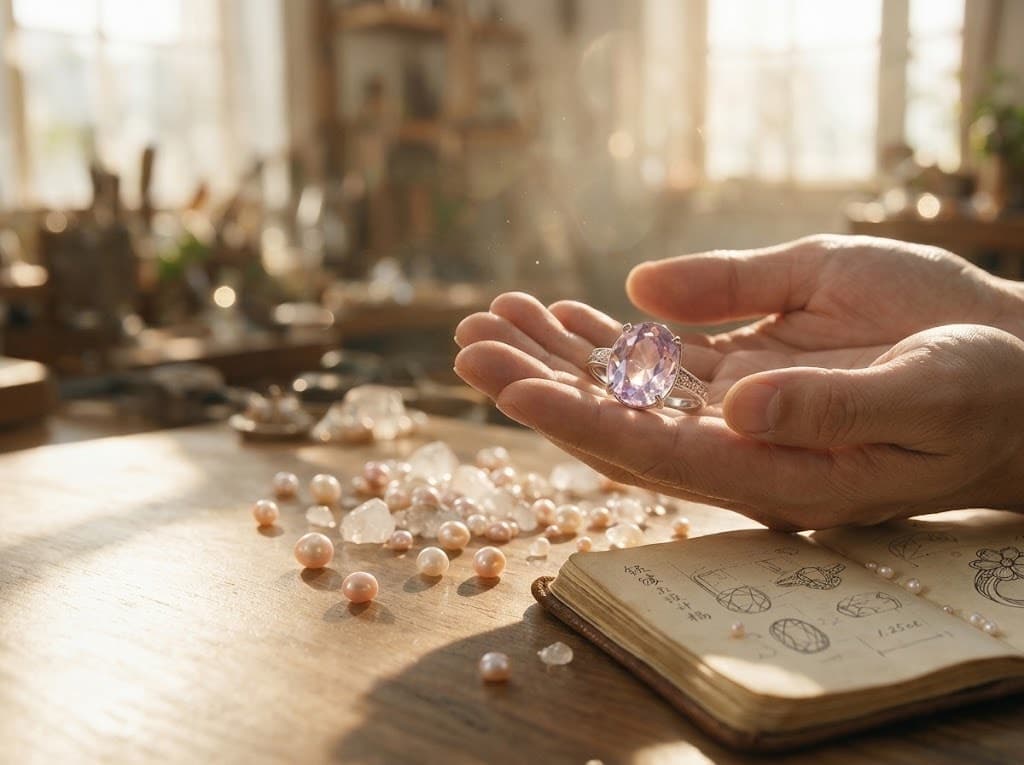
Review the sample against the brief in the same order every time: identity, dimensions, weight, function, stone setting, finish, markings and packaging fit. Photograph the sample under consistent lighting and write comments against numbered views. Terms such as “make it nicer” are difficult to reproduce; measurable instructions are easier to verify.
Zalson Jewelry states a typical sampling time of about 7 business days and supports up to three sample revisions. These are planning references, not universal promises. Stone sourcing, complex mechanisms, molds, special finishes and approval response time can change the schedule.
Repeatability
Bulk production needs in-process checks, not only a final inspection
Final inspection can catch visible problems, but it cannot efficiently reverse every upstream error. A risk-based plan checks important attributes when they can still be corrected: alloy and components before assembly, casting and soldering before finishing, setting security before packing, and approved color or texture against a controlled reference.
For reorders, record changes in material supplier, stone lot, plating specification, mold, packaging or approved tolerance. Repeatability comes from a stable production record, not from memory.
| Stage | Buyer-visible evidence | Typical risk controlled |
|---|---|---|
| Incoming materials | Material specification and component list | Wrong alloy, stone or component |
| Casting / fabrication | Dimensions, structure and defect review | Porosity, distortion, weak joints |
| Setting / assembly | Stone count, alignment, movement and security | Loose stones, poor alignment, failed mechanisms |
| Finishing / plating | Approved color and surface reference | Uneven polish, color drift, exposed base surface |
| Final packing | AQL or agreed inspection record, count and packing check | Mixed styles, cosmetic defects, transit damage |
Evidence: Responsible Jewellery Council
Commercial planning
What actually changes jewelry lead time, MOQ and price
Zalson's production minimum is 30 pieces per style, but lead time and quotation still depend on mold and tooling needs, metal and stone availability, setting density, plating, hand finishing, testing, packaging and batch size. Ask for a quote that states what is included and what will be reconfirmed after CAD or sampling.
Zalson Jewelry states typical bulk production at about 30 business days after physical sample approval. The final schedule should be confirmed for the exact order, and the launch plan should include buyer approval time, international transit and a contingency window.
- Separate one-time development costs from repeat-order unit costs.
- Confirm whether sample fees, molds, CAD, stones, plating and packaging are included.
- Ask how metal-price changes and stone substitutions are handled before order confirmation.
- Do not schedule launch photography or retail delivery against an unapproved sample date.
2026 sourcing context
Why lighter construction and evidence-led specifications matter now
Precious-metal conditions are influencing design and assortment decisions. The World Gold Council reported that Q2 2026 global gold-jewelry demand volume fell while consumer spending value remained resilient, with lighter-weight products gaining share in several markets. The Silver Institute expects the silver market to remain in deficit for a sixth consecutive year in 2026 and notes price pressure on jewelry demand.
The practical implication is not to chase minimum weight blindly. It is to engineer weight, durability, perceived value and price together, then document the chosen structure so a lighter design remains wearable and repeatable. This is an inference from current market conditions, not a prediction for a specific order.
Evidence: World Gold Council; The Silver Institute
Supplier evaluation
A six-part scorecard for comparing jewelry manufacturers
Compare manufacturers against the same questions. A polished sample and a low quote reveal little if the approval record, claim evidence and production controls are unclear.
| Area | Ask for | Strong response |
|---|---|---|
| Brief discipline | Missing-information review | Questions are resolved before quotation or CAD |
| Development control | Versioned CAD and sample comments | Changes remain traceable across approvals |
| Claim evidence | Material and stone documentation | Evidence scope matches the exact product or batch |
| Quality plan | In-process and final checkpoints | Risks are checked before they become finished defects |
| Commercial clarity | MOQ, inclusions, payment and lead-time basis | Assumptions and exclusions are written |
| Reorder readiness | Approved master and specification retention | Repeat production starts from a controlled record |
Evidence: U.S. Federal Trade Commission; CIBJO
Fit check
When Zalson Jewelry may fit your project
Zalson Jewelry is a Guangzhou jewelry business established in 2017. The team supports projects beginning from sketches, reference images, CAD drawings or existing samples, with stated capabilities across design review, CAD, sampling, casting, stone setting, polishing, plating, quality control and packaging.
A useful first enquiry includes the reference, dimensions, target weight, material, stone details, quantity, destination market and timing. Production starts at 30 pieces per style; Zalson reviews the information before confirming feasibility, quotation and schedule for the specific project.
FAQ
Frequently asked questions
How long does custom jewelry sampling take?
Zalson Jewelry states a typical sampling time of about 7 business days. Complex structures, stone sourcing, molds, special finishes and the speed of buyer feedback can change the confirmed schedule.
What is the difference between OEM, ODM and private-label jewelry?
OEM usually starts from a buyer-defined design, ODM includes more manufacturer-led development, and private label adapts an existing product platform. Design rights, exclusivity and tooling must still be defined in the contract.
Can a jewelry manufacturer start from a reference image?
Yes. Zalson can begin from a sketch, reference image, CAD drawing or existing sample. A reference should be accompanied by dimensions, materials, stones, quantity and a clear statement of what must be original or changed.
When should bulk production start?
Bulk production should start after the physical sample and measurable product specifications are approved. The approved record should include dimensions, weight basis, materials, stones, finish, markings and accepted changes.
What is Zalson's jewelry MOQ?
The minimum production order is 30 pieces per style. Design, manufacturing process, tooling, material and stone sourcing, packaging and batch economics still affect the quotation and schedule.
How long does bulk jewelry production take?
Zalson states a typical production time of about 30 business days after physical sample approval. The exact schedule is confirmed for each order and should also account for approvals, testing, packing and transit.
Expert review
Zalson Jewelry Product Development & Quality Team
Technical editorial team
Reviewed for jewelry development workflow, S925 material language, sampling, production checkpoints and item-level report scope.
Zalson Jewelry is operated by Guangzhou Zalson Jewelry Co., Ltd., established in Guangzhou in 2017. Content is reviewed by the team rather than attributed to an individual spokesperson.
Sources and further reading
- 1Formlabs: Selling Custom Jewelry With 3D Printing ↗
- 2Responsible Jewellery Council: Code of Practices 2024 ↗
- 3World Gold Council: Gold Demand Trends Q2 2026 — Jewellery ↗
- 4The Silver Institute: 2026 Silver Market Outlook ↗
- 5U.S. Federal Trade Commission: Jewelry Guides ↗
- 6CIBJO: The Blue Books ↗
Start with the brief you have