Materials & Finishes
Jewelry Plating Specification Guide for Brand Buyers
“Gold plated” describes too little for a jewelry manufacturer to reproduce a brand's intended finish. The result also depends on the base material, surface preparation, any underlayers, final color reference, polish or texture, coverage, masking and the geometry of chains, clasps, settings and moving components. This jewelry plating specification guide gives brand buyers and product developers a practical way to brief and approve those decisions without inventing universal thickness, wear-life or testing promises. It also separates accurate product terminology from marketing shorthand: a plated sterling-silver item is not automatically vermeil, and every claim should stay within the actual product data and evidence available for the destination market.
TL;DRThe short answer
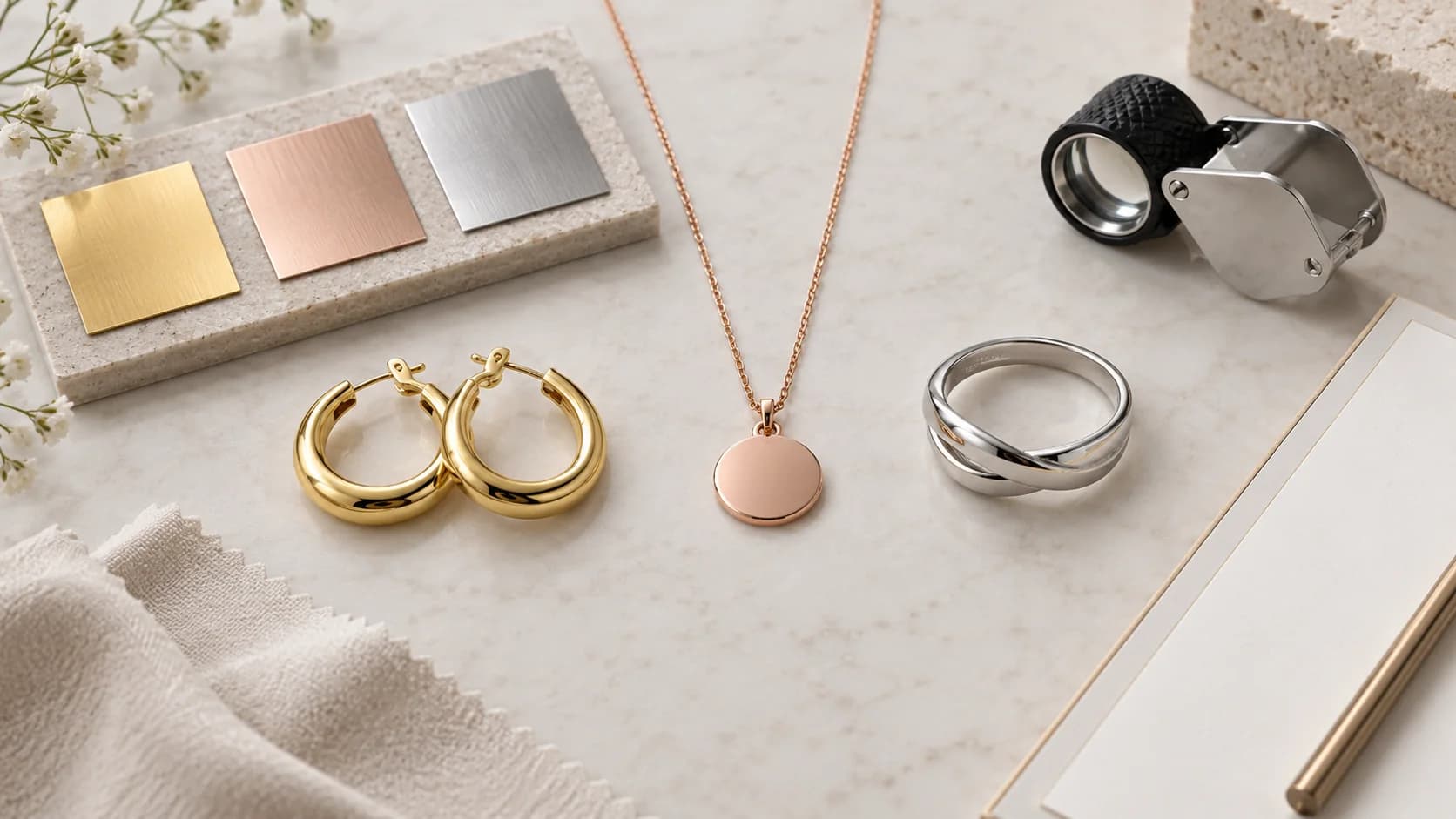
A plating brief should name the substrate, surface preparation, proposed underlayer system, final color reference, finish by area, coverage, masking, two-tone boundaries, component-specific needs and approval method. Compare the physical sample under agreed viewing conditions, retain a named reference and reconnect it to batch and reorder records. Use “vermeil” only when the product and applicable market definition support it; otherwise use accurate language such as “gold-plated sterling silver.”
Direct answer
What should a jewelry plating specification include?
Define the base material, prepared surface, proposed underlayers, final metal or color direction, finish by area, coverage, masking and two-tone boundaries. Add requirements for chains, clasps, solder points, recesses, moving parts and stone surroundings; then identify the physical sample, viewing method, evidence, claims and reorder record used for approval.
Decision summary
Key takeaways
- Replace “gold plated” with a complete system: substrate, preparation, underlayers, final color, surface finish and coverage.
- Use a physical sample or controlled color reference because words such as yellow gold and rose gold describe families, not one reproducible appearance.
- Map polished, brushed, matte, oxidized-looking, textured, recessed, masked and two-tone areas by component.
- Approve chains, clasps, solder points, recesses, moving parts and stone surroundings as part of the complete item.
- Keep terminology and care claims within product data, market rules and available evidence; reconfirm the system before reorders.
Specify the complete finish
Why “gold plated” is not a production-ready instruction
The same final color can look different on sterling silver, brass or another substrate because polishing, surface texture and intermediate layers influence the result. A useful brief identifies the actual base material, the finish expected before plating, the proposed preparation and underlayer system, and the final visible deposit or color direction. The manufacturer should confirm the process route for the design and intended market rather than relying on an incomplete label.
Descriptions also need discipline. “Gold-plated sterling silver” or “sterling silver with a gold-tone plated finish” accurately communicates a silver base with an applied finish. “Vermeil” has defined expectations that vary by market and should be used only where the product record and relevant rules support it. Do not upgrade terminology merely to make a product sound more premium.
| Field | Buyer defines | Supplier confirms | Approval evidence |
|---|---|---|---|
| Substrate | Material and product reference | Compatibility and preparation route | Material record tied to sample |
| Underlayers | Required disclosure or restrictions | Proposed system for the design and process | Released process or supplier record |
| Final appearance | Color family and reference | Achievable process proposal | Identified physical sample |
| Surface | Polished, brushed, matte or textured zones | Sequence and access | Finish map plus sample |
| Claims | Permitted product description and care copy | Available scope evidence | Approved copy and evidence file |
Evidence: GOV.UK; US Federal Trade Commission; US Federal Trade Commission; Frank & Label
Color is a controlled reference
Define yellow, rose and rhodium directions with finish by area
Yellow-gold, rose-gold and rhodium-tone descriptions are useful starting families, but they do not select one exact appearance. State whether the reference is an approved physical sample, manufacturer swatch, calibrated specification or another agreed standard, and record how it was viewed. Photography can support communication, but exposure, white balance, screen settings and surrounding colors can make it unreliable as the only acceptance reference.
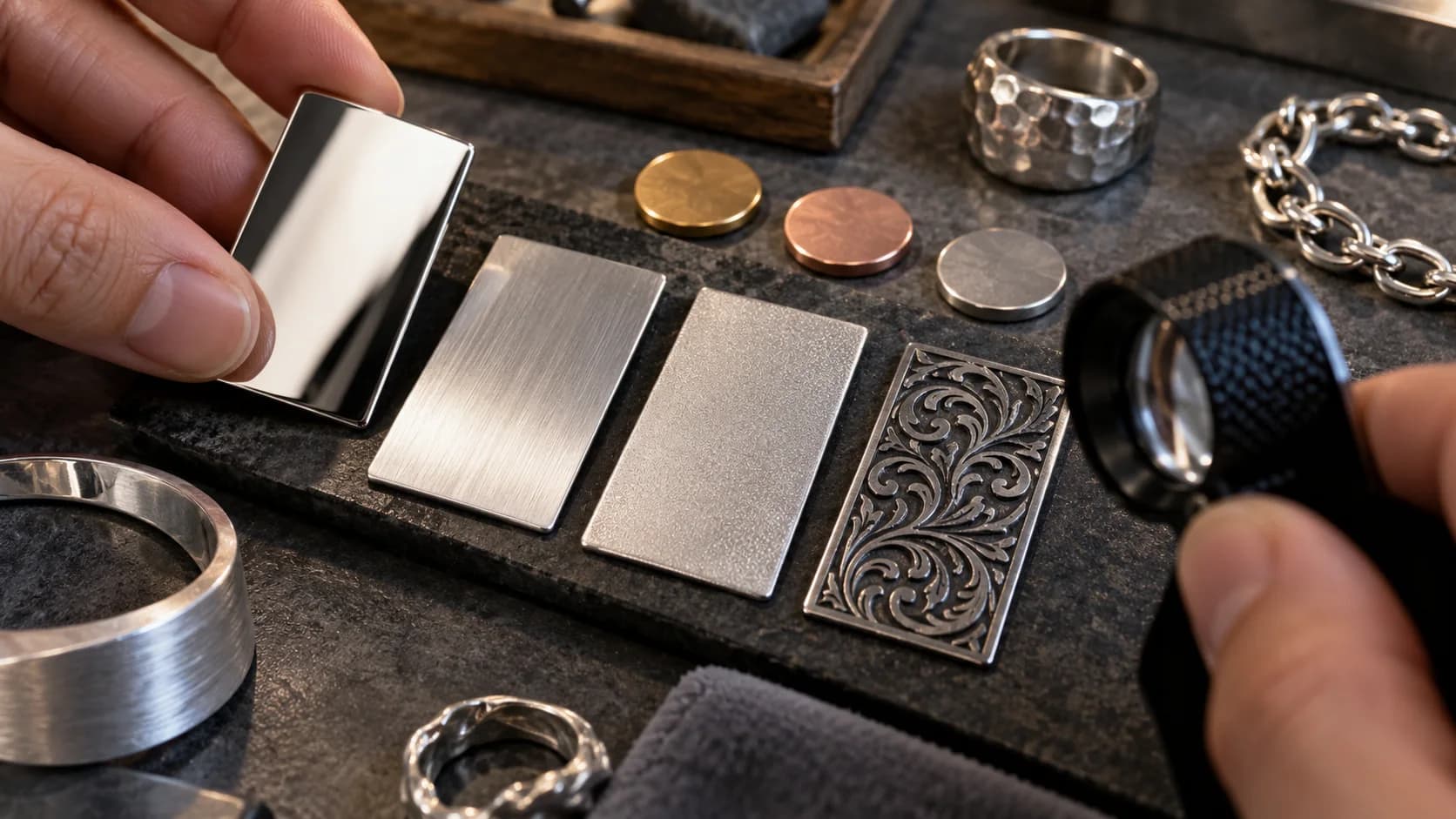
Next map the underlying surface. High polish reflects sharply; brushed or satin directions show a directional grain; matte and textured areas scatter light; recessed or deliberately darkened details create contrast. If an item combines finishes, mark boundaries and orientation. The visible color decision and the surface decision must be reviewed together because texture changes the way the same color is perceived.
- Name the color family and the exact reference selected for approval.
- Record sample ID, date, revision and agreed viewing conditions.
- Map polished, brushed, satin, matte, textured and recessed areas.
- Define grain direction and finish boundaries where they matter visually.
- Use photographs as supporting evidence rather than an unqualified master color standard.
Evidence: Frank & Label; Assay Post; National Metal Finishing Resource Center
Review the complete object
Map coverage, masking, two-tone zones and difficult components
A complete plating map identifies visible and concealed areas, intentional exclusions and two-tone boundaries. Mark the front, back, sides, edges, interior, recessed details and wearer-contact surfaces. For a two-tone product, specify which component or surface receives each finish and how the transition should appear. Masking and assembly sequence should be proposed for the actual geometry; an attractive front view alone cannot define the result.
Chains, clasps, jump rings, solder joints, hinges, moving charms, deep recesses, prong settings and areas close to stones need explicit review. Their shape, movement, assembly and finishing access can create different process questions from a broad flat surface. Ask the supplier to explain which components are plated before or after assembly, how masked zones are controlled and which aspects will be verified on the physical sample.
| Area | Specification question | Sample review | Reorder record |
|---|---|---|---|
| Chain and clasp | Same or intentionally different color and finish? | Links, clasp action, connection points and overall match | Component and process reference |
| Solder and joints | How will preparation and color continuity be handled? | Visible joint areas and adjacent finish | Approved exception or process note |
| Recesses and texture | Full coverage, contrast or intentional dark detail? | Depth, edges and texture appearance | Finish map revision |
| Moving parts | Which areas move, touch or must remain functional? | Action, contact areas and appearance | Assembly and approval reference |
| Stone surroundings | Coverage boundary and setting sequence? | Prongs, bezels, pavé zones and adjacent stones | Sample photos plus controlled specification |

Evidence: National Metal Finishing Resource Center; Frank & Label; Legor
Approval and repeatability
Separate sample color approval from bulk and retain batch references
Sample approval should identify the exact jewelry sample and plating specification reviewed. Record the color and finish decision, acceptable visual reference, coverage and component results, any approved exception and the next action authorized. A photograph helps communicate the decision, but the retained physical sample or another agreed controlled reference provides a stronger basis for later comparison.
Bulk production needs its own process and inspection records linked to the released sample. Define how the parties will assess color and finish consistency, which evidence will be retained and how deviations are escalated. Do not turn a visually approved sample into a statement that every future batch will be identical under all conditions. The practical goal is a defined comparison and disposition process.
1. Brief
Name the substrate, preparation, color reference, finish map, coverage and component questions.
2. Propose
Have the manufacturer confirm the project-specific plating and assembly route.
3. Sample
Produce and identify the physical sample with its current specification revision.
4. Compare
Review color, texture, coverage, boundaries, components and function under agreed conditions.
5. Release
Record the approved reference, evidence, exceptions and exact production action authorized.
6. Retain
Connect batch records and reorder confirmation to the released sample and change history.
Evidence: Frank & Label; National Metal Finishing Resource Center; Legor
Evidence-aware language
Align market requirements, product claims and care instructions
Destination markets can treat precious-metal descriptions and disclosures differently. The UK government's guidance, for example, explains permitted descriptions for silver articles coated with gold and distinguishes gold-plated silver from gold. The US Federal Trade Commission's jewelry guidance also addresses truthful representation of precious-metal products and disclosure of surface treatments. Confirm the current rules that apply to the product, market, seller and claims rather than treating one article as global legal advice.
Testing and marketing copy should stay aligned with the evidence scope. If a project needs restricted-substance, wear, adhesion, color or other evaluation, define the applicable requirement, method, sample or batch, laboratory or responsible party and acceptance decision. Avoid blanket statements such as hypoallergenic, tarnish-free or guaranteed to last. Care instructions should reflect the actual product and approved claims, including reasonable advice about chemicals, abrasion, moisture and storage where appropriate.
Evidence: GOV.UK; US Federal Trade Commission; US Federal Trade Commission; Assay Post
Reconfirm before repeating
Carry the approved plating system into reorders and Zalson enquiries
A reorder should reference the original style and PO, current substrate and construction, plating specification, approved sample, color and finish map, component list, packaging copy and accepted changes. Reconfirm material and process availability, destination requirements, evidence and care language. If the design, base material, component source, finish or market changes, route the affected plating decisions through sample review again.
For a Zalson Jewelry enquiry, send the product or catalog reference, substrate, intended color, finish map, two-tone or masking direction, component questions, destination market, evidence needs, quantity context and any existing physical reference. The team can review a project-specific route and identify open decisions. Thickness, performance, testing, timing and claims are confirmed for the actual design and order rather than promised universally by this guide.
Catalog references
Related products
These real catalog products are visual and construction references for specification discussions. Their published product data is unchanged; they are not presented as the exact product used in this guide.
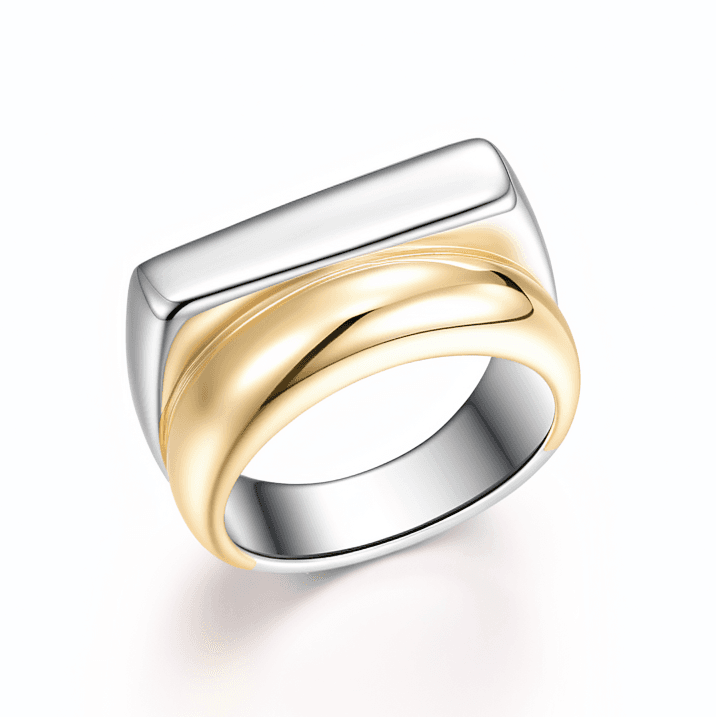
Two-Tone Gold & Silver Dome Overlay Ring
S925 Sterling Silver, Dual-tone Gold & Silver Plated, High Polish
View product →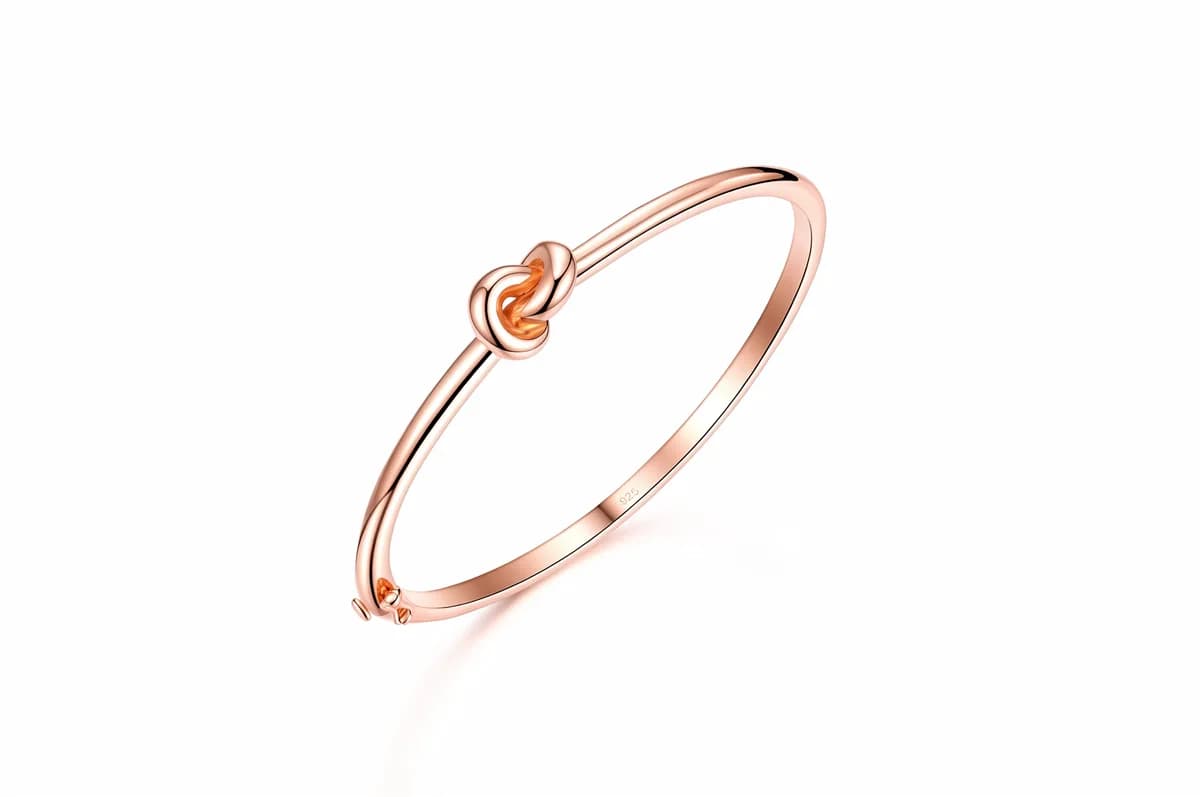
Romantic Love Knot Rose Gold Vermeil Slim Solid Sterling Silver Hinged Bangle
S925 Sterling Silver, Rose Gold Vermeil, High-Polish Finish
View product →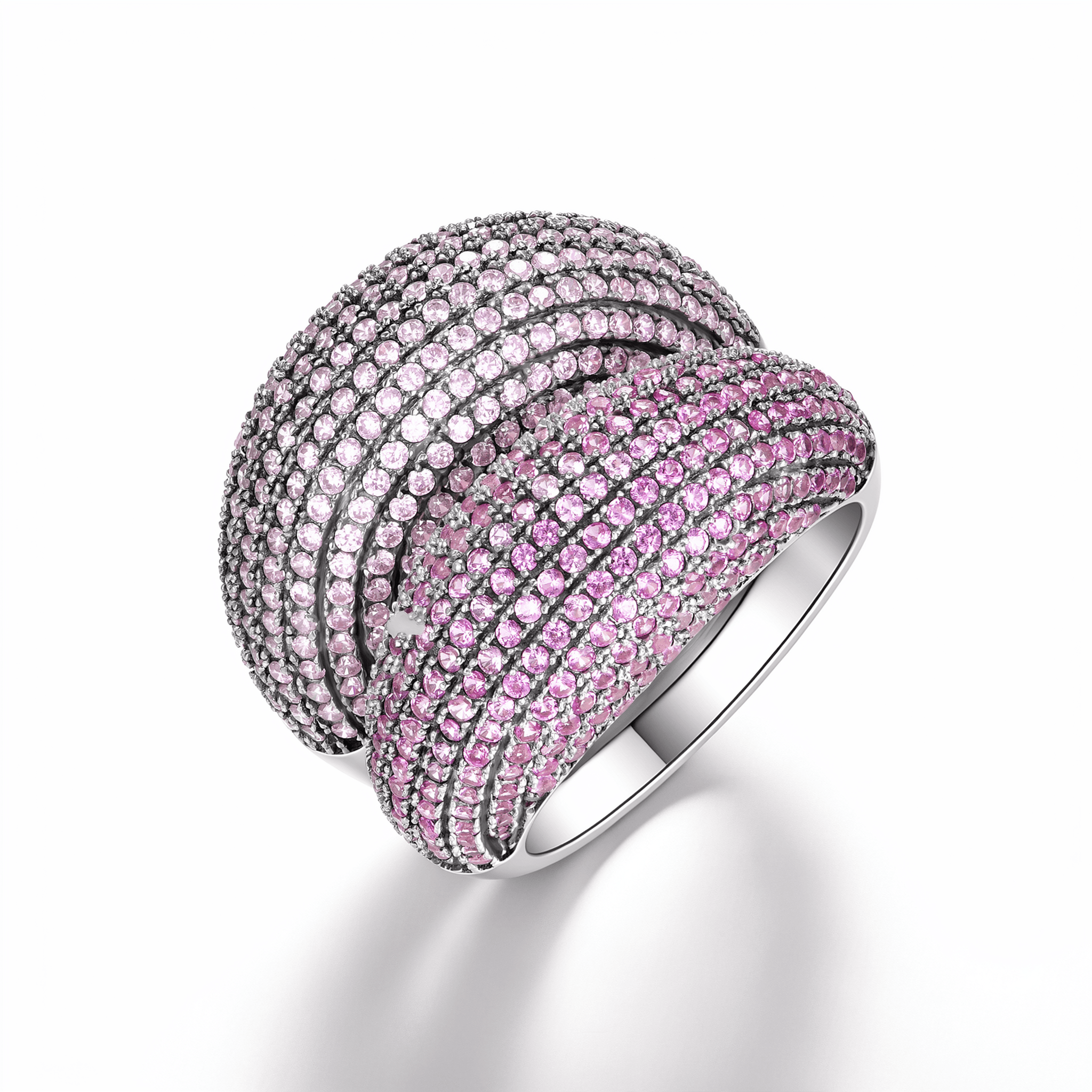
Pink CZ Swirl Twist Pave Cocktail Ring
S925 Sterling Silver, Rhodium Plated, Full Pave Pink CZ
View product →FAQ
Frequently asked questions
Why is “gold plated” not enough for a jewelry specification?
It omits the substrate, surface preparation, proposed underlayers, final color reference, texture, coverage, masking and component details that affect the visible result and manufacturing route. Those fields should be defined and approved for the actual design.
Is all gold-plated sterling silver vermeil?
No. Vermeil is a defined description with criteria that may vary by market. Use it only when the product data and applicable requirements support it; otherwise describe the item accurately as gold-plated sterling silver or sterling silver with a gold-tone plated finish.
How should a brand approve jewelry plating color?
Use an identified physical sample or controlled color reference, record the specification revision and viewing conditions, and assess color together with the actual polished, matte, brushed or textured surface. Photographs can support the record but should not be the only master reference.
Which jewelry components need special plating review?
Review chains, clasps, jump rings, solder joints, hinges, moving parts, recesses, prongs, bezels and areas around stones. Confirm coverage, masking, assembly sequence, color match and function on the physical sample.
What should be reconfirmed before a plated jewelry reorder?
Reconfirm the substrate, process and color reference, finish map, coverage, components, approved sample, evidence and market requirements. Also check product descriptions and care instructions so a changed design, source or market does not inherit an outdated claim.
Expert review
Zalson Jewelry Product Development & Quality Team
Technical editorial team
Reviewed for purchase-order release control, jewelry plating terminology, S925 material language and buyer-facing production decisions.
Zalson Jewelry is operated by Guangzhou Zalson Jewelry Co., Ltd., established in Guangzhou in 2017. Content is reviewed by the team rather than attributed to an individual spokesperson.
Sources and further reading
- 1GOV.UK: Permitted Descriptions for Gold-Plated Silver Articles in the UK ↗
- 2US Federal Trade Commission: Buying Platinum, Gold, and Silver Jewelry ↗
- 3US Federal Trade Commission: Jewelry Guides: Statement of Basis and Purpose ↗
- 4Frank & Label: Plating and Vermeil Thickness Guide ↗
- 5Assay Post: Plated, Rolled, Gold-Filled and Vermeil ↗
- 6Legor: Legor Returns to Bangkok Gems & Jewelry Fair 2026 ↗
- 7National Metal Finishing Resource Center: Precious Metal Plating ↗
Need a finish brief that can be sampled?