Buyer Approval Guide
Jewelry Sample Approval Checklist for Brand Buyers
A jewelry sample can look right in a photograph and still leave production-critical decisions open. Before releasing a style to bulk production, a brand buyer needs one controlled record that connects the identified sample to its drawing revision, measurements, material direction, stones, finish, functional parts, logo and packaging. This checklist helps founders, designers and sourcing teams review those choices in a repeatable order. It also makes the supplier conversation clearer: a sample may approve a visual direction, a particular component or a packaging fit without automatically authorizing every production detail. The production release should name what is approved, what changed and which reference will guide the next stage.
TL;DRThe short answer
A jewelry sample approval should be a recorded release decision, not a quick visual compliment. Identify the sample and revision, then review appearance, dimensions, function, materials, stones, finish, logo, packaging and any open changes. Keep the approved sample, dated specification and change log together so the next production stage has one usable reference.
Direct answer
What should a buyer approve before jewelry moves into bulk production?
Approve the identified sample against the current specification: design appearance, critical dimensions and fit, functional parts, material and stone direction, finish, branding, packaging and any approved deviations. Then issue a written production release that names the retained reference sample and revision. A sample that merely looks good does not by itself define a repeatable production instruction.
Decision summary
Key takeaways
- Identify the sample, drawing version and intended approval scope before reviewing details.
- Separate how a piece looks from the dimensions, function and material instructions needed to reproduce it.
- Review clasps, posts, hinges and moving parts as wearing functions, not only as visual features.
- Treat logo placement and packaging fit as part of the finished SKU approval.
- Retain one approved reference and a change log before issuing a production release.
From visual to measurable
Review appearance, dimensions and fit as different checks
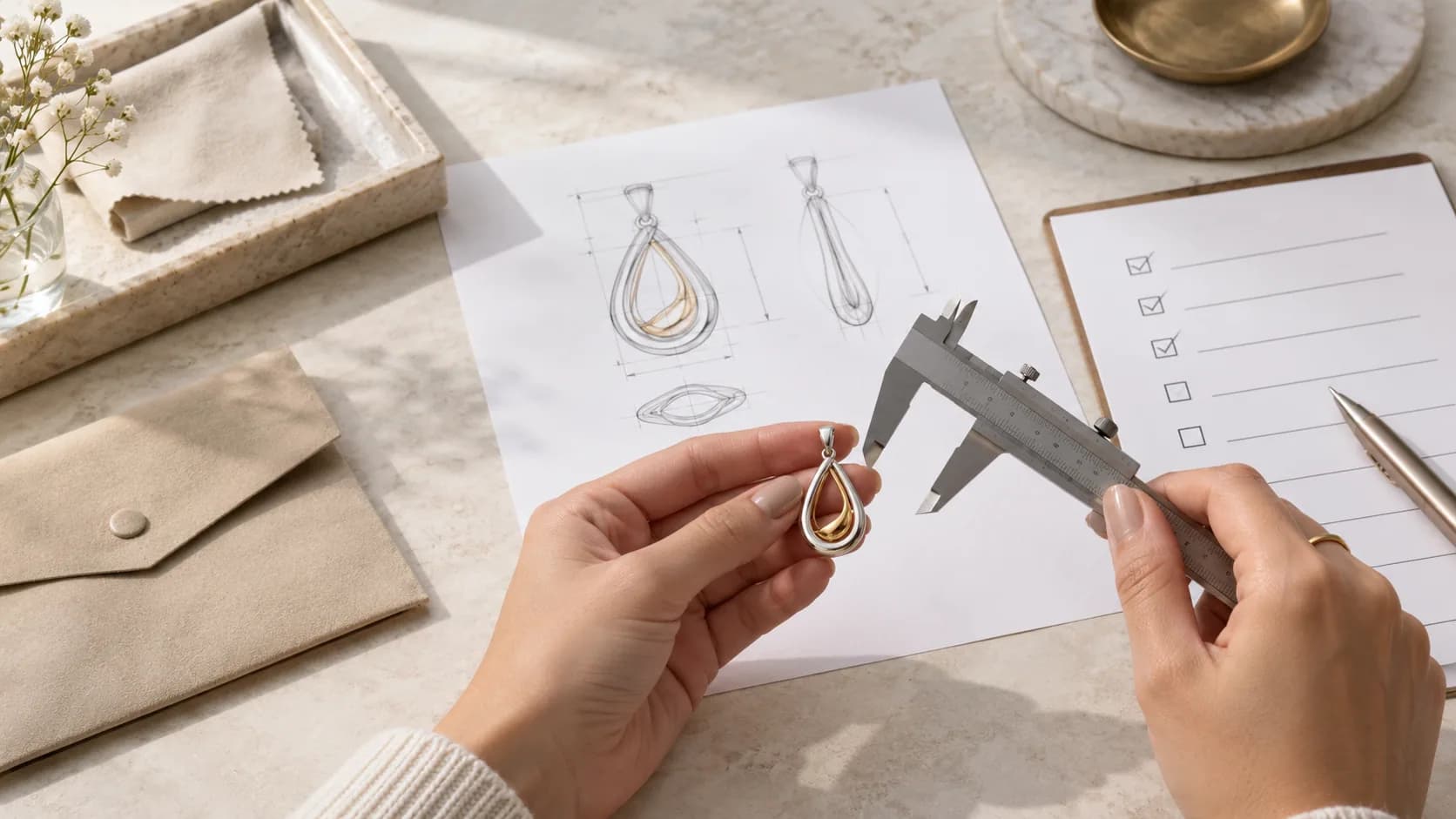
Use the approved design files and physical sample together. Compare front, back and side views, symmetry, stone placement, edge treatment and visible joins. Then separately record the dimensions that affect the wearer or the component relationship: a ring size, chain length, earring drop, bracelet fit, pendant scale, bail opening or the spacing around a setting. The project specification should identify which measurements are critical for that design.
This separation protects the buyer from a common mistake: approving a beautiful photograph while a functional or fit-sensitive detail remains undefined. If a dimension, target weight or other property is still under review, label it as open and carry it into the next sample or quotation revision rather than treating it as settled by implication.
- Compare the same views against the current design revision, not an older inspiration image.
- Check pair symmetry for earrings and matching components.
- Record the wearer-facing fit decision for rings, chains, bracelet lengths and drop earrings.
- Identify the component interfaces that affect assembly, such as bails, jump rings and setting seats.
- Attach dated photos to comments so a correction points to a visible location.
Evidence: 925 Pro; BJM Jewelry
Wear and specification
Check moving parts, materials, stones, plating and finish
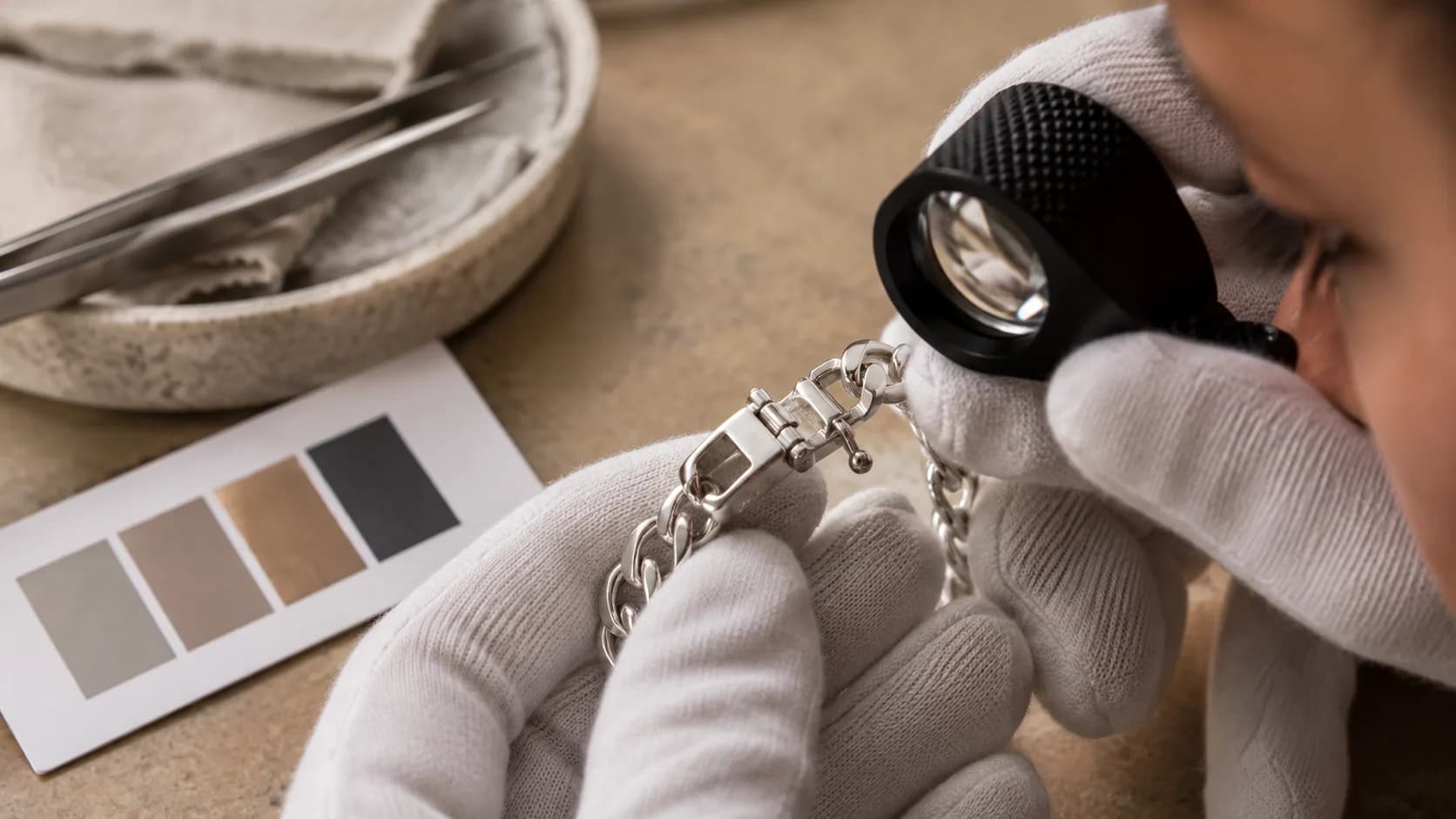
A clasp, earring post, hinge, connector or moving charm needs a deliberate review because the customer will use it, not simply view it. Open and close it, inspect how components align and record what action or feel the buyer accepts for the approved sample. The exact inspection method and acceptance criteria belong in the project plan when they matter to the product or destination market.
Material and stone confirmation belongs in the same record. State the proposed base material, stone description, setting direction, plating color and surface finish in the language that the product brief uses. A finish name is not a complete production instruction; pair it with the relevant sample view and any product-specific requirement. If a buyer needs documentation or a test plan, request it early in the quotation and approval path.
Finished SKU review
Approve branding and packaging with the jewelry, not afterwards
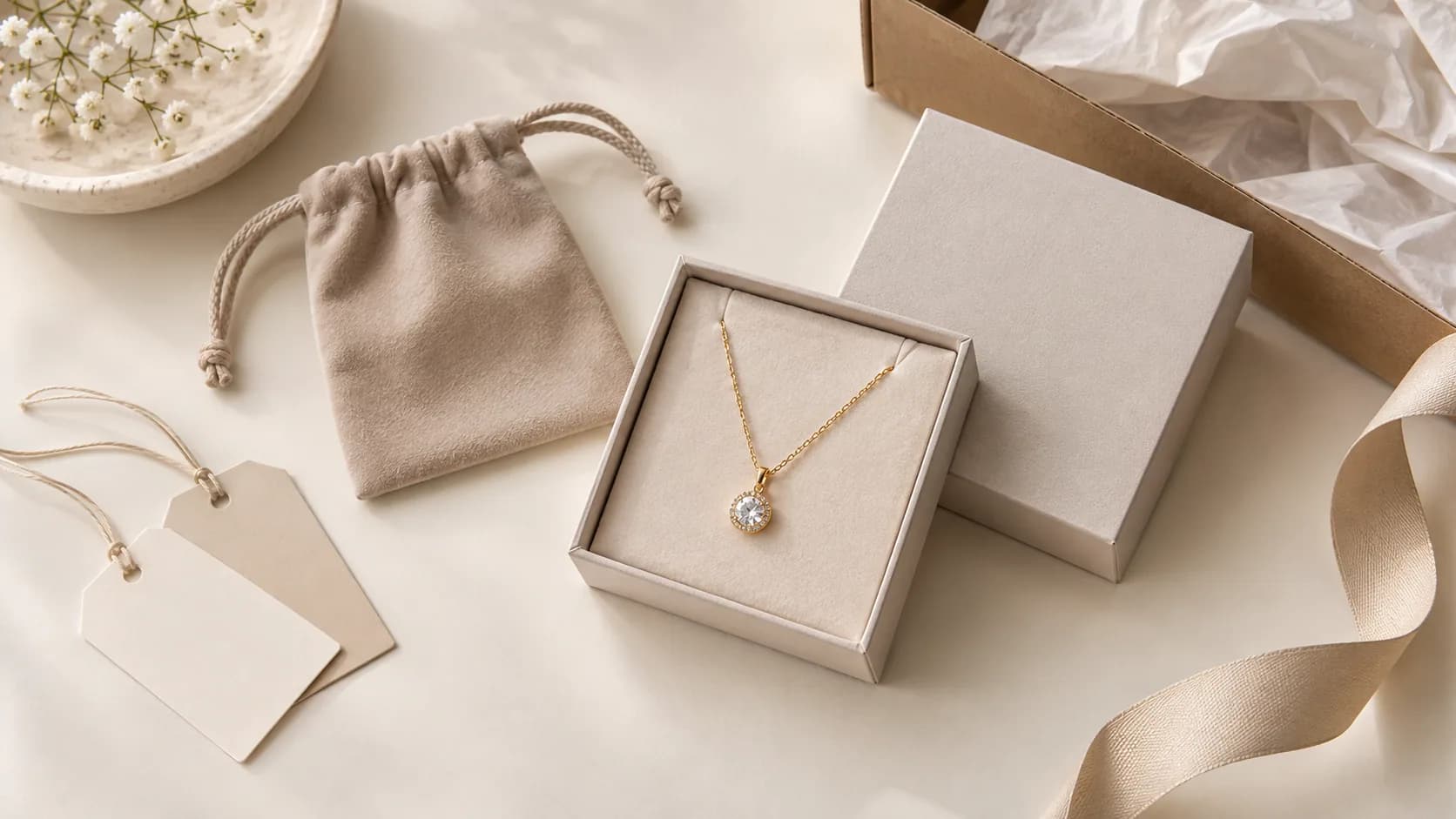
Logo, engraving, hallmark direction, card, pouch, insert, box and label instructions all influence the finished SKU. Review them against the actual sample where possible: a delicate chain needs a different insert and securing method from a ring or an earring pair. Keep the artwork version, placement view, pack-out components and quantity basis visible in the same project folder.
Packaging approval is a fit-and-identity decision. Check that the jewelry sits securely, that components do not create avoidable rubbing or movement in the chosen presentation, and that labels or cards correspond to the approved product version. If packaging is quoted separately, keep its commercial approval and quantity assumptions linked to the jewelry release.
Evidence: SilverBene; Atelier Trim
Release control
Create a golden-sample record and define re-approval triggers
The retained approved reference is often called a golden sample or master sample. Its usefulness comes from identification and context: link it to the final specification revision, photos, measurement notes, material and finish direction, approved deviations, packaging version and production-release date. Keep it protected from being confused with an earlier prototype or an unapproved supplier alternative.
A change log keeps the release usable. Material, stone, plating, component, construction, critical dimension, logo, packaging or quantity changes may alter the commercial or product decision. Record the proposed change, the reason, the affected files or sample, who must review it and the decision. That creates a straightforward re-approval path instead of relying on memory when a collection moves from sampling to production or reorder planning.
1. Identify
Name the style, sample ID, revision and review date.
2. Compare
Review the physical piece against the current drawings, brief and packaging direction.
3. Record
Write accepted details, open points and approved deviations in one controlled record.
4. Retain
Keep the approved reference, photos and specification together for the production team.
5. Release
Issue the production decision only after required comments are closed.
6. Re-approve
Route later material, construction, finish or packaging changes through the change log.
Evidence: BeadsFlex; DinHuey Jewelry
Commercial action
Prepare the sample review for a project-specific production discussion
Zalson Jewelry can start a development discussion from a sketch, reference image, CAD drawing or physical sample. For a productive sample review, send the style reference, intended material and finish direction, known dimensions, quantity split, destination market, branding and packaging needs, plus the questions that remain open. This allows the proposed development and production route to be reviewed against the actual project rather than a generic approval template.
Use the final sample record as the bridge to the request for quotation and production release. Zalson publishes a general production MOQ of 30 pieces per style; the project quotation should confirm the applicable materials, variants, packaging and commercial details for the approved design.
Catalog references
Related products
These real catalog products are visual and construction references for specification discussions. Their published product data is unchanged; they are not presented as the exact product used in this guide.
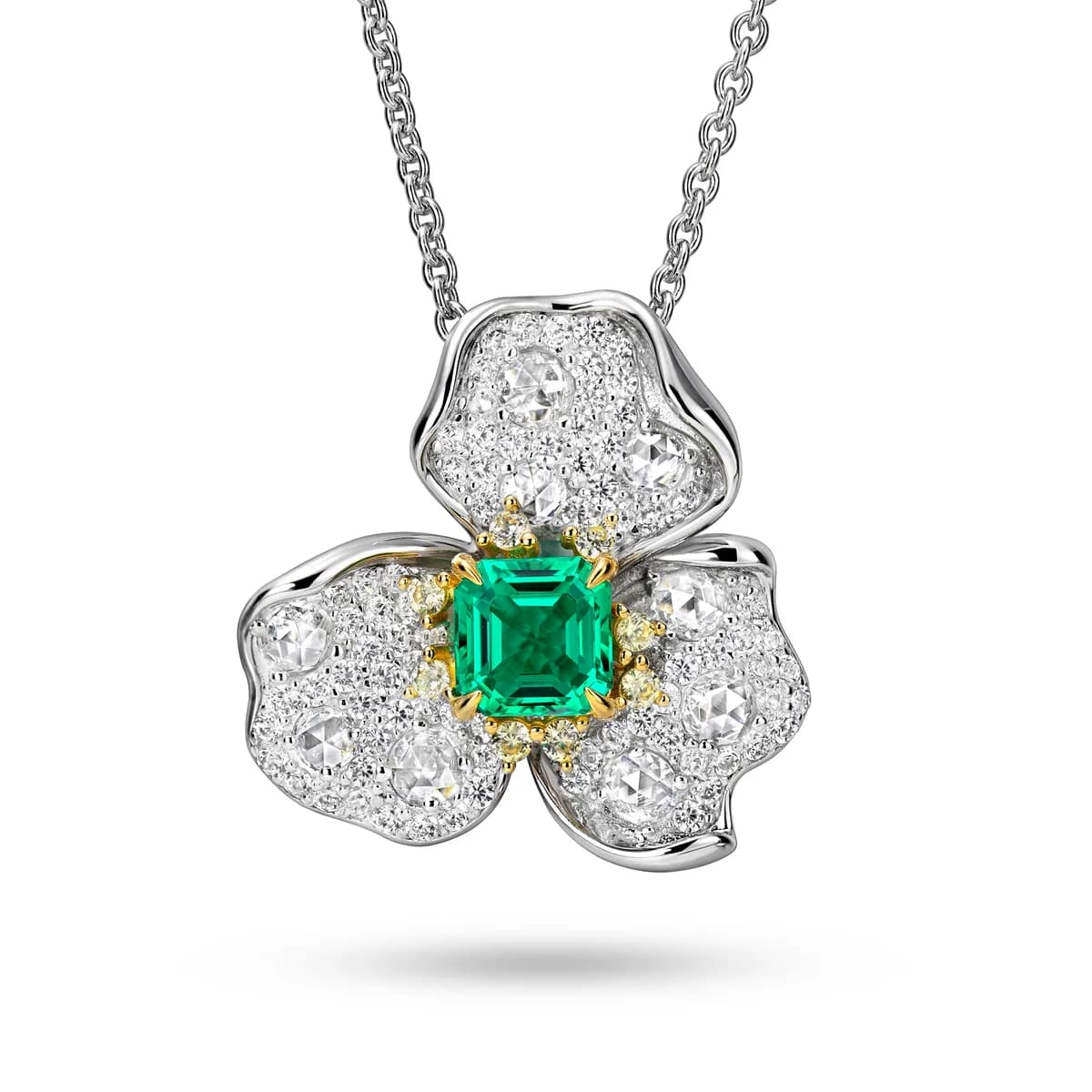
Two-Tone Micro Pave CZ Clover Emerald Pendant
S925 Sterling Silver, Dual Tone Plated, Micro Pave Full CZ Clover, Radiant Cut Emerald CZ Center
View product →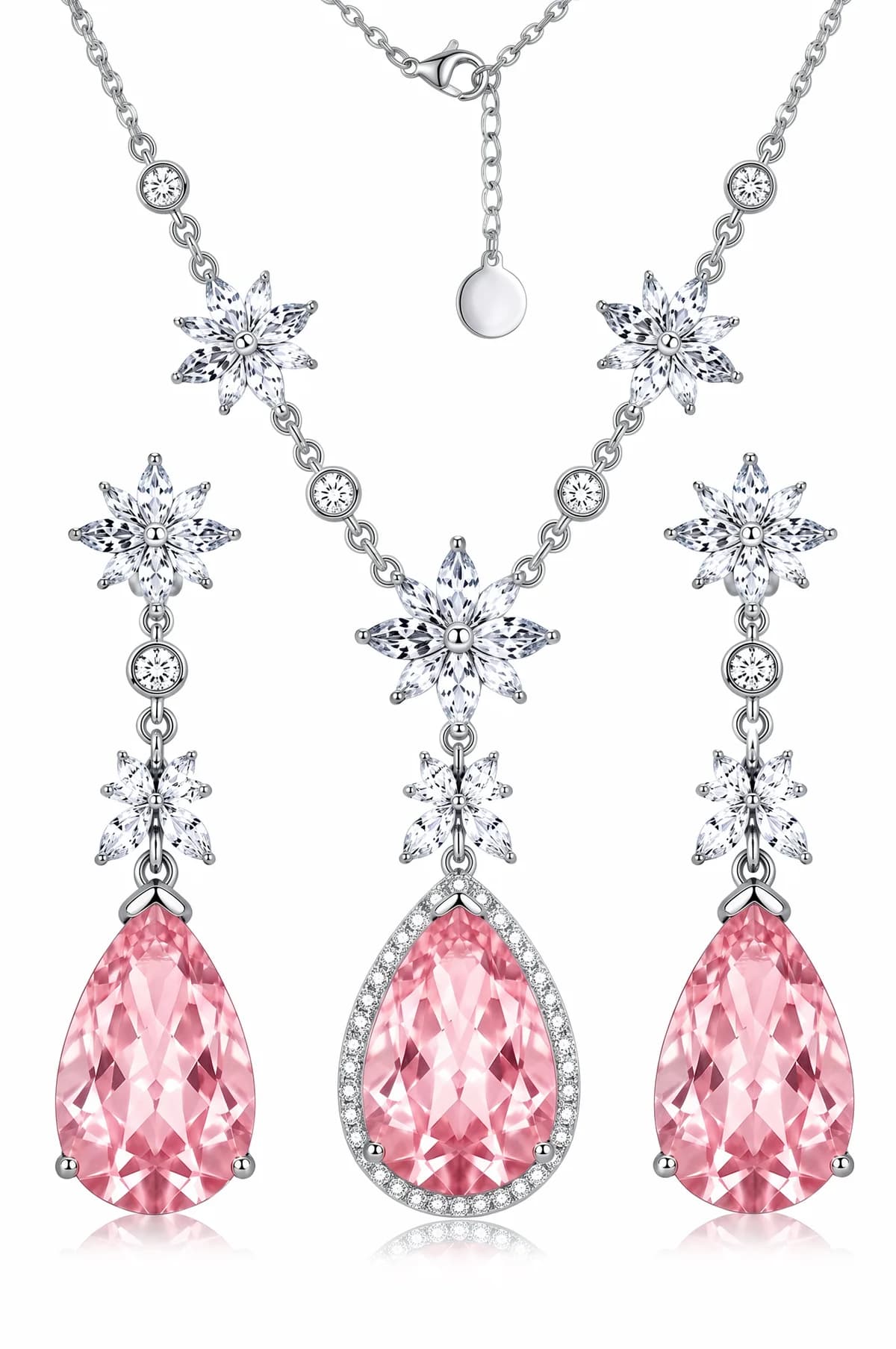
Star Flower Necklace & Earrings Set, Sakura Pink Pear Gem
S925 Sterling Silver, Rhodium Plated, CZ & Sakura Pink Pear Gem
View product →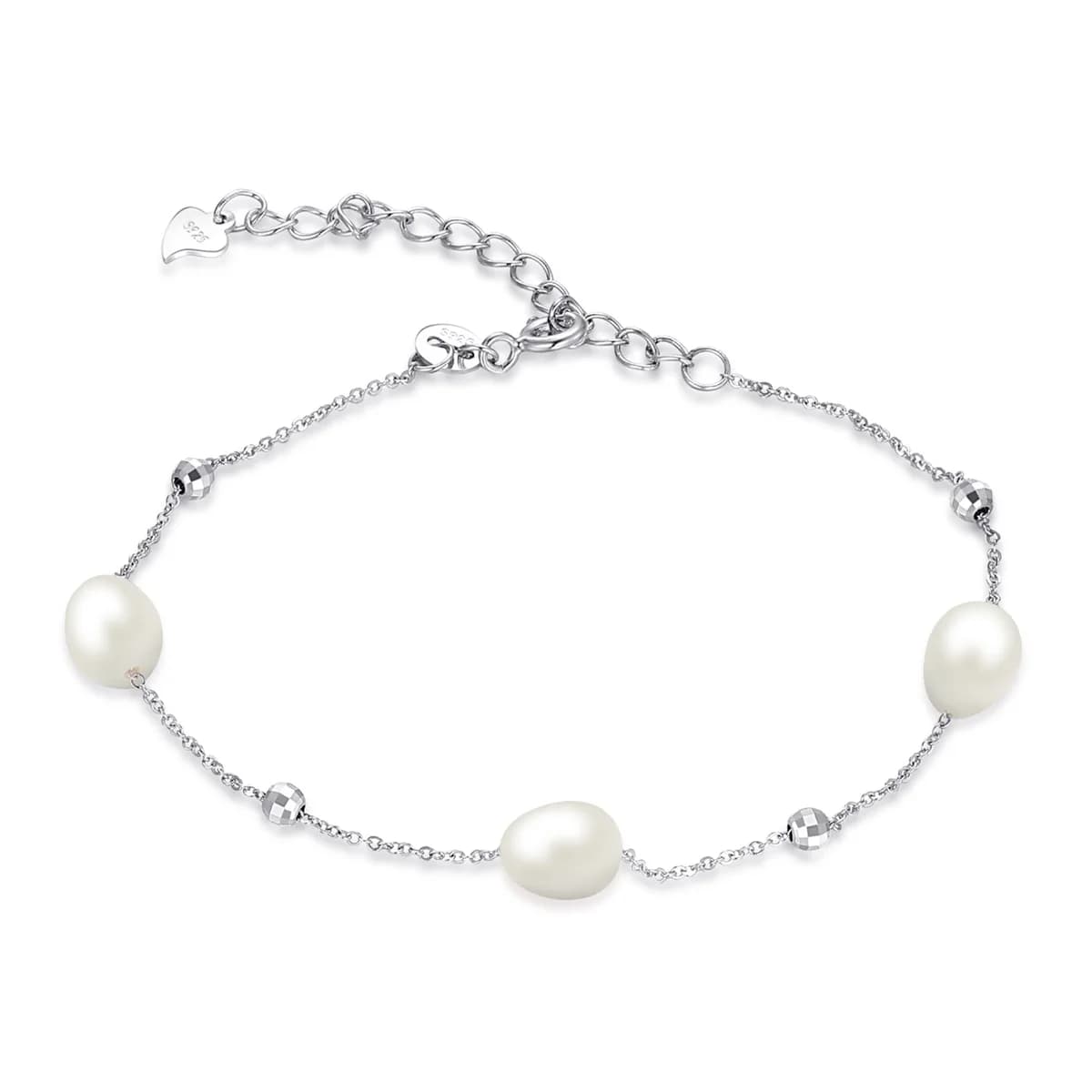
Delicate O-Link Chain Baroque Pearl Heart Tag Bracelet
S925 Sterling Silver, Rhodium Plated, Baroque Pearl
View product →FAQ
Frequently asked questions
Does a jewelry sample approval authorize bulk production?
Only when the approval record explicitly releases the identified sample and current specification for production. Appearance approval, a design-direction review or approval with unresolved comments should remain separate from a full production release.
What should be on a jewelry sample approval checklist?
Include sample identity and revision, appearance, dimensions and fit, functional parts, material and stone direction, plating and surface finish, logo and markings, packaging, open issues, approved deviations, final decision and the retained production reference.
How do I approve a clasp or moving jewelry part?
Review it as a wearing function: operate the clasp, hinge, post, bail or moving element on the physical sample, compare it with the product brief and record the accepted action or any required correction. Add project-specific criteria where needed.
Should packaging be approved with the jewelry sample?
Yes. The approved jewelry should be checked with the intended card, pouch, insert or box so fit, protection, labeling and presentation are considered as one finished SKU rather than disconnected approvals.
What changes require jewelry sample re-approval?
Re-approval should be considered when a change affects material, stone, plating, finish, construction, critical dimensions, functional components, logo placement, packaging version or another item that the buyer has identified as part of the released specification.
Expert review
Zalson Jewelry Product Development & Quality Team
Technical editorial team
Reviewed for jewelry development workflow, sample-control language, MOQ planning and production-release records.
Zalson Jewelry is operated by Guangzhou Zalson Jewelry Co., Ltd., established in Guangzhou in 2017. Content is reviewed by the team rather than attributed to an individual spokesperson.
Sources and further reading
- 1DinHuey Jewelry: Jewelry Sample Approval Checklist: What to Check Before Mass Production ↗
- 2HonHo: Jewelry Sample Approval Checklist: Before Bulk Production ↗
- 3925 Pro: Custom Silver Jewelry Sample Approval Checklist for Wholesale Buyers ↗
- 4BJM Jewelry: Jewelry CAD and Sample Review Before Production ↗
- 5BeadsFlex: Approval Loops That Run on Records, Not Memory ↗
- 6SilverBene: How to Review Jewelry Packaging Samples Before Bulk Production ↗
- 7Atelier Trim: Pendant Sample Approval Checklist ↗
- 8Associated Press: Pandora opens Vietnam jewelry factory powered by renewable energy ↗
Move from sample to a controlled release