Jewelry Sourcing
Custom Jewelry RFQ Checklist: From Reference Image to Comparable Quote
A custom jewelry request for quotation should make supplier responses comparable, not merely collect several prices. When buyers send different files, leave material or packaging undefined, or ask each factory to interpret a reference image independently, the resulting numbers may describe different products. This checklist shows how to create one controlled RFQ from an image, sketch, CAD file or physical sample; separate confirmed requirements from supplier questions; request sample and production costs; and normalize the answers before selecting a development partner. It is designed for jewelry brands, wholesalers and product teams sourcing S925 silver, gemstone, pearl, zirconia or mixed-finish collections through custom, OEM, ODM or private-label routes.
TL;DRThe short answer
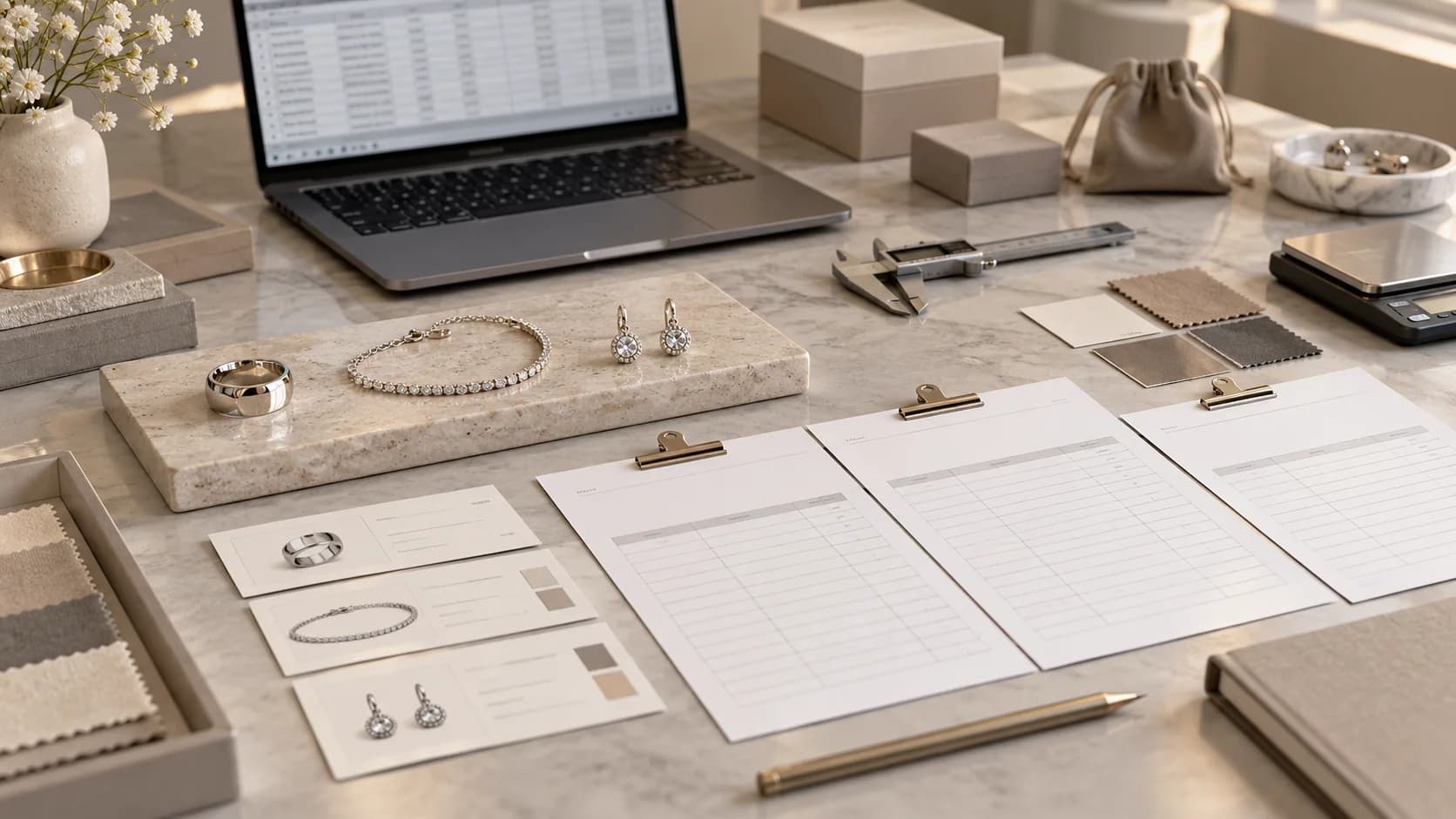
Issue one numbered RFQ to every shortlisted manufacturer. Define the product, known specifications, quote quantity, variant structure, sample requirement, branding, packaging, destination and timing. Ask suppliers to separate unit price, development, tooling, packaging, testing and delivery; list exclusions; and state every assumption. Compare only like-for-like responses.
Direct answer
What belongs in a custom jewelry RFQ?
A custom jewelry RFQ should include the style reference, design files, dimensions, target material, stones, finish, components, size or color variants, branding, packaging, sample and production quantities, destination, target timing, quality or testing needs, and requested quotation lines. It should also require suppliers to identify assumptions, exclusions, MOQ, lead-time basis, payment terms and quote validity.
Decision summary
Key takeaways
- A low unit price is not comparable if material, finish, packaging, testing or quantity assumptions differ.
- Reference images communicate direction; the RFQ must state what is required, optional and open for proposal.
- Request separate cost lines and exclusions so development, tooling and packaging do not disappear inside one number.
- Score feasibility, communication, sample route and evidence alongside commercial terms before awarding production.
Definition
An RFQ controls the question suppliers are pricing
A request for quotation is the commercial companion to the product specification. The tech pack describes the intended jewelry; the RFQ states the quantities, variants, services, timing and response format to price. Keep both under revision control and issue the same package to each supplier. Without that common basis, a quote comparison becomes a comparison of interpretations.
The first response does not need to be a final production commitment. An early RFQ can request an indicative range and feasibility feedback, provided the supplier identifies the assumptions. A final quotation should follow a clarified specification and state what happens if metal weight, stone count, finish, components or packaging change after development.
Evidence: SilverBene; ALI Jewelry
Starting from an image
Translate visual direction into an original, priceable brief
Mark a reference image with what you are asking the manufacturer to use: overall mood, stone arrangement, surface contrast, clasp type or approximate scale. Also state what must not be copied and which elements should be redesigned. Confirm that you have the right to use supplied artwork, logos and protected design elements. The supplier should not have to infer the scope from an unannotated social image.
Add at least one known dimension or physical scale. Then choose the target material and finish, or ask for named alternatives. For stones, separate visual direction from verified identity: a color reference is not automatically a gemstone specification. If a field remains open, request a proposal and make the choice a visible line in the response.
- Identify the source file and the design elements being referenced
- State intended product type, wearer, use case and target assortment
- Add scale, wearable length or size system and critical functional needs
- Name required material and finish or request separately priced options
- List stone direction, setting concept and any evidence requirement
- Attach original brand artwork and specify logo position, size and method
Checklist
The fields every custom jewelry RFQ should control
Use one cover sheet for the commercial request and one style sheet per product. For a collection, add a variant and quantity matrix rather than embedding size and color splits in prose. Ask the supplier to reproduce your line-item numbering in the quote so omissions are visible.
| RFQ area | Buyer provides | Supplier returns |
|---|---|---|
| Product | Style ID, files, revision, dimensions and functional requirements | Feasibility notes and stated deviations |
| Material and stones | Target metal, fineness, finish, stones, setting and alternatives to price | Assumed material, weight basis, stone basis and substitutions |
| Variants | Sizes, colors, finishes, pack ratios and quantity by version | MOQ basis, price breaks and variant effect |
| Development | CAD need, sample quantity, revision expectation and approval route | CAD, tooling, mold and sample charges with timing basis |
| Production and QC | Order quantity, inspection points, evidence and target date | Production timing, QC scope and exclusions |
| Branding and pack-out | Logo, labels, packaging, barcodes and carton needs | Included pack-out, separate costs and packaging MOQ |
| Commercial | Currency, destination, requested trade basis and response date | Terms, validity, payment, delivery basis and exclusions |
Evidence: 925 Pro; DinHuey Jewelry
Cost scope
Request line items instead of one unexplained total
Ask for the production unit price at each relevant quantity break, then separate development, CAD, tooling or mold, sample, stone or material alternatives, branding, packaging, testing or inspection, and delivery. Not every project uses every line; the point is to make included and excluded work visible. Taxes, duties and importing costs should only be added when the responsible party and basis are known.
Metal markets can move during development. The World Gold Council reported continued high gold prices and a shift toward lighter-weight products in Q2 2026. That context reinforces a practical procurement rule: record the material and weight basis, currency, quote date and validity rather than treating an old unit price as permanent. The same discipline applies to silver and stones even when the supplier uses a different adjustment mechanism.
Evidence: Jinming; World Gold Council
Comparison
Normalize supplier responses before choosing
Place the specification revision at the top of the comparison. Then evaluate compliance before price. A supplier that proposes a different material, finish or construction may have a valid alternative, but its number belongs in a separate option column rather than beside an exact-compliance quote.
Score communication quality as evidence, not personality. Useful signals include whether the response identifies missing inputs, separates options, flags feasibility risk and assigns ownership to the next decision. These behaviors help a buyer control development, but they do not replace sample evaluation, written terms or product-specific quality checks.
| Comparison line | Supplier A | Supplier B | Decision rule |
|---|---|---|---|
| Specification revision | Exact / deviation | Exact / deviation | Compare only the same product basis |
| Material and finish | Stated assumptions | Stated assumptions | Separate alternatives from required scope |
| Quantity and MOQ | Per style/variant basis | Per style/variant basis | Map price to the same split |
| Development costs | CAD, tooling, sample, revisions | CAD, tooling, sample, revisions | Confirm what is reusable or refundable |
| Production unit price | Quantity break and currency | Quantity break and currency | Record weight and validity basis |
| Pack, QC and delivery | Included / excluded lines | Included / excluded lines | Add only documented comparable costs |
| Timing and terms | Basis, dependencies, payment | Basis, dependencies, payment | Test against launch plan and cash flow |
MOQ and assortment
Make quantity mean one thing
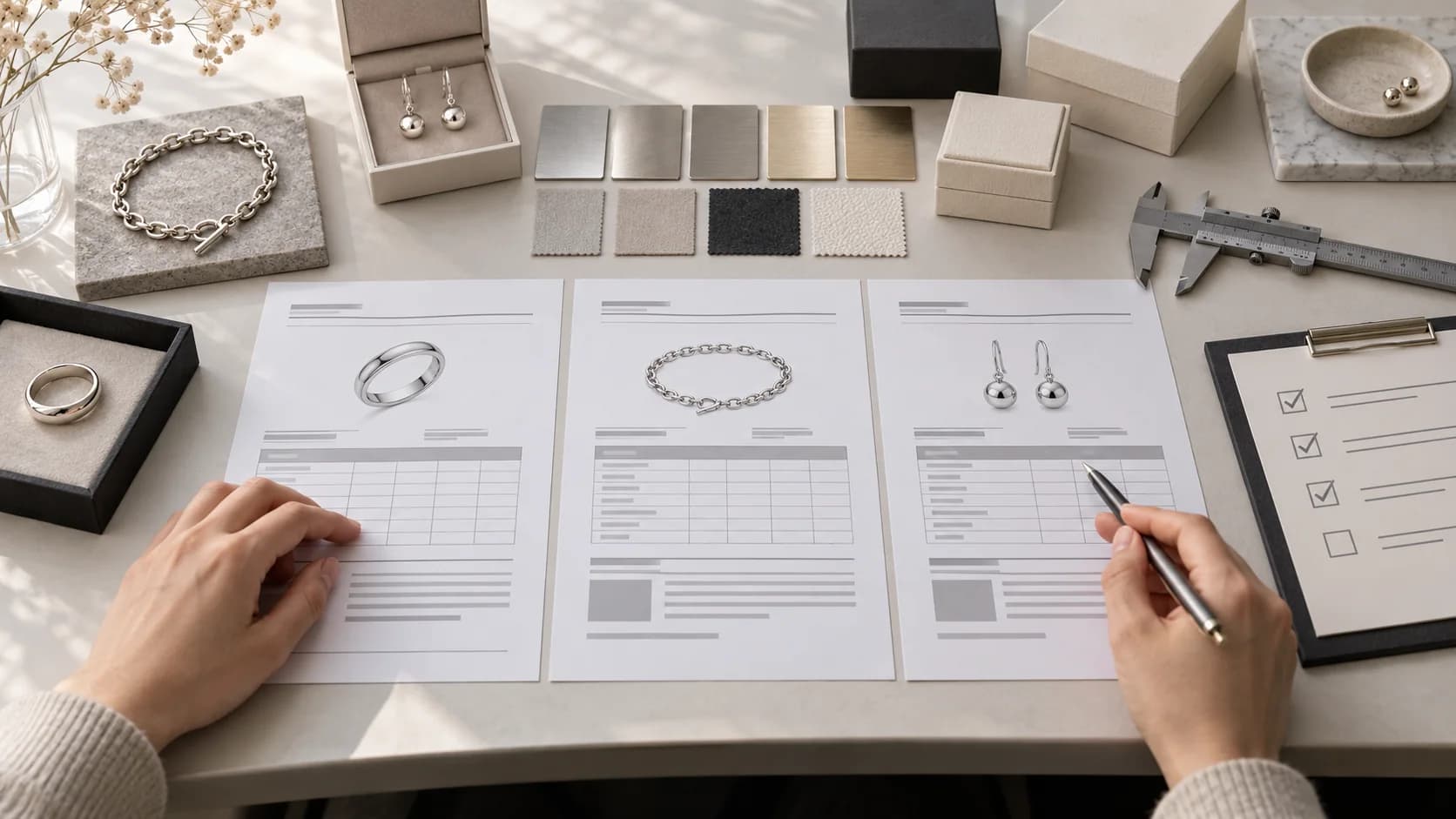
A quantity of 100 is ambiguous when a style has five ring sizes, two plating colors and two packaging versions. Show the total and the split by style, size, color, finish and pack-out. Ask whether the MOQ applies per style, per variant, per material batch or across the order, and whether mixed sizes are allowed. This is essential for comparing quotes and planning inventory.
Zalson publishes a production MOQ of 30 pieces per style as its general starting point. A project quotation still needs to confirm how variants, materials, stones and packaging affect that basis. Do not copy the headline MOQ into a purchase plan without the written split for the actual collection.
Process flow
From reference to award-ready quotation
A disciplined RFQ leaves room for technical dialogue while protecting comparability. Use clarification questions to improve one master file, then send the revised version to every active bidder. Do not let one private supplier conversation change the product basis for only part of the field.
1. Frame
Identify the product, buyer objective, reference rights, quantity, market and target decision date.
2. Specify
Create the tech pack or controlled brief; mark confirmed, optional and open fields.
3. Issue
Send the same RFQ number and response table to each shortlisted manufacturer.
4. Clarify
Consolidate questions, update the master revision and record each supplier deviation.
5. Normalize
Align material, quantity, cost lines, MOQ, timing, payment, validity and exclusions.
6. Develop
Select the sample route, document approval criteria and keep the final quote tied to the approved specification.
Commercial investigation
Evaluate the route behind the number
A quotation is one input to supplier evaluation. Review whether the manufacturer can support the required category and development route, how CAD and sample revisions are handled, which product-specific QC checkpoints will be recorded, and how changes are approved. Request evidence with a clear scope; a company capability or historical item report should not be presented as proof for a new product or future batch.
Zalson supports custom, OEM, ODM and private-label enquiries from Guangzhou. Buyers can submit an existing catalog URL, sketch, reference image, CAD drawing or physical sample. Use the RFQ to state which route is intended, then request a project-specific confirmation of feasibility, price, MOQ, sampling and production timing.
- Does the supplier identify assumptions before pricing?
- Are sample, revision and production approval responsibilities clear?
- Does the proposed QC plan address the actual design risks?
- Are material, stone and certification claims tied to the correct scope?
- Can branding, packaging and logistics be quoted as visible options?
- Is the next commercial action a specification review, sample or production order?
Evidence: ALI Jewelry; Associated Press
Catalog references
Related products
These real catalog products are visual and construction references for specification discussions. Their published product data is unchanged; they are not presented as the exact product used in this guide.
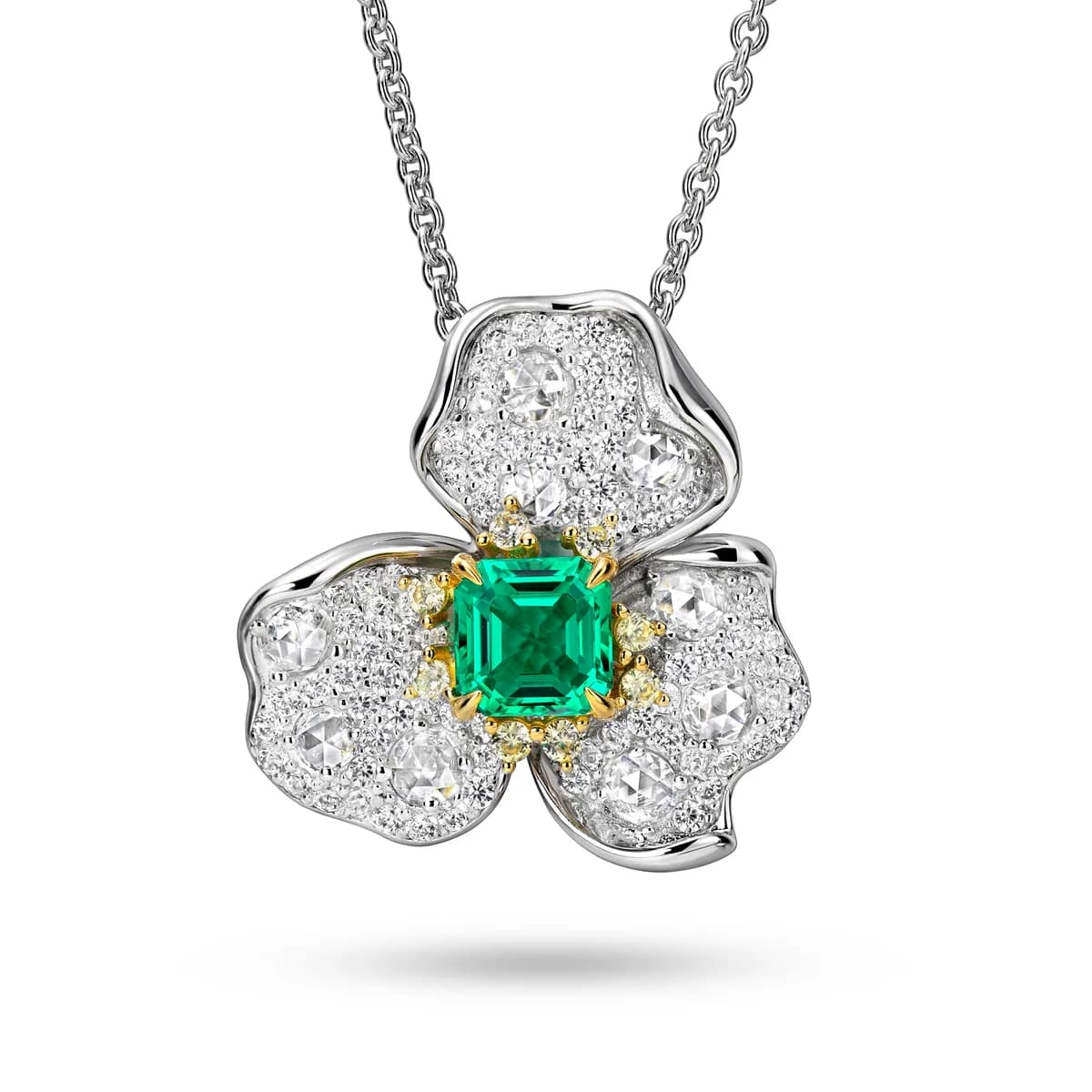
Two-Tone Micro Pave CZ Clover Emerald Pendant
S925 Sterling Silver, Dual Tone Plated, Micro Pave Full CZ Clover, Radiant Cut Emerald CZ Center
View product →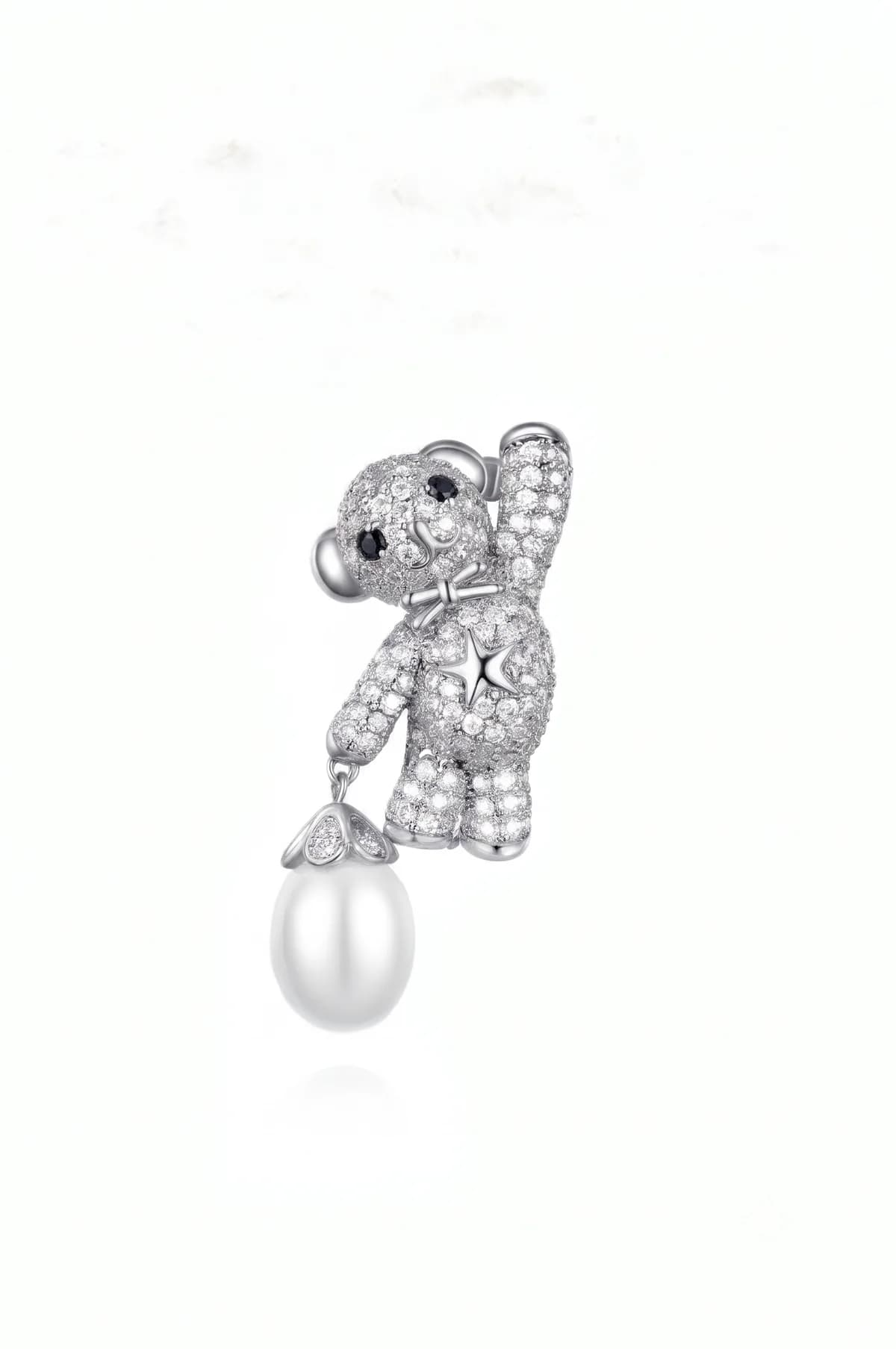
3D Full Pave Diamond Teddy Bear Pearl Dangle Brooch
S925 Sterling Silver, Rhodium Plated, Full Pave Diamond & Pearl
View product →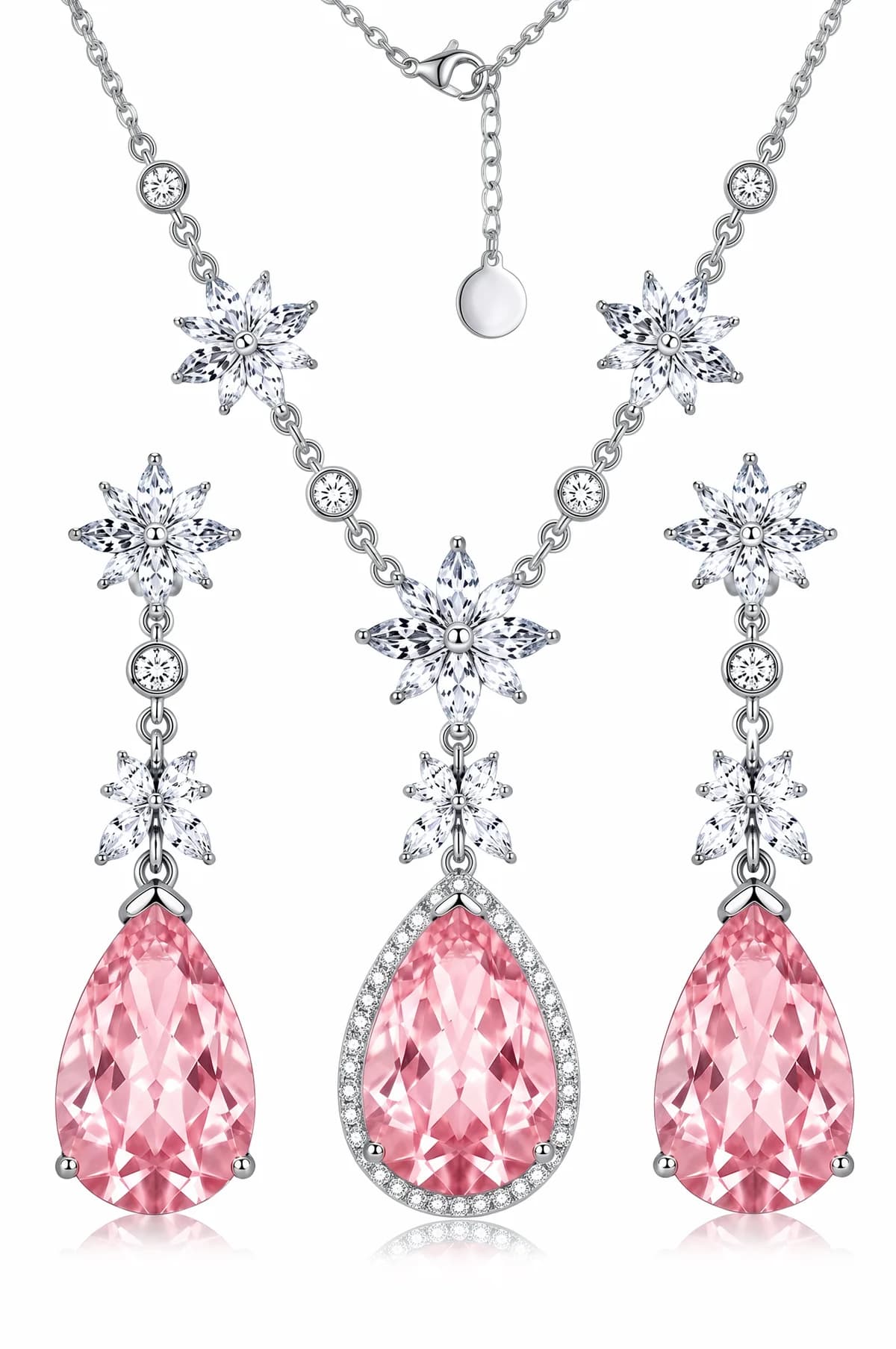
Star Flower Necklace & Earrings Set, Sakura Pink Pear Gem
S925 Sterling Silver, Rhodium Plated, CZ & Sakura Pink Pear Gem
View product →FAQ
Frequently asked questions
What information should I send for a custom jewelry quote?
Send a style ID and revision, reference or design files, dimensions, target material and finish, stone and component details, variants, branding, packaging, sample and production quantities, destination, target timing, quality needs and the cost lines you want the supplier to return.
Can a jewelry manufacturer quote from a photo?
A manufacturer may provide feasibility feedback or an indicative range from a photo, but the quote must state assumptions. Add scale, material, finish, quantity and required features, then clarify the specification before treating the response as comparable or approving development.
How do I compare quotes from jewelry manufacturers?
Confirm that every quote uses the same RFQ and specification revision. Normalize material, finish, weight basis, stones, quantity split, MOQ, development fees, unit price, packaging, QC, delivery, timing, payment, validity and exclusions. Keep supplier-proposed alternatives in separate columns.
Should sample cost and production price be quoted separately?
Yes. Ask for CAD or development, tooling or mold, sample, revisions and delivery as visible lines, then request production unit prices at relevant quantities. The quote should say whether any development charge is reusable, refundable or limited to a specific revision.
What is Zalson Jewelry's MOQ and typical timing?
Zalson publishes a general production MOQ of 30 pieces per style, typical sampling around seven business days and typical production around thirty business days. Materials, variants, packaging and project complexity can affect these starting points, so the project quotation must confirm them.
Expert review
Zalson Jewelry Product Development & Quality Team
Technical editorial team
Reviewed against Zalson Jewelry's documented buyer intake, CAD, sampling, quotation and production workflow. Product specifications remain subject to the approved project brief.
Zalson Jewelry is operated by Guangzhou Zalson Jewelry Co., Ltd., established in Guangzhou in 2017. Content is reviewed by the team rather than attributed to an individual spokesperson.
Sources and further reading
- 1SilverBene: Jewelry RFQ Checklist: What Buyers Should Send Before Asking for a Quote ↗
- 2925 Pro: B2B Custom Jewelry Quote Checklist ↗
- 3DinHuey Jewelry: Jewelry Manufacturer Quotation Brief Checklist ↗
- 4Jinming: How to Compare Quotes From Jewelry Manufacturers ↗
- 5ALI Jewelry: How to Compare Custom Jewelry Manufacturers ↗
- 6Ideambox: Supplier RFQ Checklist ↗
- 7World Gold Council: Gold Demand Trends Q2 2026: Jewellery ↗
- 8Associated Press: Pandora opens Vietnam jewelry factory as manufacturers seek supply-chain resilience ↗
Ready to compare a real project?