Size & Fit Procurement
Bracelet Size Specifications for Jewelry Brands: A Buyer’s Worksheet
A bracelet size on a line sheet can mean wrist target, open chain length, a selected extender position or the internal space of a closed bangle. Those are not interchangeable dimensions. A buyer who sends only a nominal size may receive a visually accurate sample that cannot be compared fairly with another quote or checked consistently in production. This guide helps independent brands define the finished article, its measuring state and its intended fit-review questions before approving a sample. It separates flexible chains from rigid and open forms, then connects size variants to SKU quantities, packaging and revision control. The worksheet is intentionally blank: the right dimensions, allowed variation and acceptance method belong to the particular design and target market, not to an unsupported universal allowance.
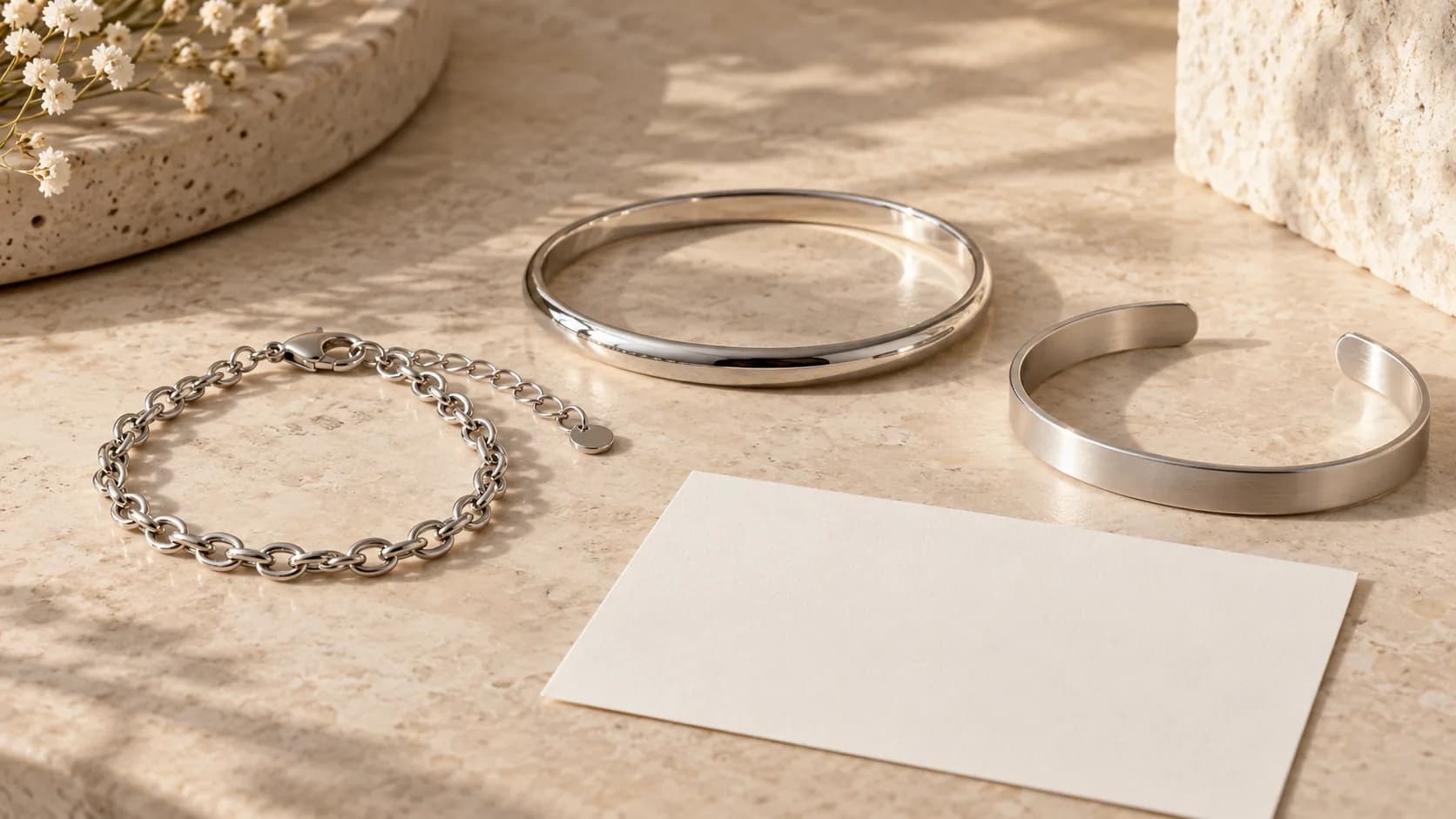
TL;DRThe short answer
Record the target wearer or market separately from the finished article. For a chain, define the open-length endpoints, clasp state and each usable fastening position. For a rigid or open form, define the relevant interior profile and opening instead of importing a chain-length label. Tie every variant to a SKU and quantity, agree the measuring tool and condition, review physical boundary samples, and approve a project-specific range before production.
Direct answer
What should a bracelet size specification include?
Name the construction, target market and SKU; define what is measured, from which endpoints, with the clasp open or closed and under what conditions. Record fixed or adjustable positions and, for a bangle or cuff, the interior shape and opening. Add the sample version, measuring method, quantity split, agreed acceptance range and fit-review decision. Confirm any revision that changes components or packaging before release.
Decision summary
Key takeaways
- Separate the wearer target from the dimensions of the finished bracelet.
- A clasp, end ring and extender change the usable fastening position; define what is included.
- A rigid oval or open cuff needs an interior/opening description, not a chain-size shortcut.
- Approve the smallest and largest intended variants as identifiable physical samples.
- Treat fit and dimensional acceptance as project-specific decisions with recorded methods.
Start with four distinct size questions
Ask whose wrist or market the design targets, what dimension is requested of the loose article, what dimension exists when it is fastened, and what fit outcome the brand expects to review. These questions produce different records. A wrist target does not itself specify a bracelet length; a photographed product does not show its internal space. Record the market and intended wearing scenario as design inputs, then ask the supplier to propose a construction and sample for evaluation.
The public ISO/DIS 25212 page describes bracelet-size definitions, measuring tools and designation, but the document is a draft under development, not a published universal tolerance or an approved Zalson method. Use it only as evidence that measurement terminology matters. A manufacturer's size chart may help explain its own collection, but should not silently become the size rule for a different project. Write a named drawing revision and finished state before asking for a price.
Define endpoints, state, tool and unit
For a flexible bracelet, identify the exact start and end features: for example, the clasp tip to the selected receiving loop, or another pair of agreed reference points. State whether the chain is laid flat, gently extended without force, closed on a specified link, or measured along an internal path. Do not mix a bare chain segment with the assembled bracelet. Specify unit, tool, orientation, support surface and whether charms or detachable parts remain attached during measurement.
Record the visible design length and the usable closed size as separate fields if both are commercially important. An internal circumference inferred from an oval drawing may not match the space of a real hinged or thick-section article. Where the method itself is disputed, compare the same physical sample with the same tool before debating a tolerance. TY Jewelry's current sample-approval guide makes this open-length versus closed-circumference distinction; its recommendations do not establish this project's accepted range.
| Field | Define | Record on |
|---|---|---|
| Wearer target | Market / wrist group / wearing context ___ | Buyer brief ___ |
| Open article length | Endpoint A to B; tool and state ___ | Finished sample ___ |
| Closed usable size | Fastening position; inside path or other method ___ | Assembled sample ___ |
| Adjustment range | Each approved link or setting; not a promise from appearance ___ | Variant schedule ___ |
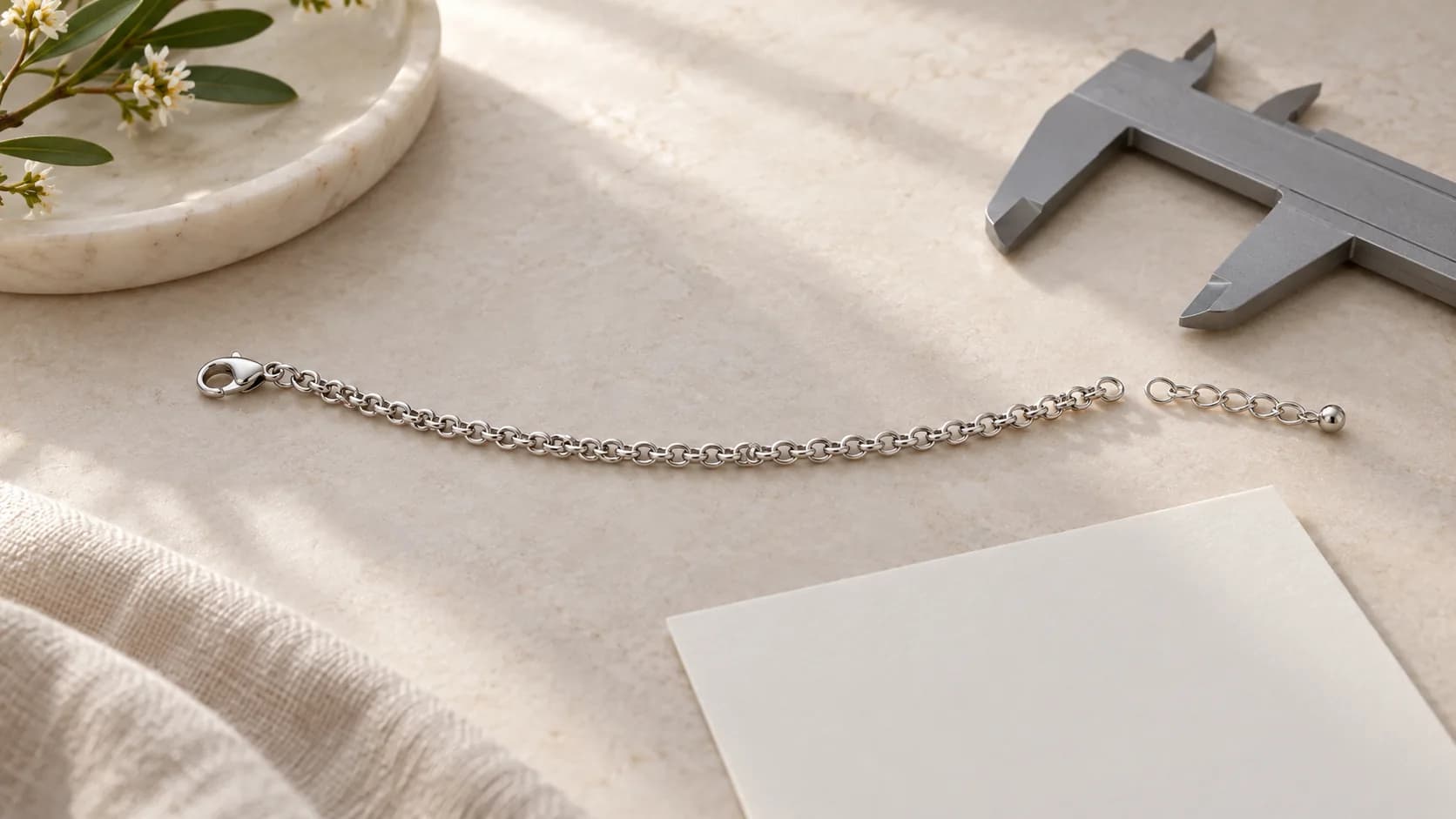
Evidence: TY Jewelry
Account for clasp, end rings and adjustable positions
A chain body, clasp, end rings and extender are separate components but can all affect the wearable result. State whether the quoted open length includes each one. If the buyer needs several fastening positions, identify which actual loops can accept the clasp and how the shortest and longest closed states are defined. A decorative extension chain is not automatically a usable adjustment range. Confirm the selected hardware on a physical sample, including the connection and whether a wearer can operate it in the intended orientation.
Keep this article focused on finished sizing. The chain-and-clasp guide handles link type, section and mating interface in detail. A change from one clasp to another can move the measurement endpoint, change the closed state and reopen packaging fit. It should trigger a size-specification review even if the nominal size label stays unchanged. Do not quote an adjustment range from a catalog photograph or from a different manufacturer's example.
Use interior geometry for a bangle or cuff
A rigid circular bangle, oval bangle, hinged form and open cuff can share a marketing size yet present different passage and wearing questions. State the inside width and depth or another agreed interior profile, where each is taken, and whether the article is closed for measurement. For an open cuff, define the opening location and state as well as the body profile. Do not reduce a non-circular design to a single diameter without agreeing what that value represents.
A flexible chain's perimeter cannot be transferred mechanically to a rigid shape. Review the intended wear and passage using an appropriate physical reference, with the buyer deciding which sizes need a sample. FOPE's brand guide distinguishes bracelet families and acknowledges individual wearing preference; its size recommendations are for its own products, not universal allowances. The adjacent visual is a generic AI scene, not a dimensional template.
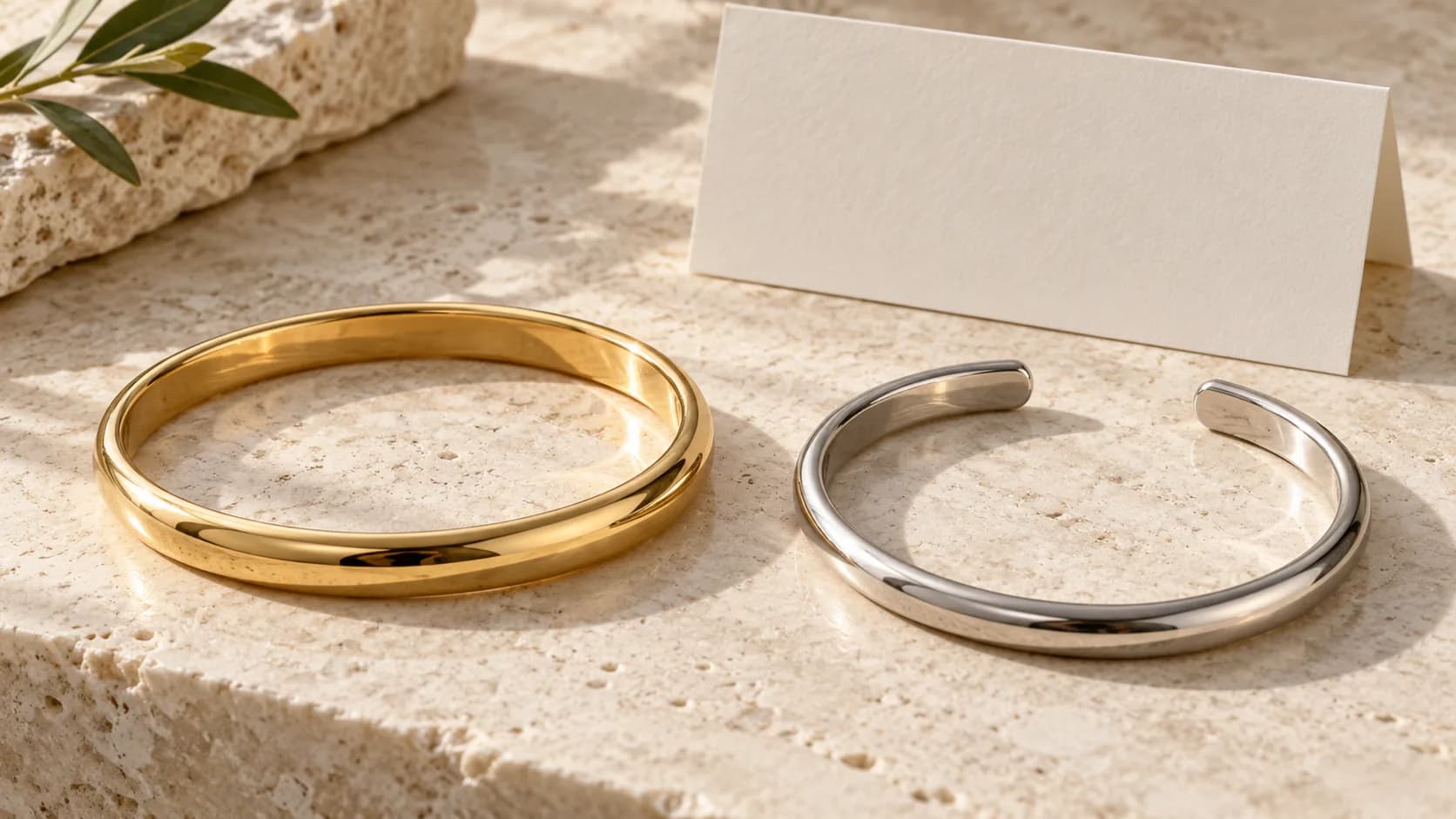
Evidence: FOPE
Connect target market, boundary samples and SKU quantities
Define the target market or channel, whether the brand wants a closer or looser visual drape, and who will judge that outcome. These are sample-review questions, not a formula that guarantees comfort for every wearer. Ask the reviewer to record where the bracelet sits, whether the closure can be reached, whether a rigid form passes over the intended reference and whether an open design keeps the intended appearance. Identify the reference and observation conditions; avoid presenting a single wear trial as population-wide proof.
Make one SKU row per design, size, material/finish and other relevant variant. Put planned quantity and intended packing unit on that same row. Where the smallest or largest size changes link count, ornament spacing, stone count or box fit, request a boundary-size sample or explicit design review. 925 Pro's current buyer guide distinguishes chains, cuffs and bangles and recommends sample review; its numeric dimensions and terms are supplier-specific and are not imported here. A multi-size quote is only comparable if each supplier prices the same matrix.
Evidence: 925 Pro
Agree an acceptance range and dispute method before release
If a finished dimension is critical, record the target, allowed range, tool, reference points, measuring condition and sample coverage together. An attractive approval photo does not establish any of these. Ask the supplier to propose a feasible range where the buyer has only a target; approve or revise it in writing before production. Keep a sample ID and measurement record so receiving teams can reproduce the same check. If two readings disagree, first reconcile tool, state, end points and operator method, then inspect the identified samples.
A size adjustment can affect component counts, clasp alignment, stones or charms, total weight, pricing, pack dimensions and the production schedule. Route material changes through a controlled request, determine which variants and units are affected, then release a new approved file set. SSJew's recent manufacturing-brief article illustrates why photos alone do not settle measurements; its example tolerances are not adopted as Zalson policy. This is a buyer method, not a guarantee of a specific acceptance number.
Evidence: SSJew
Complete a blank bracelet-size worksheet
Copy the blank fields into the RFQ, tech pack or sample-approval record. Mark a field as proposed, confirmed or unresolved; an empty measurement must not be silently guessed from a reference photo. The form records different physical questions for flexible, rigid and open construction while keeping the commercial unit on the same page. A supplier should be able to identify the exact sample, variant and method used for any result.
At approval, attach the physical sample ID and the controlled drawing or photograph used only for appearance comparison. Record the buyer decision and unresolved exceptions. If a component or packaging change comes later, retain the old record and issue a revision that states which fields are reopened. The purpose of the worksheet is repeatability, not an untested claim that one style fits every market.
| Question | Buyer input | Supplier proposal / approved record |
|---|---|---|
| Identity | Style ___ / SKU ___ / revision ___ / market ___ | Sample ID ___ / owner ___ |
| Construction | Chain / rigid / hinged / open ___ | Drawing and components ___ |
| Length or interior | Endpoints / interior axes / opening ___ | Tool, unit, state and values ___ |
| Adjustment | Fixed or selected positions ___ | Usable shortest / longest ___ |
| Acceptance | Fit-review goal; boundary variants ___ | Method, range, sample coverage ___ |
| Order | Size × finish × quantity ___ | Pack fit, price and release ___ |
Compare sizing decisions by construction
The following scenarios are decision prompts, not standardized dimensions. A fixed chain needs a single identified fastening position; an extender requires each intended usable position; a bangle needs interior geometry and passage review; an open cuff needs an opening definition and physical shape review. A product with stones across the circumference may need a layout revision when size changes. Do not copy a size value or link count across these forms without confirming the geometry.
Use catalog pieces only as visual references. The linked bracelet cards show existing designs but do not prove an unpublished size, an extension range or how a clasp is measured. Request a project-specific drawing and physical sample for the proposed material and variant. A buyer can then compare quotations based on the same finished state rather than on a shared but ambiguous word such as 'medium'.
| Purchase | Define | Sample-review question |
|---|---|---|
| Fixed chain | Open endpoints and closed fastening state | Is the finished position as intended? |
| Adjustable chain | Each usable link / shortest and longest | Can the clasp operate at each claimed position? |
| Rigid bangle | Interior axes, profile and closure state | Does it pass and sit on the defined reference? |
| Open cuff | Interior form and opening state | Does the proposed shape match the agreed reference? |
Release a measurable size version, not a loose label
Send the supplier a style reference, target market, proposed size variants and unresolved measurement questions. Ask for a dimensioned proposal that names tool, endpoints and finished state. Review physical samples, including boundary variants where form or hardware changes. Agree any acceptance range and check coverage before approving a production baseline. Link the resulting SKU matrix to quotation, order, inspection and packing records.
When a clasp, extender, bangle profile or ornament layout changes, identify the affected sizes and reopen their reviews. The buyer should be able to explain what was approved, by whom, on which sample and for which order quantity. No universal wrist allowance, fit promise or hidden catalog dimension is implied. Use the enquiry page to request a project-specific specification conversation rather than relying on these illustrative images as measurements.
- Separate wearer target, open length and closed usable size.
- Define measuring points, tool, unit and physical state.
- Record clasp and extender contributions to each usable position.
- Use interior/opening geometry for rigid or open forms.
- Map size variants to SKUs, quantities and pack units.
- Approve boundary samples, acceptance method and revision together.
1. Brief
Name target market, form and size variants.
2. Define
Fix endpoints, interior geometry and measuring state.
3. Propose
Request dimensioned construction and SKU matrix.
4. Sample
Review fit and boundary variants physically.
5. Approve
Record range, method, sample ID and buyer decision.
6. Control
Reopen affected sizes when parts or packing change.
Catalog references
Related products
These real catalog products are visual and construction references for specification discussions. Their published product data is unchanged; they are not presented as the exact product used in this guide.
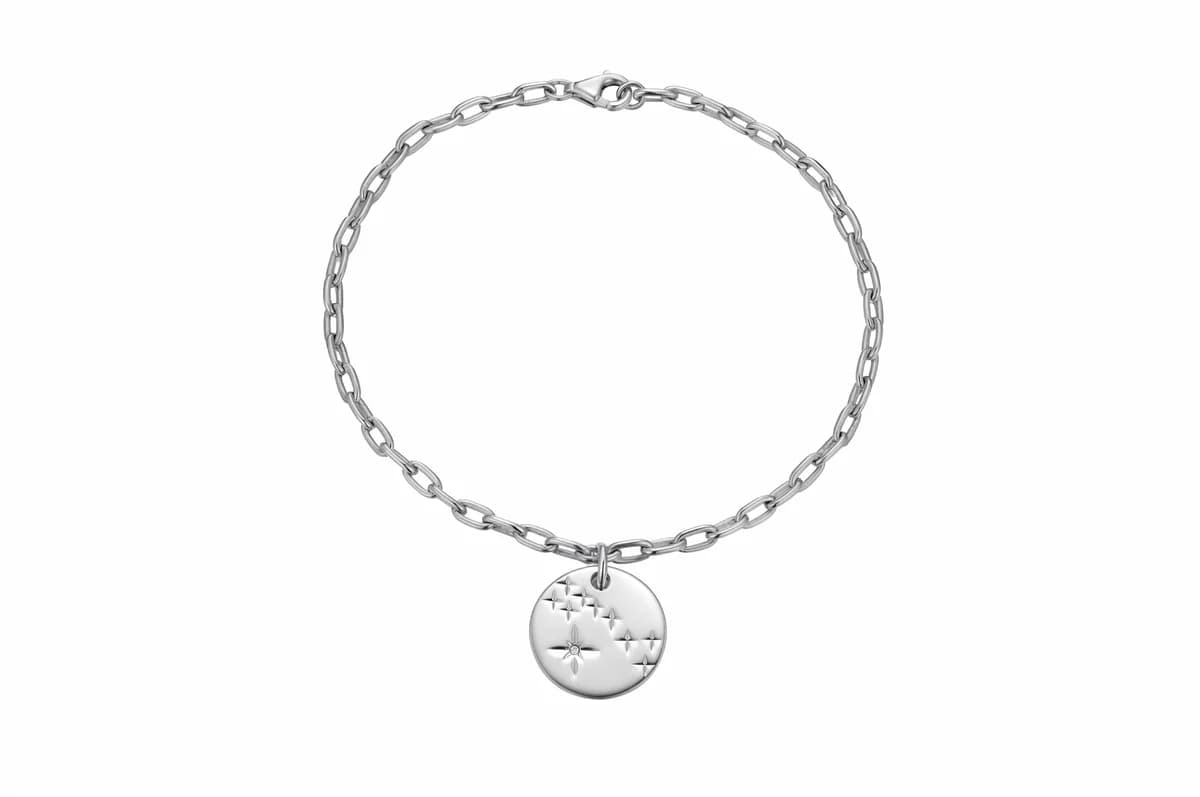
Thick Solid Starburst Embossed Disc Charm Paperclip Chain Clasp Solid Sterling Silver Bracelet
S925 Sterling Silver, Embossed Disc Charm, Paperclip Chain
View product →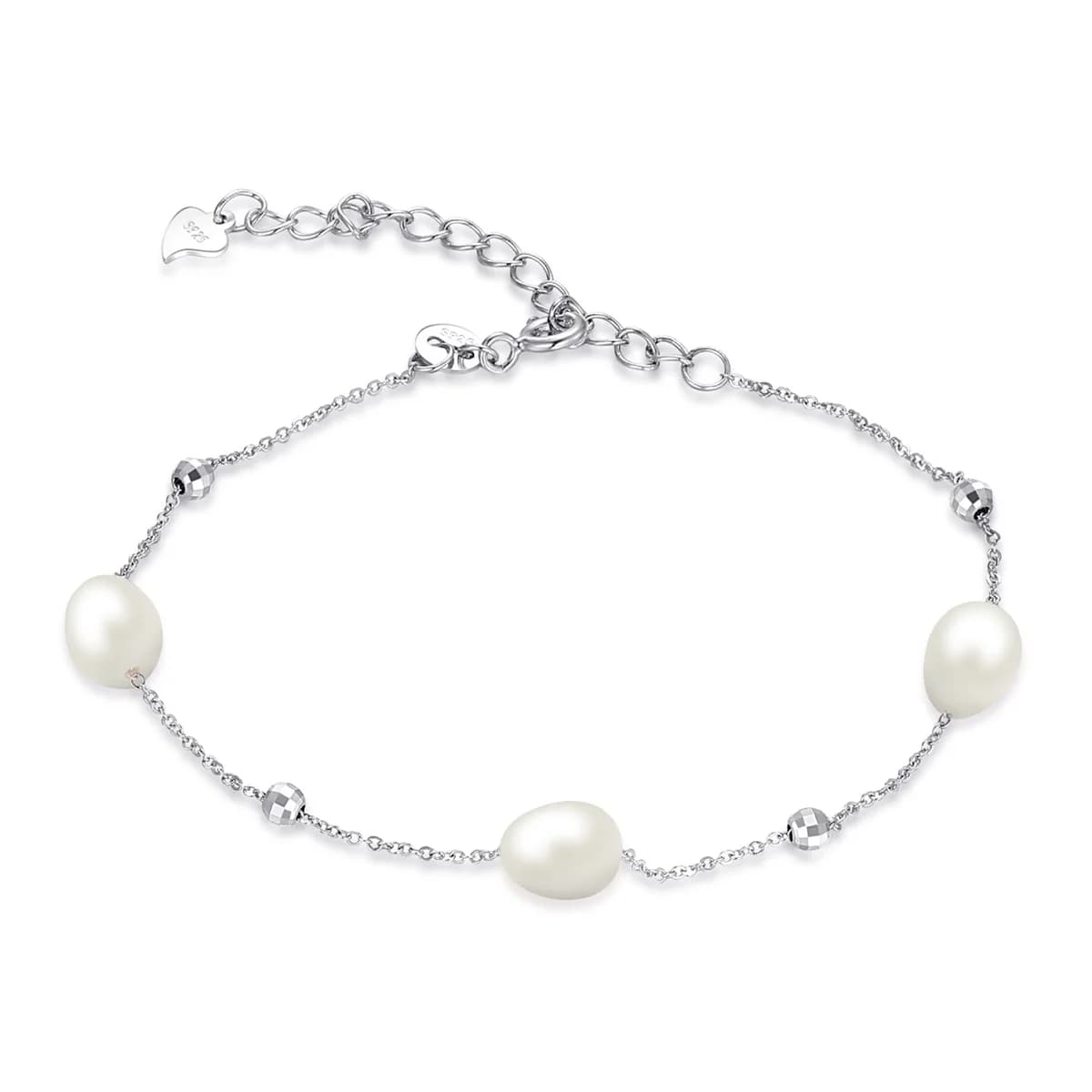
Delicate O-Link Chain Baroque Pearl Heart Tag Bracelet
S925 Sterling Silver, Rhodium Plated, Baroque Pearl
View product →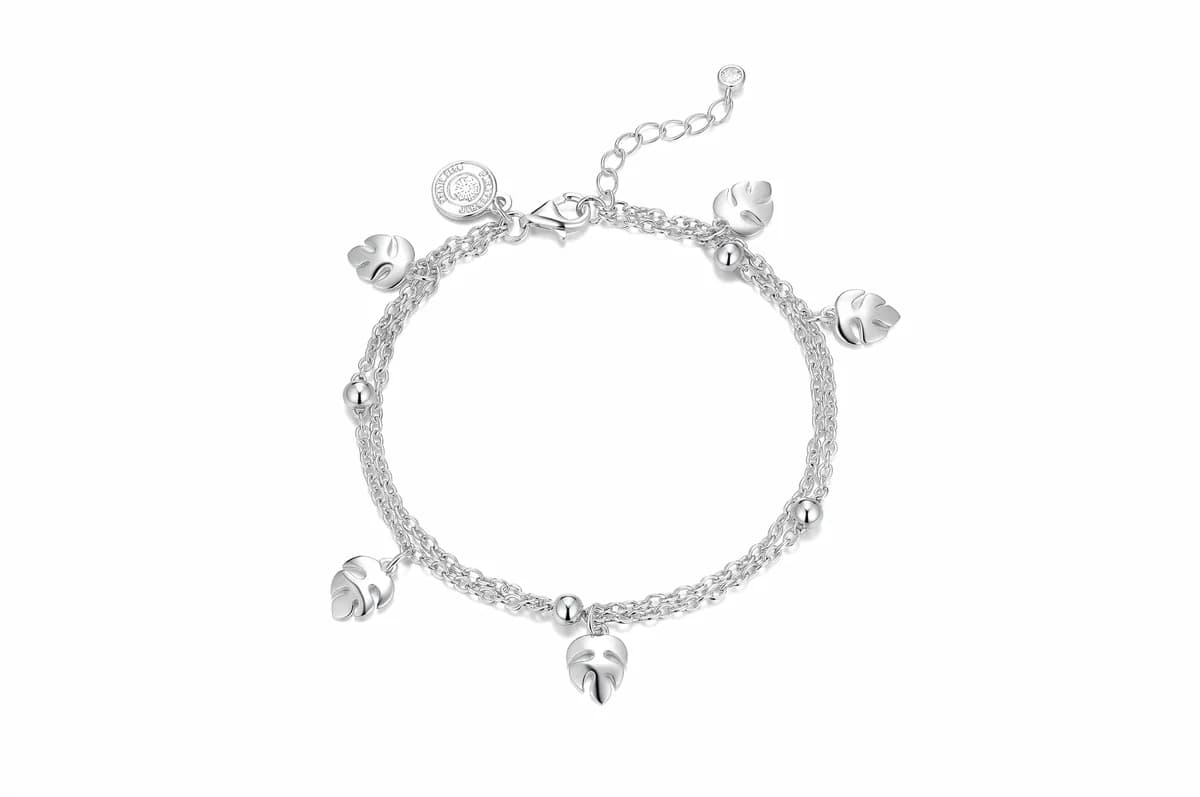
Multi-Layer Shimmer O-Chain 3D Monstera Charm Spacer Bead Disc Charm Adjustable Solid Sterling Silver Bracelet
S925 Sterling Silver, 3D Monstera Leaf Charms, Ball Spacers, Engraved Disc
View product →FAQ
Frequently asked questions
Is wrist circumference the same as finished bracelet length?
No. Wrist size is a target-user input; the finished article has its own defined measurement and fastening state. Record both, then review the proposed fit on a physical sample for the intended design.
Should a bracelet length include the clasp?
Specify the rule explicitly. Name the exact endpoints and whether the clasp, end rings and extender are included; confirm on the assembled sample rather than assuming the supplier uses the same convention.
Can a chain-size chart define an oval bangle or cuff?
No. A rigid or open shape needs agreed interior axes or profile, opening state and a physical passage or wear review. A single chain length or diameter may conceal important geometry.
What tolerance should a brand set for every bracelet?
There is no universal value adopted here. Agree the target, feasible range, method, tool, condition and check coverage for the particular construction and variant before production.
When does a size change require another sample?
Review whether the change affects closure, links, ornament or stone layout, rigid geometry, packaging or the boundary variants. Document the affected scope and approve any required new physical sample before release.
Expert review
Zalson Jewelry Product Development & Quality Team
Technical editorial team
Buyer-side specification and sample-record editorial review. This is not a product measurement, gemstone identification, laboratory result, fit guarantee or legal opinion.
Zalson Jewelry is operated by Guangzhou Zalson Jewelry Co., Ltd., established in Guangzhou in 2017. Content is reviewed by the team rather than attributed to an individual spokesperson.
Sources and further reading
- 1ISO: ISO/DIS 25212 public abstract — draft bracelet-size terminology; not a published tolerance ↗
- 2FOPE: Bracelet size guide — brand-specific sizing examples ↗
- 3TY Jewelry: Jewelry Sample Approval Checklist — open versus closed measurement context ↗
- 4925 Pro: Custom Silver Bracelet Manufacturing — construction and sample questions ↗
- 5SSJew: How to Communicate Jewelry Design Requirements — measurement and brief context ↗
Planning bracelet variants?