Size & Fit Procurement
Ring Size Specifications for Jewelry Brands: A Buyer’s Checklist
A ring-size label is useful for merchandising, but it is not a complete manufacturing instruction. A brand may order a nominal size across several markets while the supplier is working from a different gauge, an intermediate CAD diameter or a ring whose interior is not uniformly round. These are distinct questions, and a conversion table cannot settle them. For private-label buyers and product developers, the safer starting point is a written specification that connects a named size system with a finished measurement method, an actual sample and a variant matrix. This guide provides that record, including blank worksheet fields, boundary-size checks and a decision path for revisions. It addresses supplier communication rather than consumer finger measurement or a promised fit for every wearer.
TL;DRThe short answer
Name the market size system and reference version, then define the finished ring measurement, tool and sample condition. Keep the nominal label, internal dimensions, CAD target and final acceptance distinct. Review band width and interior shape on physical samples, especially boundary sizes. Link every size to a SKU and quantity, agree the measurement range and dispute method, and reapprove affected design features after a size change.
Direct answer
What belongs in a jewelry ring-size specification?
Record the named size system and reference, nominal label, agreed finished measurement and units, tool and measurement position, ring condition, band profile, target variants and SKU quantities. Review representative physical samples and boundary sizes, document the project-specific acceptance range and dispute method, and identify which dimensions, settings, finish and packaging need renewed approval if a size or structure changes.
Decision summary
Key takeaways
- A size code, internal diameter and internal circumference are different fields.
- A conversion chart does not replace a named method or approved physical sample.
- Width, interior contour and non-round geometry can change the review question.
- Check the finished piece, not only an intermediate CAD or casting state.
- Tie each approved size to its SKU, quantity and current revision.
Separate the size label from the measured ring
Begin with the target market, the exact size notation and the reference table or standard edition the parties intend to use. A number without a named system may mean different things to different buyers. Record units next to every dimension; do not let an unqualified number stand for a circumference in one file and a diameter in another. Internal diameter describes a line across an opening at a defined position. Internal circumference describes a path around its interior. A nominal market label is a designation, not an observed measurement of this physical piece.
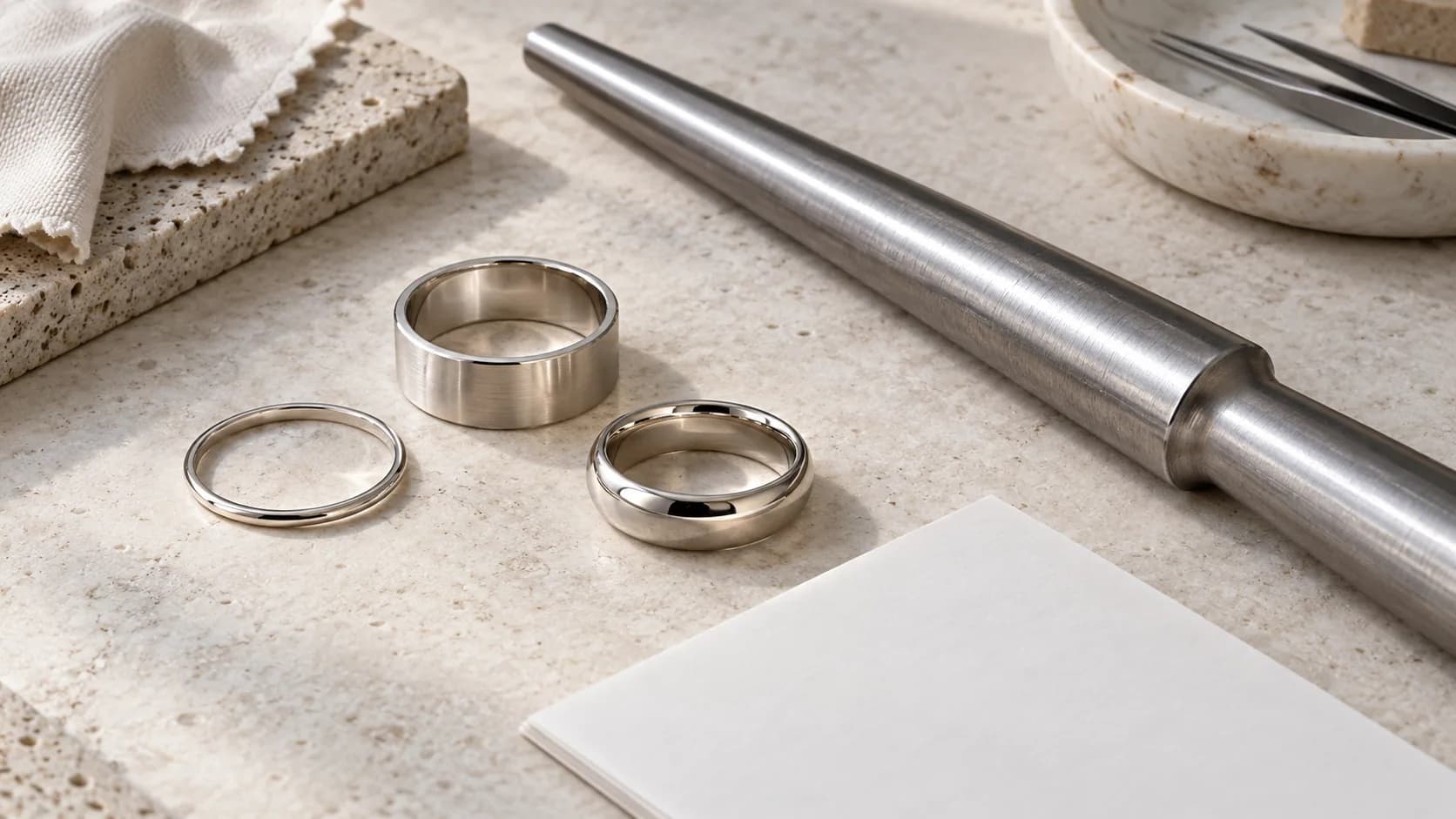
The public ISO 8653:2016 abstract describes ring-size measurement using a ring stick and the designation of ring size, mainly in manufacturing. Its public page identifies the published edition; it does not give us authority to claim that we read the paid clauses or to copy a tolerance from them. Agree the applicable method with the responsible supplier and reviewer. If a design has a different interior geometry from the chosen reference, mark the exception for a project-specific decision rather than silently applying an ordinary round-band conversion.
| Field | What to identify | Do not treat as |
|---|---|---|
| Market label | Country/system and reference edition ___ | A measured physical diameter |
| Interior dimension | Diameter or circumference, position and units ___ | An unlabeled size number |
| Finished acceptance | Measurement state, method and agreed range ___ | The CAD drawing alone |
Evidence: ISO
Specify a method before using a conversion chart
Conversion tables can help map a sales catalog to a manufacturing brief, but published tables do not all use the same reference assumptions. Select one named table and version for the order, then record what physical property will be checked on the finished sample. A converted label should be presented as a translation for review, not as proof that two independent gauges produce an identical fit. Ask the supplier to flag a conflict between the label and the specified measured outcome before production; do not resolve it by choosing whichever number is easier to quote.
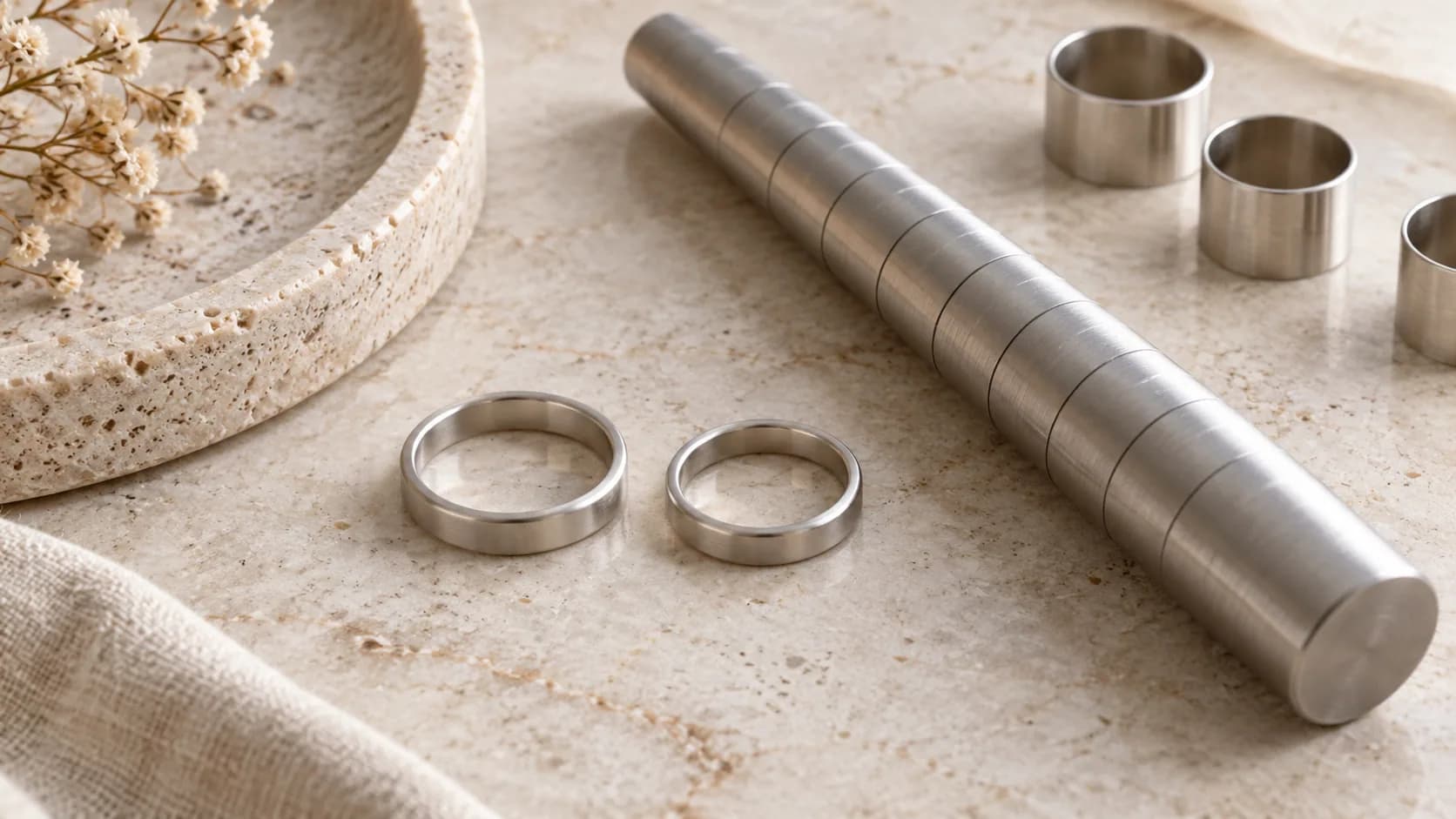
State the tool, its calibration or reference status, the point of contact with the ring, orientation, reading rule and who records the result. If the buyer and supplier use different tools, agree a reconciliation or retained sample procedure. Stuller advises matching ring gauges to a calibrated mandrel and considering widths and fits. That is a useful method question, not a universal instruction to purchase one brand's equipment. Record a photo or measurement note with the actual sample ID; neither an unlabeled photo nor a finger-size guess completes the inspection record.
Evidence: Stuller; GetJewelDesigns
Describe width, interior profile and the measurement state
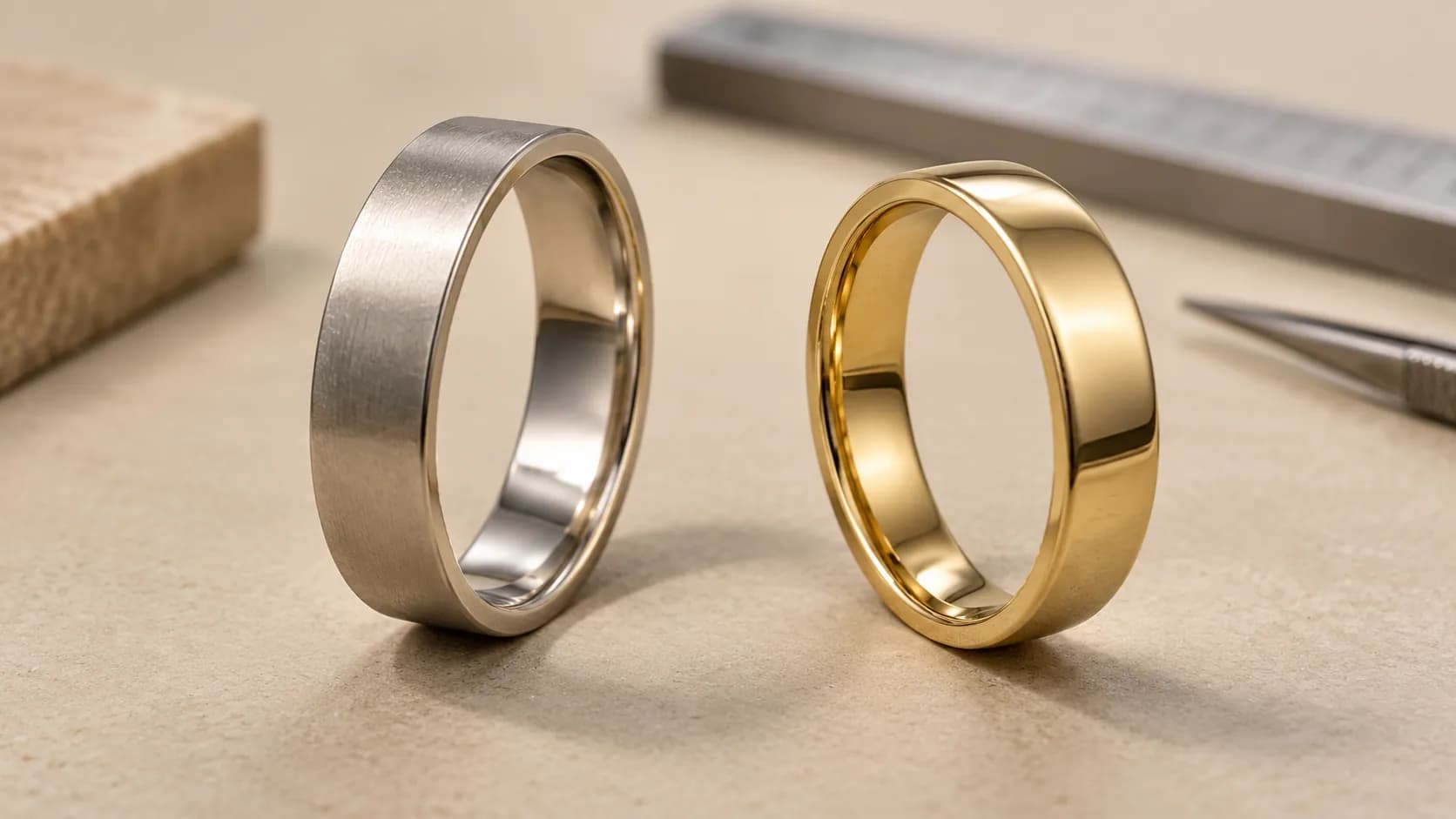
A slim uniform band, a wide shank, a tapered ring and a convex interior should not automatically share the same fit review. Record the axial width at the relevant positions, the shank section and any designed variation around the opening. Ask the reviewer where the gauge contacts the interior and whether a different profile changes the observable feel on the chosen sample. GIA separates wide, tapered and convex-interior ring considerations and warns that a chart-based inside measurement depends on a perfectly round interior. This is a reason to check the geometry, not an endorsement of a fixed size increase for every wide band.
Also identify the production state. A CAD target is a design input; an unfinished trial or casting is an intermediate artifact; a polished and finally finished ring is the proposed selling piece. Ask when the requirement is verified and whether any finishing step could change the relevant opening or surface. Record the finish state, temperature or other conditions only if they matter to the agreed procedure. A supplier's process allowance, if any, belongs to its controlled method and measured evidence, not hidden inside the brand's target size.
Evidence: GIA
Flag open, adjustable and non-round designs explicitly
For a non-round or intentionally open design, a single diameter may not describe the useful opening. Ask the design and manufacturing reviewers to propose labeled views, reference orientations and a physical comparison method for the actual configuration. Record whether any opening position is part of the approved design and how it is stated to the buyer. A photographed gap must not be treated as evidence of adjustability, a guaranteed range or permission to bend the piece. If the supplier cannot verify an intended range, leave that statement out of the product brief and listing.
A size change in CAD can affect more than the interior opening. The recent Rendora manufacturer discussion distinguishes a controlled shank edit from whole-model scaling that would also move stone seats and other geometry. Use that as an issue list, not as a validated workflow for a Zalson design. Identify protected stone dimensions, setting interfaces, ornament positions and visual proportions; then request a marked proposal for each size or size family. Refer the updated model and sample through the established CAD and sample approvals rather than assuming one enlarged drawing covers all variants.
Evidence: Rendora
Build the SKU matrix and choose samples that expose risk
Create a row for every ordered size, style, finish and other variant combination that requires a separate SKU. Put the nominal label, target measured result, quantity, reference sample and current revision on the row. Keep unknown quantities blank for quotation rather than inventing a market split. If minimum quantities apply per style, size or finish, ask the supplier to define that basis before comparing offers. A size matrix is also a packing and receiving tool: a correct total piece count does not prove that the required distribution of sizes was delivered.
Choose sample sizes with the actual geometry and production risks in mind. A central size may reveal appearance while a boundary size exposes a different stone or shank relationship. Ask whether the smallest, largest, widest-band and any open configuration need distinct physical review. Document who evaluated fit, on what sample and against which agreed criteria; an individual's subjective comfort note is not a population-wide fit promise. Use the sample approval checklist for the decision record and the quality plan for subsequent verification coverage, rather than turning every exploratory try-on into a blanket bulk acceptance.
Agree the acceptance range and a repeatable dispute check
Define which measurement controls acceptance, the allowed range if one is agreed, sample or lot coverage, the reading rule and what happens when a result sits near a boundary. Do not borrow a tolerance from an unrelated ring, internet chart or intermediate CAD file. A difference between two tools may be a method difference rather than a product defect. Identify the reference gauge or retained sample, the person who can remeasure, and how the buyer and supplier exchange an out-of-range record. Preserve both the initial and repeat observations instead of silently overwriting one.
Separate a measured dimension dispute from a wearer's fit preference. The latter may reveal a design or merchandising issue even if the stated finished measurement is met. Agree who reviews the affected SKU, whether additional physical samples are needed and what order scope is paused while a decision is pending. A change in size or shank may reopen stone setting, exterior appearance, finish, packaging and production timing questions. Record that dependency through a design change request; do not assume an unapproved size correction leaves everything else untouched.
Use a blank ring-size specification worksheet
The worksheet is a request for project evidence, not a completed set of Zalson measurements. Fill it with the target market, a named reference, the physical measurement method and the specific SKU matrix. Attach a dimensioned view or retained sample ID where available. An empty field needs an owner and a next action; copying a measurement from a visually similar catalog ring would not resolve it. Keep the buyer's requested target distinguishable from the supplier's proposed way to achieve and inspect it.
When the quotation changes, keep its applicable size-range assumption and variant quantities with the worksheet revision. A supplier may need to propose separate size families, patterns or sample sets; the correct scope is project-specific. The brand should ask which assumptions influence price, sample work and production release rather than adopting an unstated universal resizing ability. Retain the approved record alongside the purchase order, then use it at inspection and reordering. This avoids comparing a new delivery against the wrong version of a nominal size label.
| Record | Buyer request / reference | Supplier proposal / approval |
|---|---|---|
| Market and size system | Market ___; system/table/edition ___ | Confirmed reference ___ |
| Finished dimension | Metric, unit, position and state ___ | Method/tool and reading ___ |
| Band and geometry | Width, section, interior, opening ___ | Views and sample IDs ___ |
| Variant matrix | SKU, label, quantity, finish ___ | Size-family assumptions ___ |
| Acceptance | Range, coverage, repeat check ___ | Owner and decision ___ |
| Revision | CAD, sample, inspection, pack ___ | Released version and date ___ |
Review different purchase scenarios against different evidence
A single narrow band, a multi-size collection and an open design do not have the same specification gap. The narrow band still needs a confirmed system and finished-state check; the collection needs a size-to-SKU matrix and boundary sample plan; the open design needs an agreed geometric description before a conventional label can be trusted. Do not turn this table into a claim that one configuration is easier or more comfortable for all wearers. It is an agenda for asking the supplier what must be checked.
Keep the catalog references below in the right role. They illustrate different visible ring silhouettes available on this website, not measured examples, sizing case studies or proof that their sizes can be altered. Request current product-specific data before basing any purchase decision on them. If a buyer wants a new size range, show the reference style and intended market in an RFQ, then ask for a technical and commercial response for that exact proposal. An existing listing cannot authorize a new size or performance claim.
| Purchase scenario | Priority definition | Physical review |
|---|---|---|
| One regular band | Named system, finished measurement | Actual profile and tool comparison |
| Multi-size launch | SKU matrix, quantity, boundary sizes | Representative and edge variants |
| Open or non-round form | Reference orientation and accepted geometry | Actual proposed configuration |
| Revised ring design | Changed dimensions and dependent features | Reapproval where affected |
Close the size brief before production release
Start with the market and required variants, not a conversion result in isolation. Obtain a proposed dimensioned record and sample plan from the supplier, then compare the actual samples using the agreed method. Note all unresolved labels, boundary samples and fit observations; request an explicit decision by the authorized buyer contact. A signed-off middle size does not automatically approve unreviewed extremes. Only the identified versions and quantities should progress to production according to the parties' agreed gate.
For a Zalson enquiry, send the style reference, destination market, size system, target variants, quantities and any existing physical reference. State which dimensions are known and which need a supplier proposal. Ask what can be sampled and measured before relying on a catalog image. The value of this brief is clarity: product development, buying, inspection and pack-out can all refer to one approved size matrix, while unknowns remain explicit. No universal sizing allowance, fixed tolerance or all-person fit guarantee is implied by the workflow.
- Identify the target market, size notation and reference edition.
- Define the finished dimension, measurement tool, position and state.
- Map each size to its SKU, order quantity and current revision.
- Select physical samples, including project-relevant boundary configurations.
- Agree acceptance range, repeat check and named decision owner.
- Recheck stone, finish, packaging and timing dependencies after a size change.
1. Define
Name market, system, variants and the current product reference.
2. Measure
Agree finished-state method, tool, point and reading.
3. Propose
Receive CAD and sample plan without inventing allowances.
4. Review
Compare physical samples and boundary-size behavior.
5. Approve
Release a versioned SKU matrix and acceptance method.
6. Verify
Check production and packing against the released record.
Catalog references
Related products
These real catalog products are visual and construction references for specification discussions. Their published product data is unchanged; they are not presented as the exact product used in this guide.
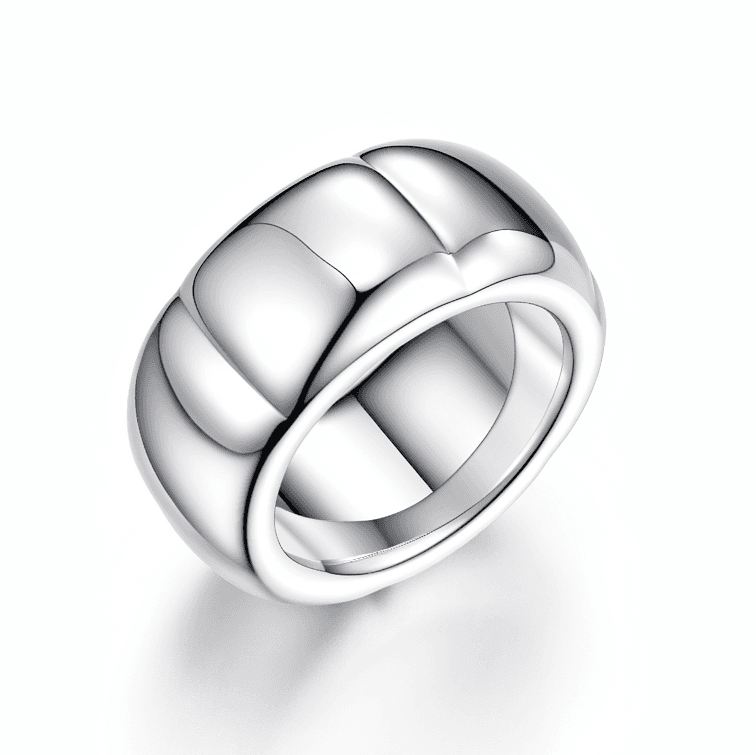
Wide Grooved Dome Band Signet Ring
S925 Sterling Silver, Rhodium Plated, High Polish Dome
View product →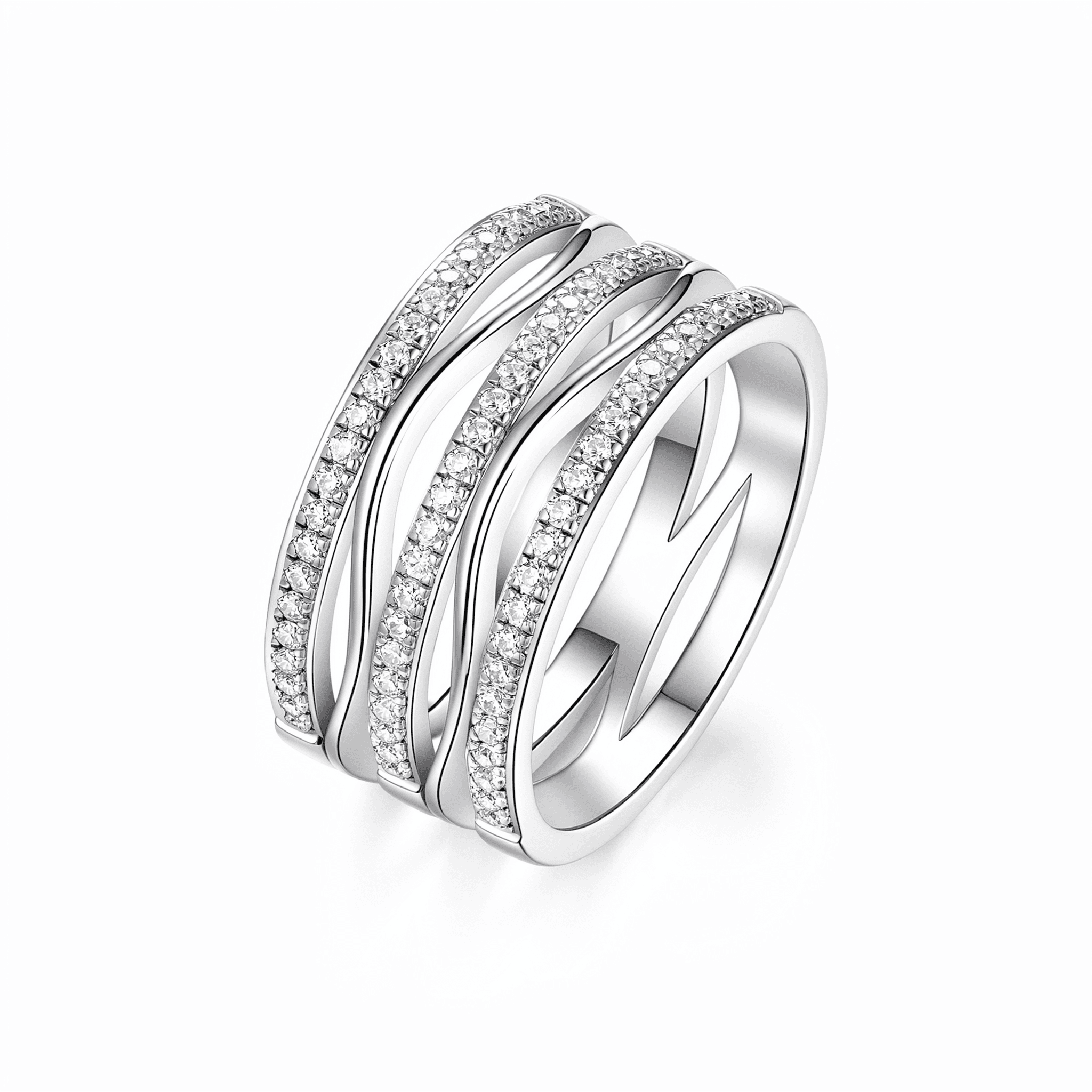
Three-Layer Parallel Pave CZ Open Band Ring
S925 Sterling Silver, Rhodium Plated, Full Pavé CZ
View product →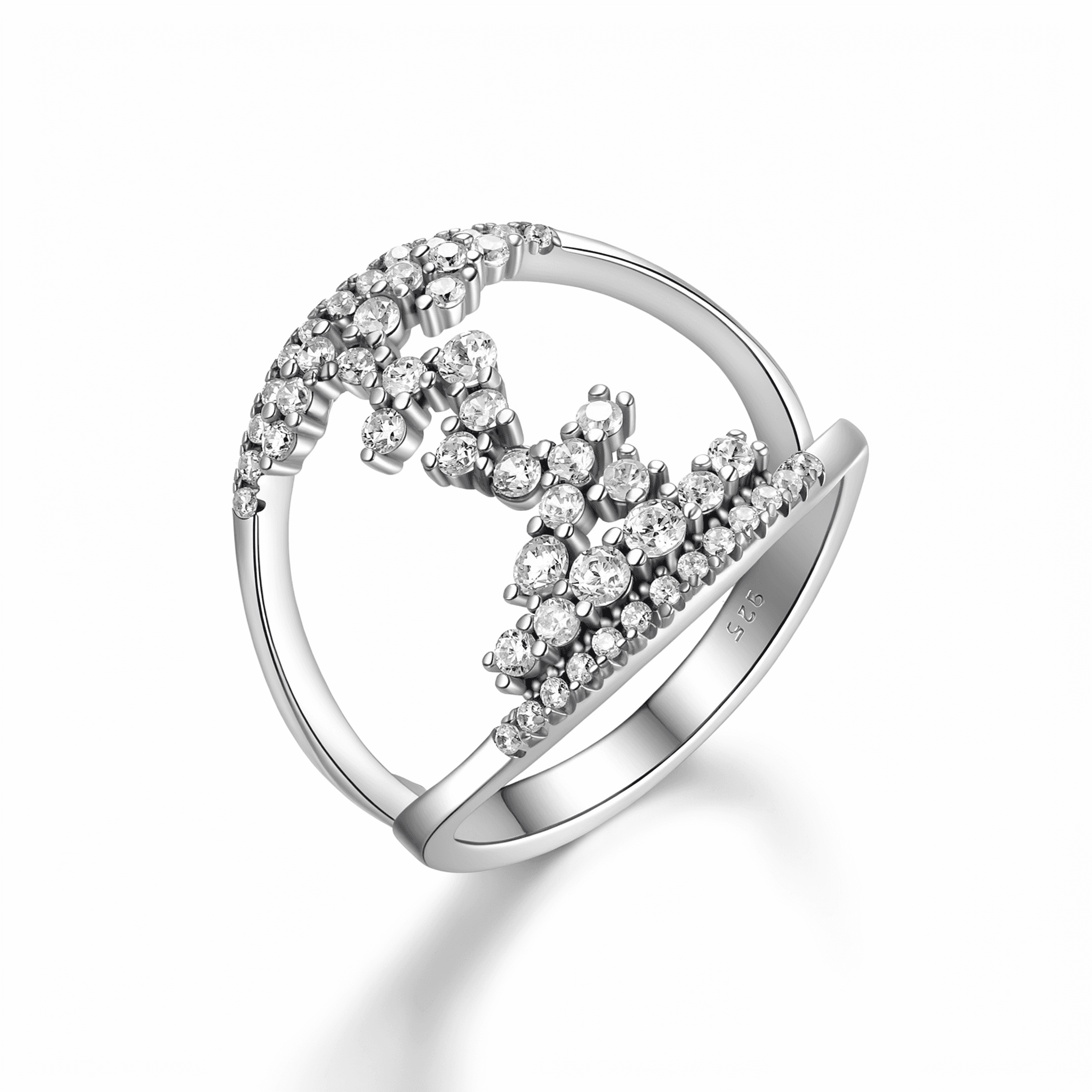
Moon & Star Cluster Pave CZ Open Band Ring
S925 Sterling Silver, Rhodium Plated, Full Pavé CZ
View product →FAQ
Frequently asked questions
Is a ring size label enough for a factory order?
No. Identify the market size system, reference version and the finished physical measurement and method. Link the label to the actual SKU and approved sample so a shared number does not conceal different measurement conventions.
Can I use an online conversion chart as the final acceptance criterion?
Use a named chart to translate a market label for discussion, then agree the physical measurement, tool and sample that control the order. A chart alone cannot verify a non-round interior or guarantee the intended fit.
Should a wide band always be ordered a fixed size larger?
No universal increase is specified here. Band width, section and interior profile belong in a project-specific physical review. Ask the supplier for the proposed sample and method rather than adopting an allowance from an unrelated design.
Does an open or adjustable-looking ring have a known size range?
Not from an image. Define the intended geometry, allowed configuration and measurement method, then confirm any claimed range on a physical sample. Do not infer adjustability or resizing capability from a visible opening.
What changes when a brand adds another ring size?
Update the size-to-SKU matrix, quantity and version. Ask which CAD geometry, stone seats, band profile, finishing, sample checks, packaging and schedule dependencies need renewed confirmation before adding the size to an approved order.
Expert review
Zalson Jewelry Product Development & Quality Team
Technical editorial team
Buyer-side specification and evidence-scope editorial review. This is not a product measurement, laboratory result, medical advice, legal determination or fit guarantee.
Zalson Jewelry is operated by Guangzhou Zalson Jewelry Co., Ltd., established in Guangzhou in 2017. Content is reviewed by the team rather than attributed to an individual spokesperson.
Sources and further reading
- 1ISO: ISO 8653:2016 — public abstract and current edition status; no paid clauses claimed ↗
- 2GIA: Accurate Determination of Finger and Ring Sizes — different profiles and round-ring chart boundary ↗
- 3Stuller: How To: Ring Size Reference Guide & Chart — tools and width considerations ↗
- 4GetJewelDesigns: Ring sizing for CAD — manufacturer perspective; numeric allowances not adopted ↗
- 5Rendora: Resize a Ring in CAD Without Scaling the Stones — current peer perspective ↗
Planning ring variants?