Production Planning
Jewelry Production Lead Time: How Brands Plan Approval Gates
Jewelry production lead time becomes useful only when the buyer and supplier agree what the clock includes and what allows it to start. A collection launch depends on more than workshop activity: design decisions, stone availability, packaging approvals and shipment preparation can all sit between an enquiry and usable stock. This guide helps independent brands and sourcing teams build a schedule around approval gates rather than add an advertised sample estimate to an advertised production estimate. It provides a blank planning worksheet, order scenarios and a change-review method. Use them to distinguish your requested date from a supplier-confirmed plan, assign unresolved dependencies and keep a revision from silently becoming a delivery promise.

TL;DRThe short answer
Define the interval before asking for days. Separate development, sampling, bulk work and logistics; identify start conditions, owners, dependencies and release evidence. Keep target, forecast, confirmed and actual dates distinct. Parallelize only work with stable inputs and an accepted risk. Allow project-specific review and contingency, then re-confirm downstream dates whenever a change, shortage or failed check alters the approved plan.
Direct answer
How should a brand plan jewelry production lead time?
Plan jewelry production lead time from defined start conditions and approval gates, not a generic number of days. Record the specification, material and packaging dependencies, buyer review windows, production checkpoints and shipment handover. Assign owners and distinguish requested, forecast, confirmed and actual dates. Reassess the affected path after changes or failed checks before communicating a revised delivery expectation.
Decision summary
Key takeaways
- An estimate without its start condition and completion event is not a usable schedule.
- Approval waiting, material supply and packaging belong in the plan alongside production work.
- Parallel work needs stable inputs and an explicit owner for the risk of revision.
- A buyer target, supplier forecast and acknowledged commitment are different records.
- Factory readiness, carrier handover and arrival need separate confirmation.
Define which interval the jewelry lead time describes
Ask the supplier to name the beginning and end of each estimate. Development may include feasibility review, CAD and decisions that define the product. Sampling concerns the agreed physical trial and its review; clarify whether revisions, transport and buyer response time are included. Bulk production has its own readiness conditions. Logistics covers a separate route after the goods reach the agreed handover point. These intervals can interact without being interchangeable.
Record working-day or calendar-day usage, the relevant working calendar and the date of the estimate. Do not assume two durations from different pages can simply be added: the same activity might appear in both, or neither may include material sourcing. Royi Sal's published FAQ ties its production estimate to approvals, payment and materials. That is a useful example of why start conditions matter, not a timetable or commercial condition that can be transferred to Zalson.
| Interval | Beginning to define | Completion to define | Question often omitted |
|---|---|---|---|
| Development | Accepted brief and agreed development scope | Released design inputs for the next step | Are open decisions and revisions included? |
| Sampling | Authorized trial with usable inputs | Specified sample delivered or approved, as agreed | Does this include shipping and buyer review? |
| Bulk work | Agreed production-start conditions satisfied | Defined manufacturing / packing release | Are materials, QC and packing included? |
| Logistics | Named handover or carrier event | Defined receiving point or event | Who confirms the route and clearance assumptions? |
Evidence: Royi Sal
Write a production-start gate before recording the finish date
Use a short start-readiness record: order and specification revision, sample decision, material and component confirmation, quantity matrix, packaging status, agreed commercial conditions and supplier acknowledgment. Identify which fields must be complete before bulk work is authorized and which may remain open under a limited written instruction. A quotation date is not proof that these conditions have been met or that capacity has been allocated.
Mark each input confirmed, proposed or open, with its owner and next action. If a critical input is open, show its effect on the forecast rather than inventing an actual start date. Ask whether the estimate assumes procurement before or after release. The RFQ checklist establishes comparable inputs, while the purchase order checklist defines the order being authorized. This guide connects those records to the calendar instead of replacing them.
- Start event and evidence required: ___
- Specification, order and sample references: ___
- Unresolved dependency / owner / next review: ___
- Supplier acknowledgment and date basis: ___
Separate genuine parallel work from decisions that must wait
Map the inputs each task consumes before deciding to overlap it. Stone dimensions may affect a seat; the approved product profile may affect its packaging insert; a finish change may require another physical reference. These are reasons to ask for a dependency review, not reasons to assume every custom project follows one fixed sequence. Use the tech pack, CAD approval and gemstone specification guides for the technical inputs themselves.
Some preparatory work can run alongside review if the required inputs are stable. For example, collecting destination-document requirements need not wait for finished jewelry. By contrast, authorizing a final insert while product dimensions remain open can create rework. Name the person accepting any early-release risk and the limit of the authorization. Purchasing an unresolved component early does not make its design approved; it makes the commercial exposure visible.
Put buyer decisions and sample revisions on the calendar
Agree who receives each approval package, what it contains and how feedback is consolidated. Schedule time to inspect the sample, resolve internal disagreements and return a decision tied to its revision. A message approving appearance while leaving material, dimensions or packaging open is not necessarily permission for the next production step. Write the scope of approval and the open actions together.
For every review, record a requested response date and the consequence of a later answer. Do not presume a missed date automatically changes contractual rights; ask the parties to confirm the resulting plan. Include an alternate decision contact when appropriate. The sample approval guide covers the physical review. Here the practical task is to show when that decision becomes available to the next activity and which version it releases.
Build a blank milestone and dependency worksheet
Use one schedule version for the order, with separate lines for tasks that can block another task. Each line needs an input, output, owner, date basis and evidence of completion. The U.S. GAO Schedule Assessment Guide explains how an integrated schedule can reveal whether major events and their supporting activities are realistic and how changes affect the plan. The buyer worksheet below adapts that general planning principle; it is not a jewelry standard or a GAO certification.
Keep duration, waiting time and allowance distinguishable. Add actual completion only when the named event occurred; do not replace a forecast with an actual merely because its date passed. Write a requested date and a confirmed date in separate fields. If you cannot yet estimate an activity, enter the question and review date rather than a convenient number. A schedule should expose uncertainty early, not conceal it behind a tidy finish date.
| Gate / owner | Input → release evidence | Date basis | Dependency / allowance | Status / next action |
|---|---|---|---|---|
| Brief ready / ___ | Version ___ → accepted scope ___ | Target ___ / confirmed ___ | Open design field ___ | ___ |
| CAD decision / ___ | Views ___ → approval ___ | Review window ___ | Stone / structure input ___ | ___ |
| Sample decision / ___ | Sample ___ → signed decision ___ | Trial and review ___ | Revision allowance ___ | ___ |
| Production start / ___ | Order ___ → acknowledgment ___ | Forecast ___ / actual ___ | Material / payment / quantity ___ | ___ |
| Inspection release / ___ | Lot ___ → disposition record ___ | Planned ___ / actual ___ | Rework / recheck provision ___ | ___ |
| Packed and documented / ___ | Pack-out ___ → handover set ___ | Readiness date ___ | Boxes / labels / documents ___ | ___ |
| Carrier handover / ___ | Released shipment ___ → receipt ___ | Booking ___ / actual ___ | Route and cutoff confirmed by ___ | ___ |
Evidence: U.S. Government Accountability Office
Plan first orders, repeat styles and mixed collections differently
Use the actual scope to decide what can be reused. A reorder may retain approved geometry but still need component, finish, quantity and packaging reconfirmation. A first order may have no released baseline at all. A mixed collection may contain one unresolved style that does not prevent other styles from progressing, provided separate authorization, packing and commercial consequences are agreed.
Ask whether splitting release or shipment would help and what it changes: quantities, cost, evidence, packing, documentation and receiving arrangements. Do not assume partial delivery is available or automatically better. The comparison below identifies planning questions rather than assigning a fast or slow label. Follow the reorder checklist for baseline control and the MOQ guide when quantities or variant splits change.
| Scenario | Baseline to confirm | Likely open dependency | Decision needed |
|---|---|---|---|
| Original design | Brief and development deliverables | Geometry, sample and material route | Which trial releases which next step? |
| Repeat approved style | Current specification and retained reference | Current materials, quantity and capacity | Is it genuinely unchanged? |
| Multi-style collection | Separate style status and shared inputs | Slowest unresolved style or common packaging | Combined or separately authorized releases? |
| Late packaging change | Product fit and current pack-out | Artwork, inserts and quantities | Reconfirm readiness; do not assume a swap |
Replan a change before it becomes a missed promise
For a changed stone, clasp, finish or quantity, record the request, affected revision and work already completed. Ask the supplier to identify procurement, sample, process and packing steps that need another decision. Keep the prior schedule as the baseline, then show a proposed revision and its assumptions. A changed finish is not only a new color in a spreadsheet; it can require a different approval path.
Treat a failed check as a decision point. Identify the affected goods, correction plan, reinspection scope and release authority, then obtain a new forecast for dependent tasks. Do not remove inspection to recover a date or describe held goods as ready to ship. Use the quality control plan and plating specification guide for the requirements themselves. The scheduling record should explain what changed, who approved the response and whether the revised downstream dates are confirmed.

Keep factory readiness, dispatch and arrival as separate milestones
Ask what ready means: manufacturing completed, inspection released, packed, documents approved or physically available for collection. A carrier booking is not an actual pickup, and pickup is not arrival at the buyer's receiving location. Record who supplies the logistics estimate and which route, cutoff, destination and receiving assumptions it uses. Leave clearance and final-mile uncertainty visible rather than hiding them inside the production figure.
The U.S. International Trade Administration notes that document requirements vary by destination and shipment and should be established in advance. Use that principle as a planning dependency, not as a universal document list for a China-origin order. The shipping documents checklist connects the final physical shipment to the information that the buyer, exporter and logistics parties need to review. Schedule that review before the agreed handover, not as an afterthought when the cartons are waiting.
Evidence: International Trade Administration
Use status updates that reveal the next constraint
A useful update names the current approved version, completed event, next blocking input, owner, forecast impact and next review. Ask for evidence suited to the event instead of a percentage-complete claim that mixes finished, waiting and held units. Keep buyer decisions in the same action log so that delays are addressed as shared dependencies rather than attributed automatically to one side.
Discuss contingency for the actual uncertainty: another review cycle, a difficult sourcing requirement, a packing correction or logistics variation. Do not add an arbitrary standard percentage and call the result guaranteed. Set a review trigger when an assumption fails. In its October 2, 2026 announcement, ICC's Digital Standards Initiative emphasized interoperable trade records. The practical planning inference is to agree the shared record and accepted handover format; moving a file electronically does not itself close an approval gate.
Evidence: International Chamber of Commerce
Bring the schedule questions into the project enquiry
Send the design stage, quantity and variants, material direction, packaging scope, destination and date needed at your receiving point. State which approvals are available and which require a proposal. Zalson's published references are about seven business days for sampling and about thirty business days for production, subject to design and order confirmation. They are separate general references, not a combined delivery guarantee, reserved capacity or proof of current material availability.
The manufacturing process page explains the broader stages, and the catalog references below can anchor the product discussion without assigning them an invented lead time. Ask the team to return a start condition, milestone plan and open-dependency list for the actual brief. That produces a schedule a brand can review and update, rather than a number repeated from a website.
- Before accepting the plan: verify the order, specification and sample revisions match.
- Name every open input, its owner and the next decision date.
- Confirm the start event, completion event and calendar behind each estimate.
- Separate buyer targets from supplier-acknowledged dates and record change triggers.
- Review inspection, packing, document and carrier milestones before announcing arrival expectations.
1. Define the interval
Name the beginning, completion event, calendar and estimate date.
2. Map dependencies
Identify required design, material, approval and packing inputs.
3. Assign gates
Record each decision owner, review window and release evidence.
4. Confirm the plan
Separate targets from acknowledged dates and remaining assumptions.
5. Review changes
Assess affected work and obtain approval for revised forecasts.
6. Handover separately
Confirm packing, documents, carrier event and receiving expectations.
Catalog references
Related products
These real catalog products are visual and construction references for specification discussions. Their published product data is unchanged; they are not presented as the exact product used in this guide.

Pink CZ Swirl Twist Pave Cocktail Ring
S925 Sterling Silver, Rhodium Plated, Full Pave Pink CZ
View product →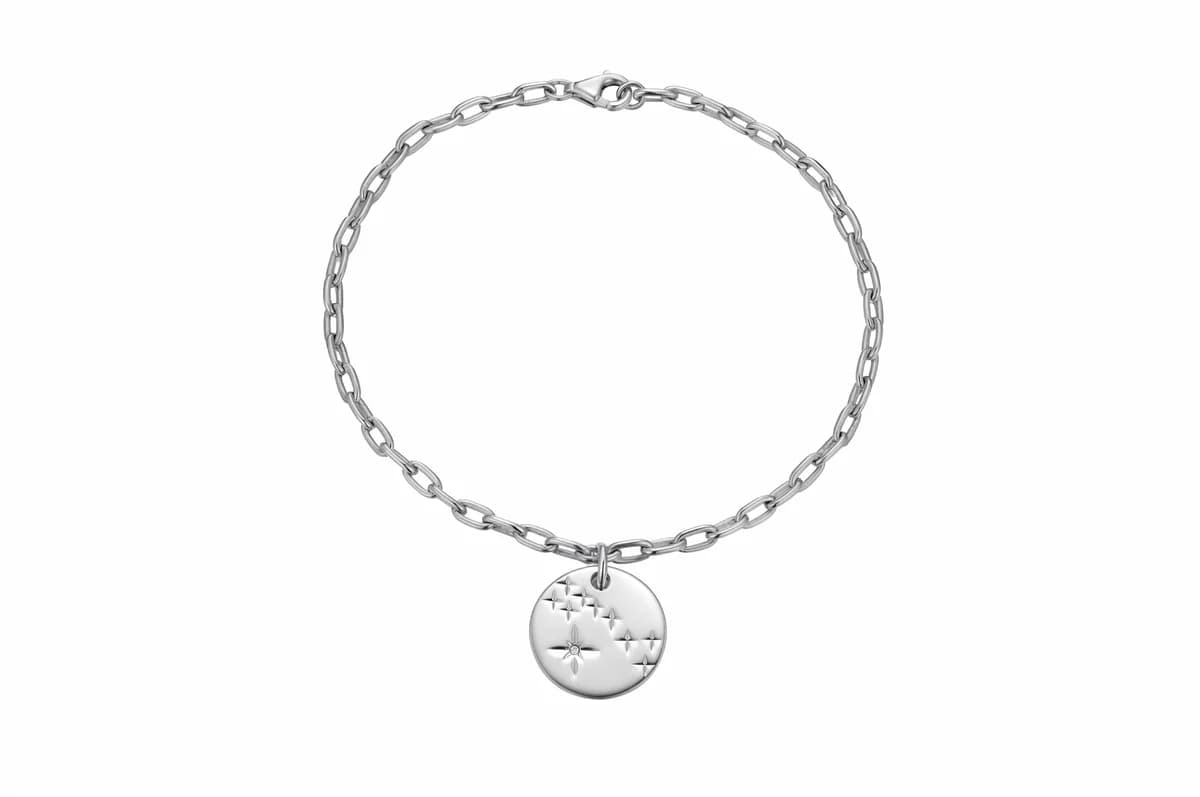
Thick Solid Starburst Embossed Disc Charm Paperclip Chain Clasp Solid Sterling Silver Bracelet
S925 Sterling Silver, Embossed Disc Charm, Paperclip Chain
View product →
Violet Cushion Halo Jewelry Set
Silver-tone design reference; deep violet stone direction. Base metal, stone identity and finish specified to order.
View product →FAQ
Frequently asked questions
When does jewelry production lead time start?
At the event agreed for that order. Confirm the required specification, sample approval, materials, quantity, commercial conditions and supplier acknowledgment. A quotation or enquiry date does not automatically establish a production start.
Does a sample estimate include every revision and shipping?
Not necessarily. Confirm the sample scope, included revision work, transport, buyer review and the event that ends the estimate. Keep development changes visible instead of assuming unlimited revisions fit one advertised duration.
Can packaging run in parallel with jewelry production?
Some work can overlap when its inputs are stable and the early-release risk is agreed. Final insert or box-fit decisions may depend on approved product dimensions. Record the dependency, authorization and consequences of a later change.
Is a factory-ready date the same as an arrival date?
No. Define factory readiness, packing and document release, carrier handover and receiving separately. Logistics estimates depend on the actual route and shipment requirements and should not be inferred from manufacturing time.
What should happen after a change or failed inspection affects the plan?
Identify affected goods and tasks, agree correction or revision work, preserve required checks and obtain a new forecast with its assumptions. Record the owner and approval before communicating a revised confirmed date.
Expert review
Zalson Jewelry Product Development & Quality Team
Technical editorial team
Editorial review covers buyer-side schedule dependencies, approval records and shipment-information handoffs. This is planning guidance, not a confirmed delivery schedule, customs ruling, legal opinion, carrier acceptance or insurance commitment.
Zalson Jewelry is operated by Guangzhou Zalson Jewelry Co., Ltd., established in Guangzhou in 2017. Content is reviewed by the team rather than attributed to an individual spokesperson.
Sources and further reading
- 1U.S. Government Accountability Office: Schedule Assessment Guide — general project-schedule principles ↗
- 2Royi Sal: OEM/ODM FAQs — supplier-specific start conditions, not Zalson timings ↗
- 3Tonglin Jewelry: Production Lead Time — further manufacturer perspective on dependencies ↗
- 4International Trade Administration: Documents in an Export Transaction — U.S. exporter guidance on destination-specific preparation ↗
- 5International Chamber of Commerce: October 2, 2026: Digital Standards Initiative's Next Phase ↗
Planning a collection launch?