Procurement Planning
Jewelry Purchase Order Checklist Before Production Release
A jewelry purchase order should do more than repeat a total quantity and price. It should identify the exact approved product, connect every style and variant to the current specification, define what is included in the commercial offer, and state which evidence authorizes production. For brand founders, buyers and sourcing teams, that record becomes the shared reference when materials, plating colors, stones, sizes, packaging and delivery details cross several files. This jewelry purchase order checklist turns those decisions into a controlled release package while keeping quotations, samples and later changes traceable. Project-specific payment, delivery, inspection and trade terms still require confirmation between buyer and supplier.

TL;DRThe short answer
Build the purchase order from the accepted quotation, released specification and identified approved sample. Include buyer and seller contacts, PO and product references, every style and variant split, quantities, unit prices and exclusions, packaging and label versions, quality and destination requirements, payment and shipping terms, delivery address, change control and order acknowledgment. Production begins only when both sides confirm the same controlled release package.
Direct answer
What should a jewelry purchase order include before production release?
A jewelry PO should name both parties, reference the accepted quote, released specification and approved sample, list every style and variant with quantity and price, define packaging and quality requirements, and record payment, shipping and delivery terms. It should also require supplier acknowledgment, resolve exceptions and state the exact revision authorized for production.
Decision summary
Key takeaways
- Reference the accepted quotation, released specification and identified approved sample instead of copying details from memory.
- List quantities at style, SKU and variant level, then reconcile every line to the PO total.
- State inclusions, exclusions, fees, packaging, labels and pack-out so the unit price has a visible scope.
- Require an order acknowledgment that records exceptions before either party treats the order as released.
- Use formal change control for production changes and preserve the original PO relationship on reorders.
Know the document's job
PO, RFQ, quotation and sample approval are different controls
An RFQ asks suppliers to price a defined opportunity. The quotation records what the supplier offers, its assumptions and its commercial validity. Sample approval records a decision about an identified physical reference. The purchase order is the buyer's commercial instruction for the accepted scope, while the supplier's acknowledgment confirms whether it can execute that instruction without exceptions. Keeping those roles separate makes missing or conflicting information visible before work begins.
A PO should not silently repair an incomplete specification or convert an unapproved sample into a production reference. Link it to the current tech pack, approved sample record, packaging version and accepted quote. If a decision remains open, identify the owner and release condition. A supplier can then respond with an exact acknowledgment rather than assuming that the newest email overrides the controlled record.
| Document | Primary purpose | Buyer check | Release status |
|---|---|---|---|
| RFQ | Request a comparable commercial response | Same scope and variant assumptions sent to each supplier | Not a production authorization |
| Quotation | State offered scope, prices, assumptions and validity | Accepted revision and explicit exclusions | Commercial input to the PO |
| Sample approval | Record the decision on an identified physical sample | Approved features, conditions and unresolved items | Technical reference only within its stated scope |
| Purchase order | Order the accepted product, quantity and commercial scope | All references, totals and terms align | Pending acknowledgment and closed exceptions |
| Order acknowledgment | Confirm supplier acceptance or exceptions | No conflict with PO or released specification | Production may begin when the agreed gate is met |
Evidence: SSJew; 925 Pro; International Trade Administration
Establish one source of truth
Identify the parties, contacts and controlled product references
Start with legal buyer and seller names, billing information, relevant addresses and the people responsible for commercial, technical, quality and logistics questions. Give the order its own PO number and date. Then cite the supplier quote number and revision, product specification or tech-pack ID, approved sample identifier and any packaging specification that forms part of the order. A filename without a revision is not sufficient where several versions have circulated.
Use the buyer's style, SKU and variant codes consistently across the PO, labels and packing information. Where the supplier also uses an internal code, show both without replacing the buyer's identifier. This cross-reference allows receiving teams and later reorders to connect a physical unit to the right commercial and technical record.
- Legal buyer and seller identity, billing and order contacts
- PO number, issue date, quotation number and accepted revision
- Style, SKU and supplier code where applicable
- Released specification or tech-pack ID and revision
- Approved sample ID, approval date and stated conditions
- Packaging, label and artwork version included in the order
Evidence: SSJew; 925 Pro; DinHuey Jewelry
Count what is actually being made
Build a line-by-line matrix for styles, sizes, colors and materials
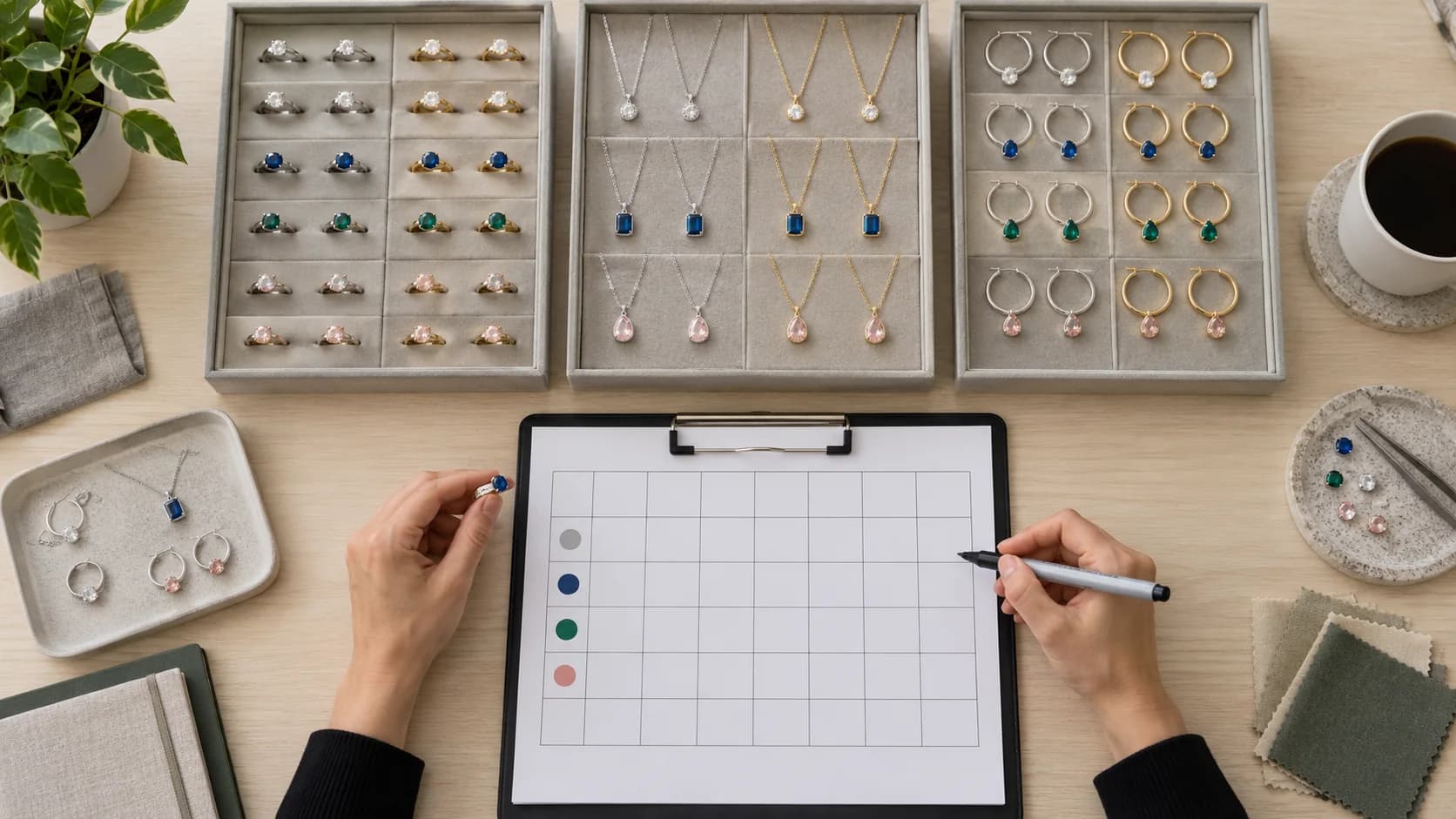
A single style total can hide an unusable assortment. Give each order line the style or SKU, size, material, stone option, plating or finish color, packaging relationship and quantity. If a product has no variation in one field, say so or keep that field controlled by the referenced specification. Add line subtotals and reconcile them with the style and PO totals before release.
Describe materials and finishes with the language supported by the approved product record. For example, a sterling-silver item with a gold-tone plated finish should not be promoted to vermeil unless the relevant product data and market terminology support that description. Quantity changes can also affect confirmed commercial or production assumptions, so route a changed split back through acknowledgment rather than editing an informal spreadsheet after release.
| Line identity | Technical split | Commercial split | Reconciliation |
|---|---|---|---|
| Style and SKU | Size, material, stone and finish revision | Quantity and unit-price basis | Line extension |
| Colorway | Approved color reference and affected components | Quantity by color | Color subtotal |
| Size range | Named sizing system and variant code | Quantity by size | Size subtotal |
| Packaging SKU | Card, pouch, box, label and pack-out version | Units assigned to product SKU | Packaging-to-jewelry match |
| PO total | All released lines | Total ordered units and commercial total | Matches quotation and acknowledgment |
Make the price scope readable
Record price, currency, fees, packaging and exclusions together
For every commercial line, state the agreed currency, unit price and quantity basis, then show extensions and the order total. Separate development, tooling, molds, special packaging, labeling, testing, inspection, freight or other charges when they are not included in the unit price. Repeat the accepted quote's exclusions instead of relying on silence. The objective is not to prescribe one pricing structure but to make this project's structure auditable.
Connect each product SKU to its packaging bill and approved artwork. Identify the card, insert, pouch or box, label data, SKU or barcode source, units per sellable pack, inner grouping and outer pack-out. Barcodes and identifiers should come from the responsible brand or assigned data owner; the supplier should not infer them from a similar product. Confirm counts in the same units used by receiving.
Evidence: International Trade Administration; SSJew; 925 Pro
Define acceptance and handover
Close quality, market, payment, shipping and delivery details
Reference the project's inspection plan, approved workmanship criteria, sampling basis or agreed inspection level, test or documentation responsibilities, destination market and disposition route for nonconforming product. Do not insert a copied test standard or a claim such as hypoallergenic without confirming its relevance, method, scope and evidence. The PO should identify the requirement and owner, while the supporting specification explains the technical detail.
State payment schedule, payment method, named Incoterm and place where agreed, requested shipment window, mode, consignee, shipping contact and complete delivery address. Incoterms allocate defined delivery tasks, costs and risks, but they do not replace the sales contract or automatically settle ownership, payment, product specifications or every customs matter. Use the current agreed rule precisely and record separate responsibilities for freight, insurance, duties, taxes and documents as the project requires.
- Inspection scope, acceptance reference and responsibility for release evidence
- Destination-market requirements and documentation owner
- Agreed payment milestones and currency without relying on a default template
- Named Incoterm and named place where the parties choose to use one
- Shipment window, routing instructions, consignee and final delivery address
- Explicit allocation of freight, insurance, duty, tax and document responsibilities
Evidence: International Chamber of Commerce; International Trade Administration; TY Jewelry; SilverBene
Release and repeat
Use order acknowledgment, change control and reorder references
Ask the supplier to acknowledge the PO by number and revision, confirm the applicable specification and sample, and list every exception. The buyer then resolves exceptions and issues a clear production-release decision. After release, a change request should identify the affected PO lines, old and new requirement, reason, price or timing impact, approvals and effective date. An updated file sent through chat is not a controlled change unless both parties connect it to the order record.
For a reorder, cite the original PO, accepted change orders, released specification and retained sample or approved record. Reconfirm materials, components, finish references, packaging artwork, market requirements, quantities and commercial terms because availability and requirements can change. A reorder reference accelerates review; it does not justify assuming that every earlier condition remains current.
1. Assemble
Combine the accepted quote, released specification, approved sample record and packaging version.
2. Reconcile
Check style, SKU and variant quantities, prices, fees, packaging and totals line by line.
3. Confirm terms
Record quality, payment, delivery, shipping, destination and responsibility details.
4. Acknowledge
Require the supplier to accept the named PO revision or list exact exceptions.
5. Release
Close exceptions and document the precise specification and sample authorized for production.
6. Control changes
Issue formal change records and preserve the complete reference chain for reorders.

Evidence: SSJew; Jinming; DinHuey Jewelry
Buyer action
Prepare a production-release enquiry for Zalson Jewelry
For a Zalson production discussion, send the current style and SKU matrix, released specifications, approved sample references, accepted quotation, packaging and label files, destination market, quality requirements and desired delivery context. Mark any field that is provisional and identify who can approve commercial, technical and packaging questions. The team can then review the project-specific production basis and return open items for closure.
The final order acknowledgment, payment, Incoterm, timing, inspection, documentation and shipping responsibilities are confirmed for the actual order. This article is a planning framework rather than a quotation, contract or universal production promise.
Catalog references
Related products
These real catalog products are visual and construction references for specification discussions. Their published product data is unchanged; they are not presented as the exact product used in this guide.
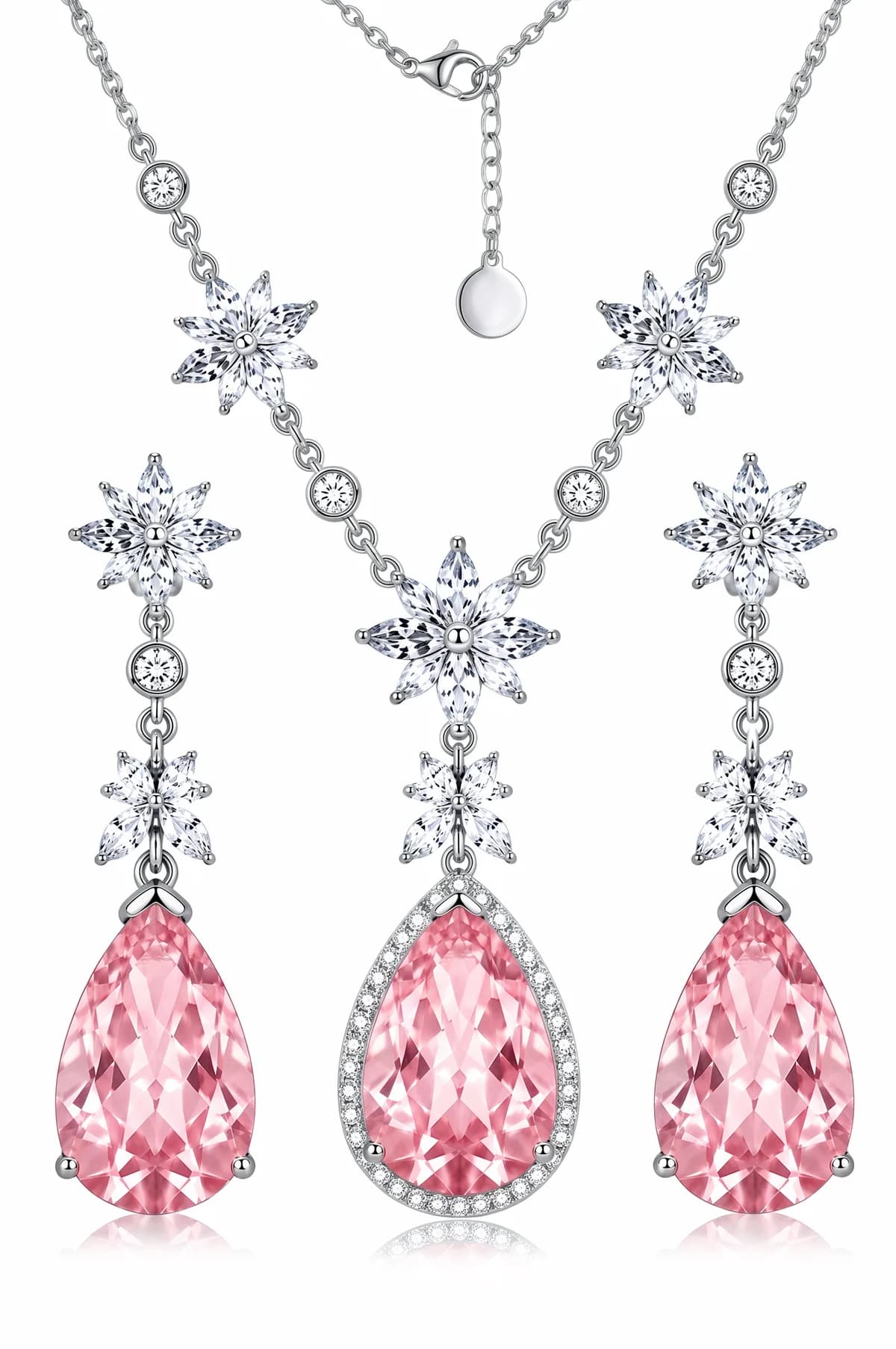
Star Flower Necklace & Earrings Set, Sakura Pink Pear Gem
S925 Sterling Silver, Rhodium Plated, CZ & Sakura Pink Pear Gem
View product →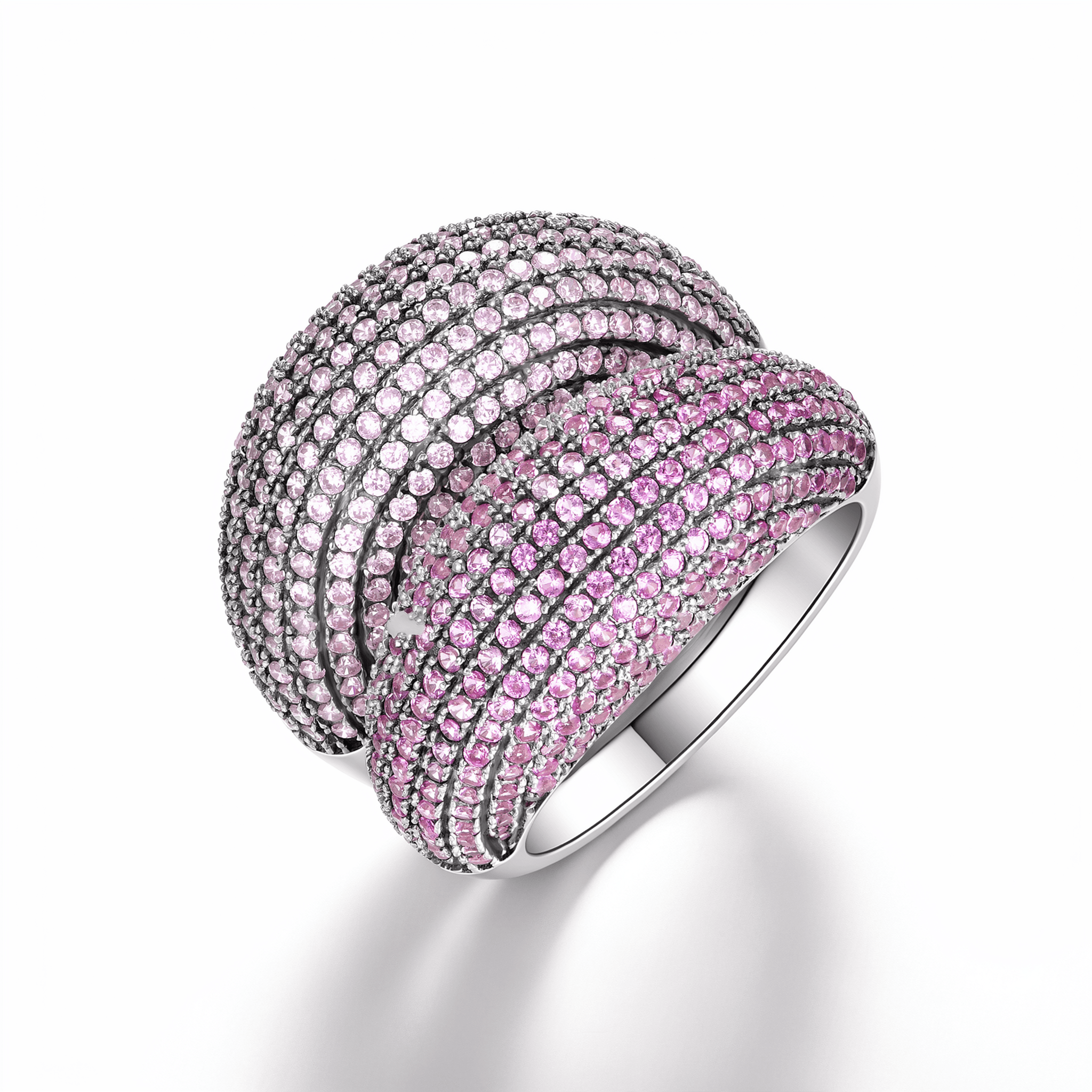
Pink CZ Swirl Twist Pave Cocktail Ring
S925 Sterling Silver, Rhodium Plated, Full Pave Pink CZ
View product →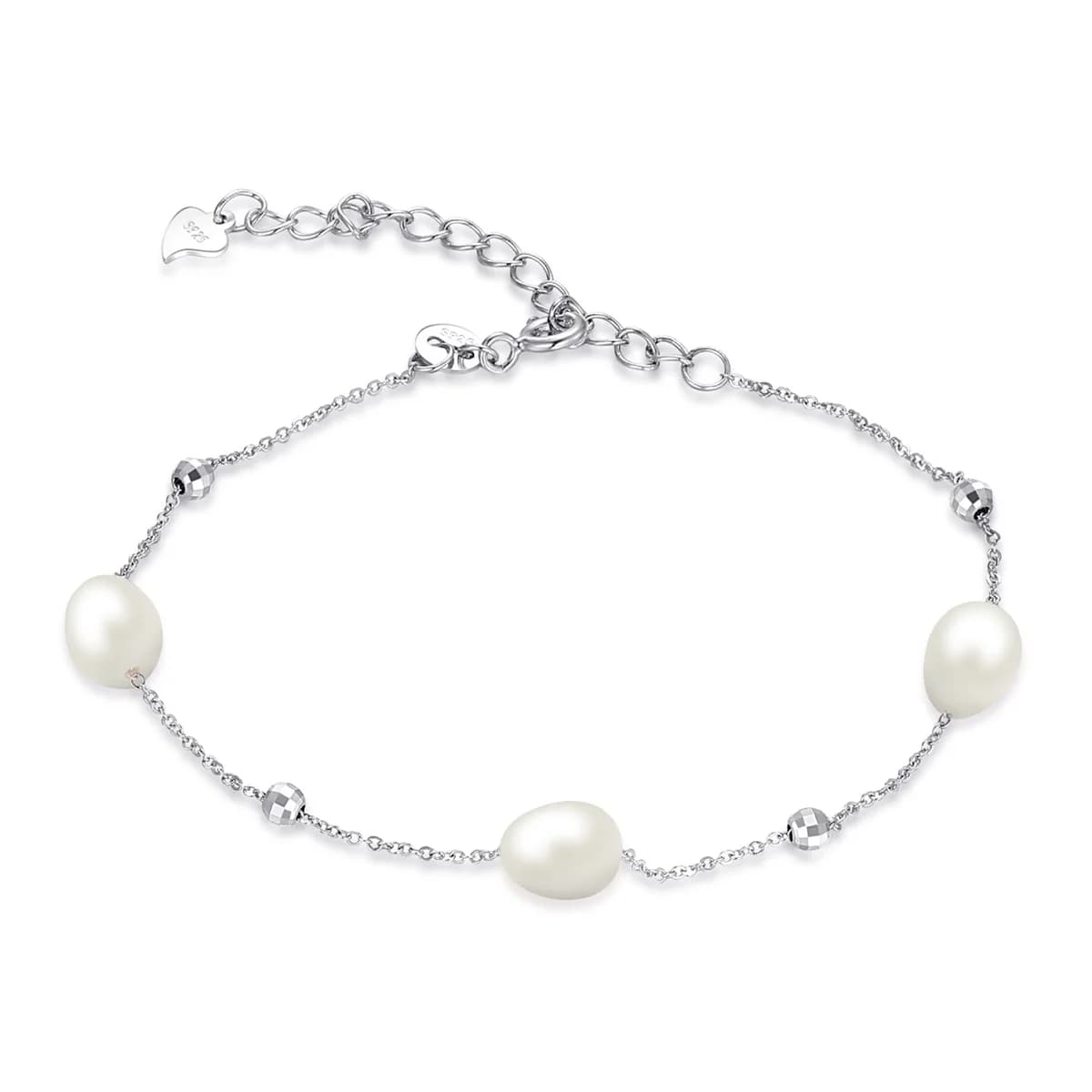
Delicate O-Link Chain Baroque Pearl Heart Tag Bracelet
S925 Sterling Silver, Rhodium Plated, Baroque Pearl
View product →FAQ
Frequently asked questions
What is the difference between a jewelry PO and an RFQ?
An RFQ asks a supplier to price and clarify a defined scope. A purchase order places the buyer's order against an accepted commercial and technical scope. The supplier should still acknowledge the PO and identify exceptions before production release.
Should a jewelry purchase order reference the approved sample?
Yes. Cite the sample identifier, approval date and any conditions together with the released specification revision. This prevents a visually similar but different sample or file from becoming the production reference.
How should jewelry variants appear on a purchase order?
List style or SKU, size, material, stone, plating or finish, packaging relationship, quantity and price basis on controlled lines. Reconcile line totals with style totals and the complete PO total.
Does issuing a jewelry PO automatically release production?
Not necessarily. A safer gate requires supplier acknowledgment, resolution of exceptions, confirmed commercial and technical references, and a documented release decision. The contract between the parties should define when the order becomes binding and production may begin.
What should a jewelry reorder reference?
Reference the original PO, approved changes, latest released specification, retained sample or approval record, packaging artwork and current variant matrix. Reconfirm availability, requirements, prices and terms instead of assuming the original order remains unchanged.
Expert review
Zalson Jewelry Product Development & Quality Team
Technical editorial team
Reviewed for purchase-order release control, jewelry plating terminology, S925 material language and buyer-facing production decisions.
Zalson Jewelry is operated by Guangzhou Zalson Jewelry Co., Ltd., established in Guangzhou in 2017. Content is reviewed by the team rather than attributed to an individual spokesperson.
Sources and further reading
- 1SSJew: Jewelry Production Order Checklist for B2B Buyers ↗
- 2925 Pro: Custom Silver Jewelry Purchase Order Checklist ↗
- 3DinHuey Jewelry: Jewelry Sample Approval Checklist Before Mass Production ↗
- 4SilverBene: Final Inspection Checklist for Wholesale or OEM Jewelry Orders ↗
- 5TY Jewelry: Jewelry Pre-Shipment Inspection Checklist ↗
- 6Jinming: Custom Jewelry Order Process ↗
- 7International Trade Administration: Pro Forma Invoice ↗
- 8International Chamber of Commerce: Incoterms 2020 Rules ↗
Preparing a controlled jewelry order?