Private Label Procurement
Private Label Jewelry Packaging Checklist for Brand Buyers
Private label jewelry packaging is not a decorative task to leave until the jewelry is finished. It is a component system that turns an approved piece into a sellable, identifiable and receivable SKU. Cards, pouches, boxes, inserts, labels and shipping protection must fit the product, use the correct artwork revision and follow a pack-out instruction that a supplier can repeat. This checklist helps brand founders, buyers and product teams connect packaging decisions to jewelry quantities, samples, SKU data and reorder control. It does not assume one universal packaging minimum, material performance result or sustainability claim; those details belong to the actual packaging proposal, destination market and approved sample.
TL;DRThe short answer
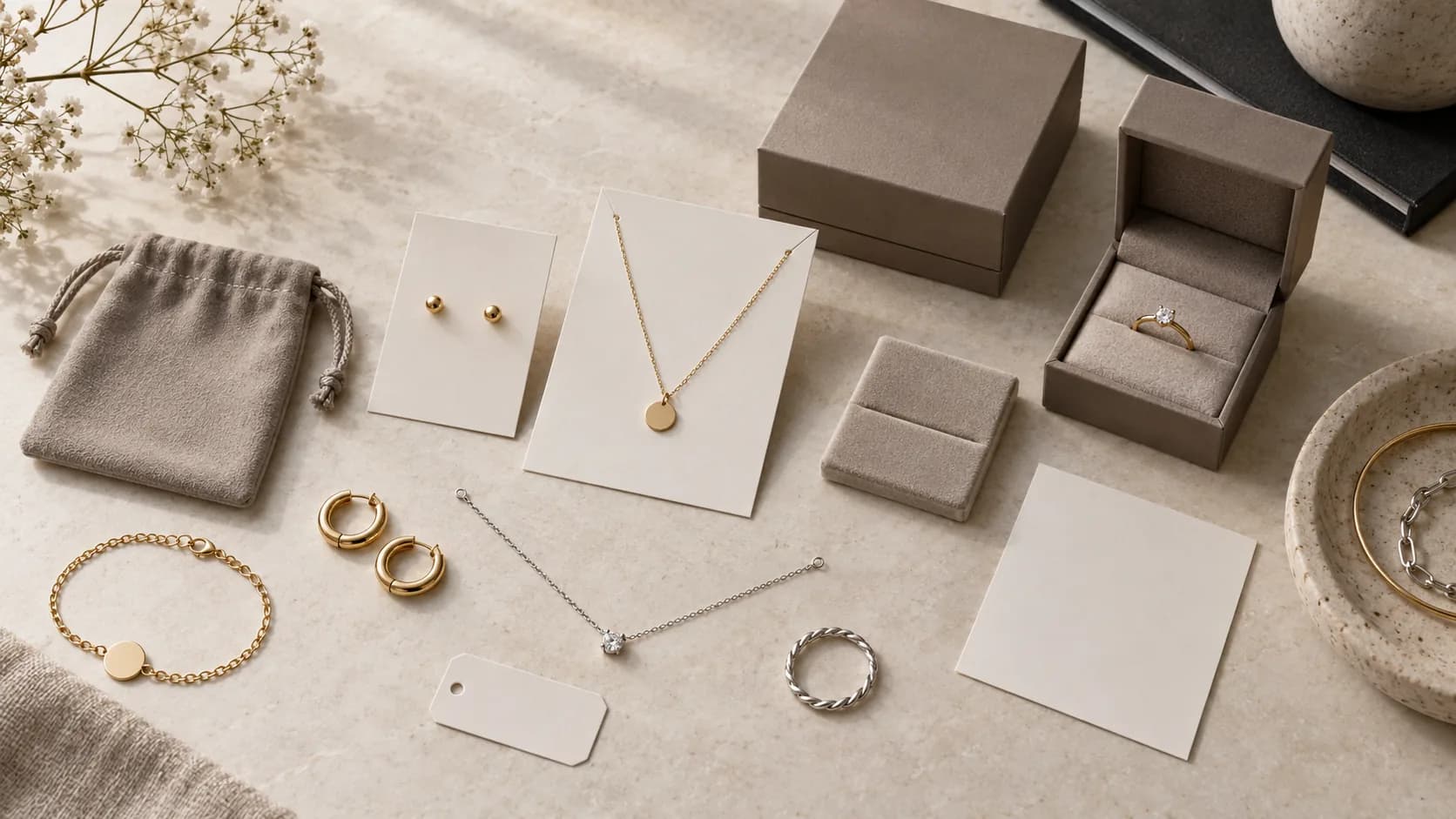
Define packaging as a bill of components for each finished SKU: jewelry, card or insert, pouch or box, labels, printed materials and shipment protection. Confirm fit, presentation, artwork version, quantities, SKU or barcode data, sample approval and piece/set/shipment pack-out. Keep packaging quantities separate from jewelry MOQ until the supplier confirms the project basis, then retain the approved sample and change log for reorders.
Direct answer
What belongs in a private label jewelry packaging checklist?
List every component in one sellable unit, its format, fit, artwork version, label and SKU data, quantity basis and packing sequence. Approve the jewelry inside the actual card, pouch, insert or box; document piece, set and shipment pack-out; and retain a versioned sample. Confirm packaging minimums, materials, performance and market rules with the relevant suppliers instead of assuming they match the jewelry order.
Decision summary
Key takeaways
- Define the complete sellable unit instead of requesting a generic branded box.
- Review fit, protection and presentation with the approved jewelry inside the proposed packaging.
- Control logo artwork, label copy, SKU mapping and barcode ownership by version.
- Reconcile packaging quantities separately from jewelry MOQ and include allowance decisions in the quote.
- Document one-piece, coordinated-set and shipment pack-out so warehouse receiving can verify the order.
Start with the sellable unit
Treat packaging as part of the finished jewelry SKU
Begin with a packaging bill of components for one sellable unit. A ring SKU might include the ring, insert, box, care card, label and protective outer wrap. An earring pair may need a card, securing method, pouch and identifier. A necklace may require chain-control points that reduce movement or tangling. State whether the item is sold as one piece, a pair or a coordinated set so the quantity language stays consistent.
Separate customer-facing presentation from factory or shipment packing, then connect them in the same brief. The retail card, pouch or box communicates the brand; inner protection, grouping and outer cartons support handling and receiving. The buyer should identify the desired experience and data. The supplier should confirm what it can source, print, assemble and pack for the actual order.
| Packaging layer | Possible components | Buyer decision | Approval evidence |
|---|---|---|---|
| Product contact | Card, insert, holder, sleeve or wrap | How the piece is secured and separated | Jewelry shown in the proposed component |
| Presentation | Pouch, box, ribbon, care card or story insert | Required contents and opening sequence | Complete presentation sample |
| Identification | SKU label, barcode, size or color label, origin or market copy | Data owner, format, placement and version | Printed proof and scan or data check where applicable |
| Shipment | Inner grouping, protective material, carton and mark | Units per group and receiving logic | Pack-out photos, list and shipment specification |
Evidence: 925 Pro; DinHuey Jewelry; BJM Jewelry
Review the real combination
Check product fit, protection and presentation together
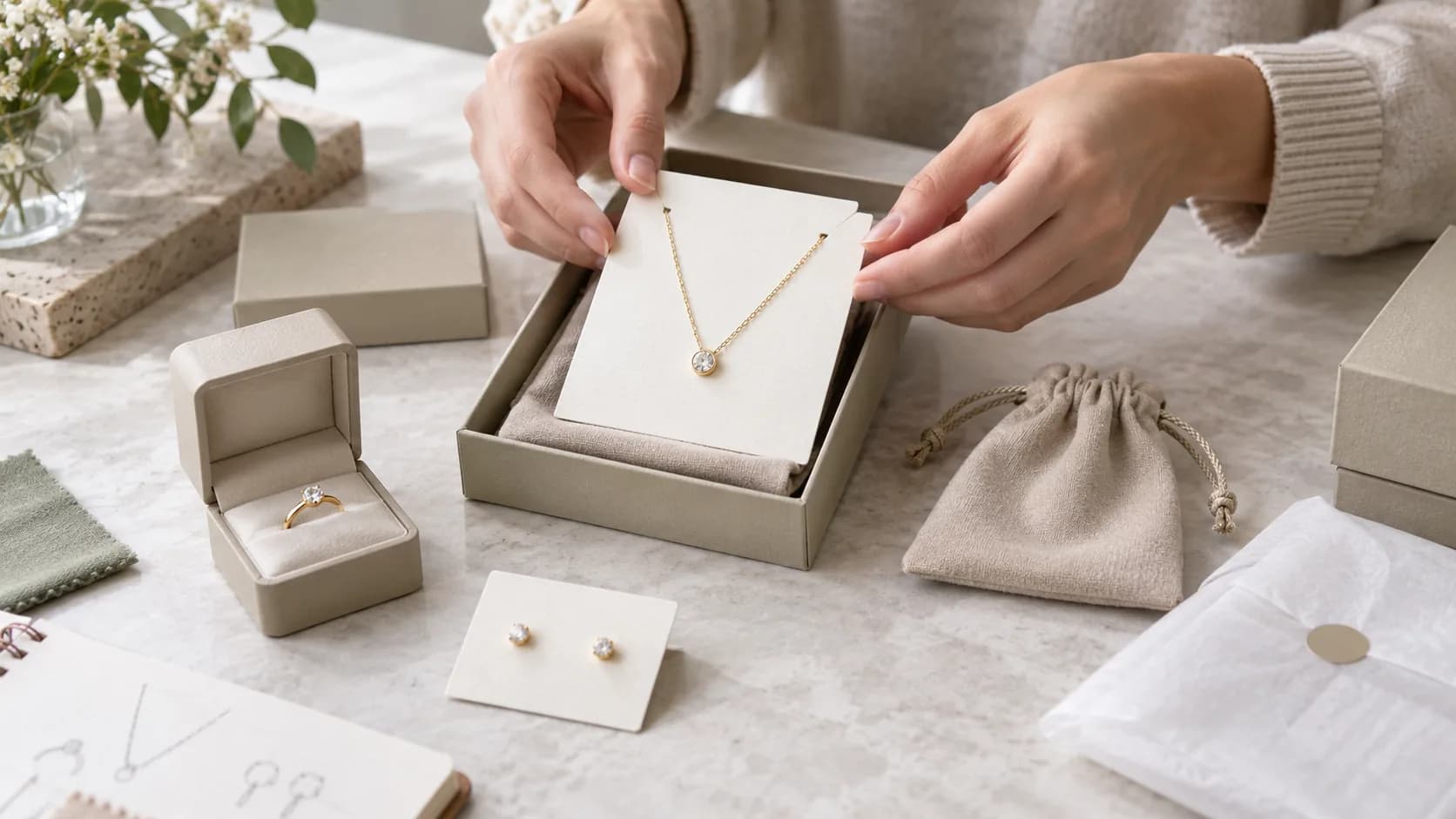
Outside box dimensions alone do not prove that the product is held correctly. Review the approved jewelry inside the proposed card, pouch, insert or box. Check how a necklace chain is secured, whether an earring pair remains organized, whether a ring setting contacts a lid or insert, and whether components can move or rub in the intended pack-out. The review should match the way the SKU will be handled and presented.
Protection and appearance are connected but not interchangeable. A visually minimal pack may still need an inner securing method; a substantial box may still use an unsuitable insert. Ask the packaging and jewelry suppliers to define the proposed materials and construction, then establish any project-specific performance or shipping validation required for the destination and sales channel. This checklist does not certify material performance.
Evidence: DinHuey Jewelry; Velcena Jewelry; TEYING
Brand and data control
Lock logo artwork, copy, SKU identifiers and barcode responsibility
Give each logo, card, insert and label file an owner and revision. Specify placement, orientation, approved copy, color reference and which packaging component receives it. A screen preview should be followed by a proof or sample on the proposed component because size, surface and print process can change the visible result. Any unconfirmed print method or capability should remain a supplier question, not a website promise.
SKU and barcode instructions need the same control. Map every sellable variant to the label it should receive and decide who provides the identifier, barcode artwork or source data. GS1 explains that the number identifies the trade item and the barcode is its machine-readable carrier; suppliers should not invent brand-owned identifiers. Verify the approved data and placement before bulk labeling and keep a human-readable SKU or variant check in the packing record.
- Store the original brand artwork and approved production version separately.
- List exact card, pouch, box, insert and label combinations by SKU.
- Assign ownership for product identifiers, barcode data and regulatory copy.
- Approve wording and spelling against the actual product material and care direction.
- Record label placement so it does not cover branding, required copy or the product itself.
Commercial alignment
Reconcile packaging quantity with jewelry MOQ and approve a complete sample
Packaging quantity and jewelry MOQ are related but may come from different suppliers, setup routes and order units. Show the jewelry quantity by style and SKU, then show each packaging component quantity on its own line. Include whether a shared card, pouch or box serves several compatible products and who owns unused or replacement components. Ask the quotation to state the packaging basis rather than assuming it equals the jewelry total.
Zalson publishes a general production starting point of 30 pieces per style for jewelry. The packaging quantity, print setup, component availability and ability to combine variants must still be confirmed for the project. Before bulk pack-out, approve a complete packaging sample with the intended jewelry, current artwork, inserts, labels and sequence. Record what is approved and what remains subject to a separate requirement.
| Line to confirm | Buyer provides | Supplier confirms | Control record |
|---|---|---|---|
| Jewelry | Style, SKU, variant and quantity matrix | Project-specific production basis | Approved sample and order revision |
| Cards and inserts | Artwork, product mapping and quantities | Format, sourcing and print proposal | Approved proof or component sample |
| Pouches and boxes | Preferred format, fit and presentation | Available construction and quantity basis | Approved jewelry-in-packaging sample |
| Labels | SKU, barcode or copy source data | Print and application route | Verified label proof and mapping |
| Shipment pack | Receiving and grouping requirements | Pack-out and carton proposal | Packing list, photos or agreed release evidence |
Evidence: BJM Jewelry; Velcena Jewelry; DinHuey Jewelry
Repeatable assembly
Define piece, set and shipment pack-out—and retain a change log
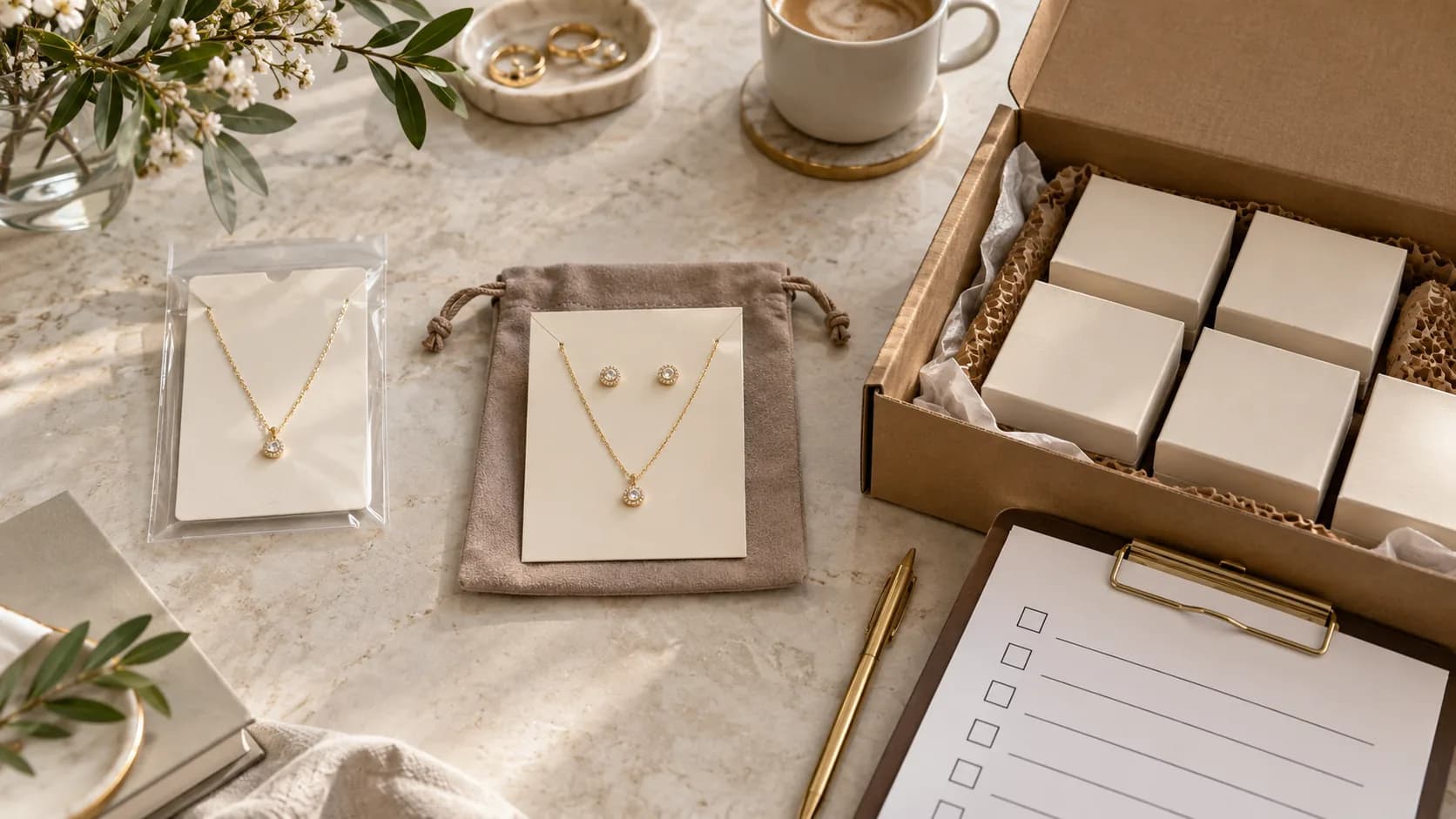
A pack-out instruction should show what belongs together and in what order. Distinguish one-piece packs, pairs, coordinated sets, inner groups and shipment cartons. State how the warehouse can identify the SKU without relying on visual similarity, and reconcile counts in the same unit used by the purchase order. Photos help show placement, but they should accompany the written component and quantity record.
For reorders, retain the approved artwork, component specification, packaging sample, SKU map and pack-out revision. Reconfirm availability, artwork and requirements before repeating the order. If a box, insert, label, product dimension or market instruction changes, record which SKUs are affected and route the new combination through approval rather than silently replacing the earlier reference.
1. Define
Create the component bill, SKU map and presentation goal for each sellable unit.
2. Source
Ask relevant suppliers to confirm available formats, print route, quantities and responsibilities.
3. Prototype
Place the approved jewelry in the proposed card, pouch, insert, box and label system.
4. Approve
Record fit, appearance, artwork, identifiers, contents and the exact packaging revision.
5. Release
Issue piece, set, inner-group and shipment pack-out instructions with the order.
6. Reconcile
Check quantities and mapping, retain evidence, and log every reorder change.
Evidence: BJM Jewelry; Velcena Jewelry; HSN
Destination and enquiry
Add destination-market requirements before requesting release
Packaging rules depend on where and how the product is sold. The European Commission reports that the EU Packaging and Packaging Waste Regulation began applying on a phased basis from August 2026, with measures addressing packaging composition, recyclability, labeling and unnecessary packaging. A brand selling into the EU should obtain current professional compliance guidance for its role and packaging; a generic supplier checklist is not legal advice or a sustainability certification.
For a Zalson private-label enquiry, send the jewelry or catalog reference, quantity and variant matrix, packaging component list, artwork, SKU and label data, destination market, desired sample scope and pack-out instructions. The team can review the proposed coordination route and identify project questions. Packaging sourcing, printing, quantities, validation and timing remain subject to the written project confirmation.
Evidence: European Commission; GS1
Catalog references
Related products
These real catalog products are visual and construction references for specification discussions. Their published product data is unchanged; they are not presented as the exact product used in this guide.
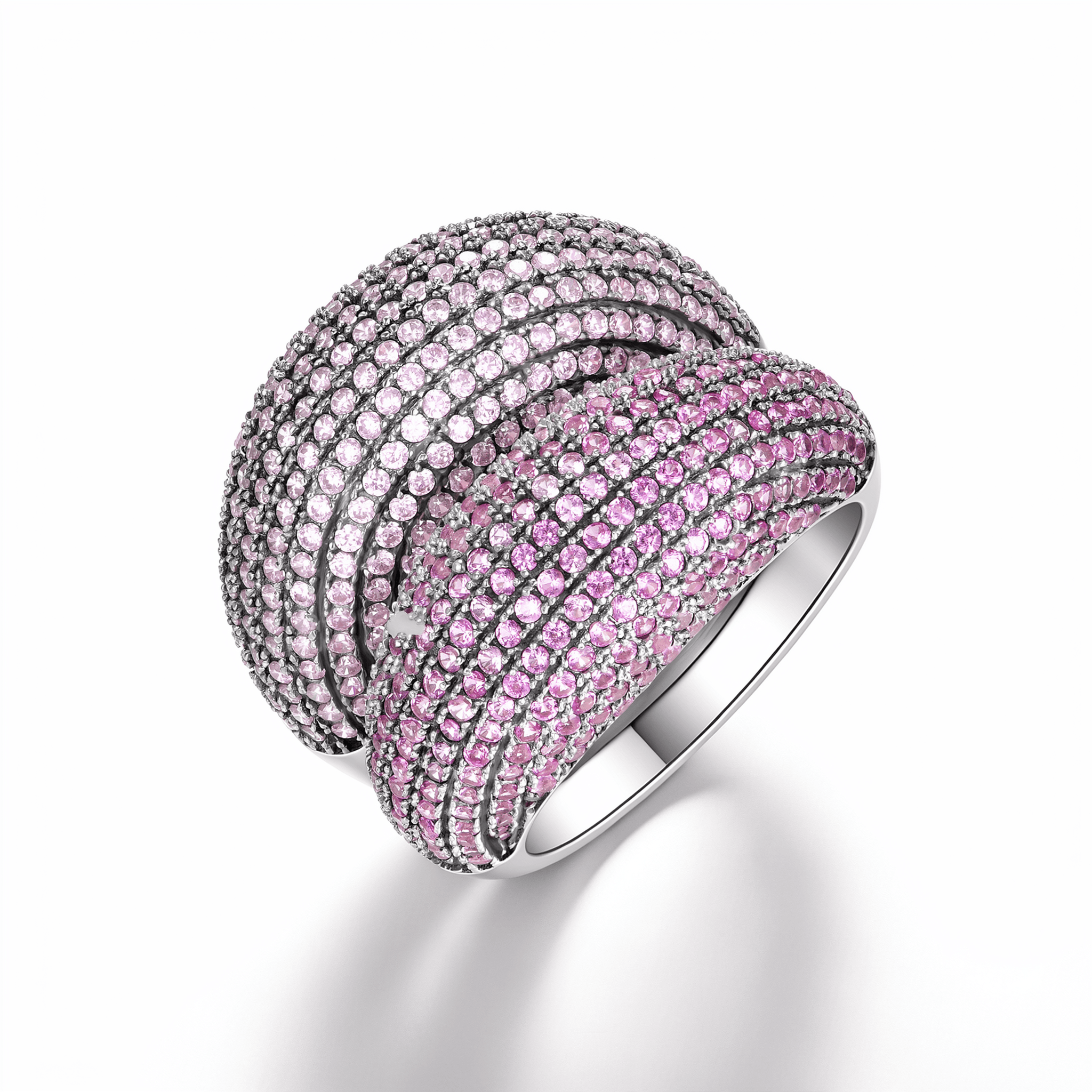
Pink CZ Swirl Twist Pave Cocktail Ring
S925 Sterling Silver, Rhodium Plated, Full Pave Pink CZ
View product →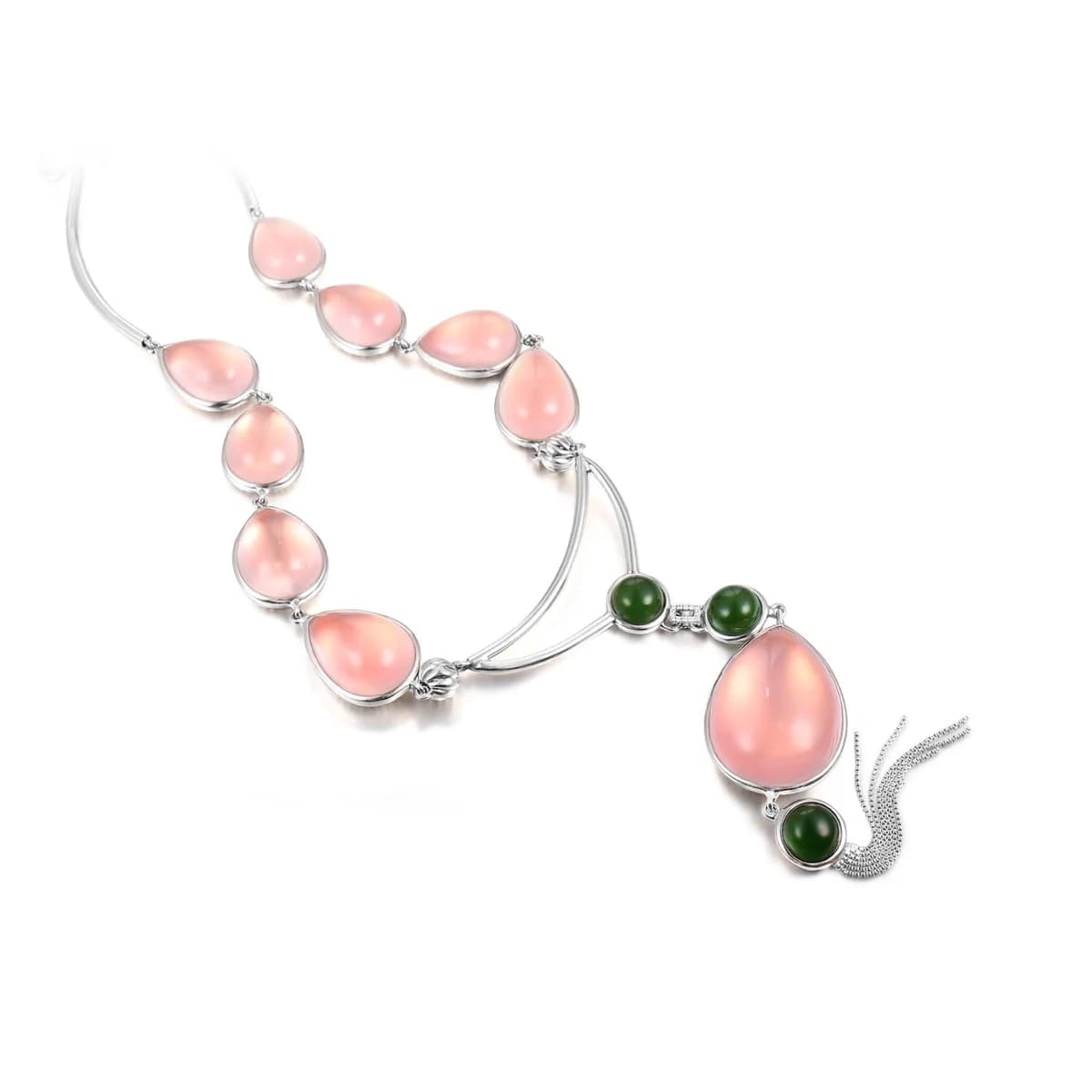
Rose Quartz with Hetian Green Nephrite Jade Pendant
Sterling Silver
View product →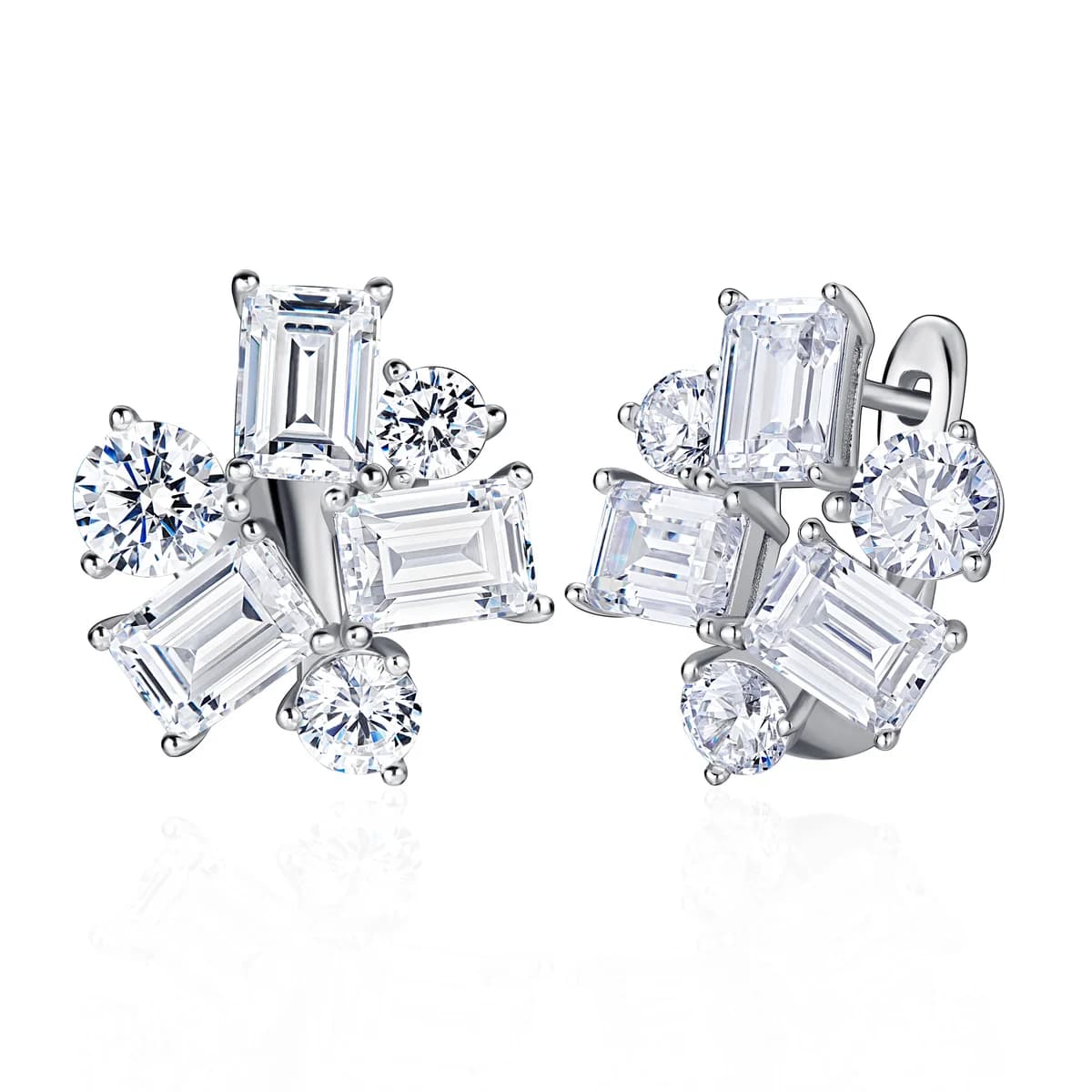
Asymmetrical Starburst Baguette Round Diamond Studs
S925 Sterling Silver, Rhodium Plated, Emerald Cut Baguette CZ, Round Brilliant CZ
View product →FAQ
Frequently asked questions
What should private label jewelry packaging include?
Define every component in the sellable SKU and shipment system: jewelry card or insert, pouch or box, printed materials, SKU or barcode labels, protective elements, inner grouping and outer packing. Name the artwork, quantities and assembly sequence for each product version.
Is jewelry packaging MOQ the same as jewelry MOQ?
Not necessarily. Jewelry and packaging components can have different suppliers, setup routes and order units. List quantities separately and ask the project quotation to confirm the basis for every card, pouch, box, insert, label and printed component.
How should buyers approve a jewelry packaging sample?
Review the approved jewelry inside the complete proposed pack. Check fit, securing method, presentation, component contents, artwork, label data, SKU mapping and opening sequence, then record the exact packaging revision and any unresolved requirements before bulk pack-out.
Who should provide jewelry SKU and barcode data?
The brand should control its SKU system and assign responsibility for trade-item identifiers and source data. The supplier can print and apply approved labels when confirmed, but it should not invent brand-owned identifiers. Verify the data and product mapping before release.
What records should be kept for a jewelry packaging reorder?
Retain approved artwork, component specifications, the jewelry-in-packaging sample, SKU and label map, pack-out instructions, quantity record and change log. Reconfirm availability and any market requirement before repeating the order because components or instructions may change.
Expert review
Zalson Jewelry Product Development & Quality Team
Technical editorial team
Reviewed for jewelry CAD decision boundaries, sample-release workflow, packaging specifications and buyer-facing change control.
Zalson Jewelry is operated by Guangzhou Zalson Jewelry Co., Ltd., established in Guangzhou in 2017. Content is reviewed by the team rather than attributed to an individual spokesperson.
Sources and further reading
- 1925 Pro: Private Label Jewelry Packaging: Cards, Pouches and Boxes ↗
- 2DinHuey Jewelry: Customer-Supplied Jewelry Packaging: A Checklist Before Production ↗
- 3BJM Jewelry: Private Label Jewelry Packaging Checklist ↗
- 4Velcena Jewelry: Private Label Jewelry Packaging for OEM & Wholesale Orders ↗
- 5TEYING: Can a Jewelry Factory Handle Your Logo, Packaging, and Retail-Ready Assembly? ↗
- 6GS1: 10 Steps to Barcode Your Product ↗
- 7European Commission: New Packaging Rules for Less Waste and Easier Recycling ↗
- 8HSN: Vendor Supply Chain Manual: Jewelry Packaging ↗
Turn a packaging idea into a controlled SKU