Gemstone Procurement
Natural Gemstone Specification Checklist for Jewelry Manufacturing
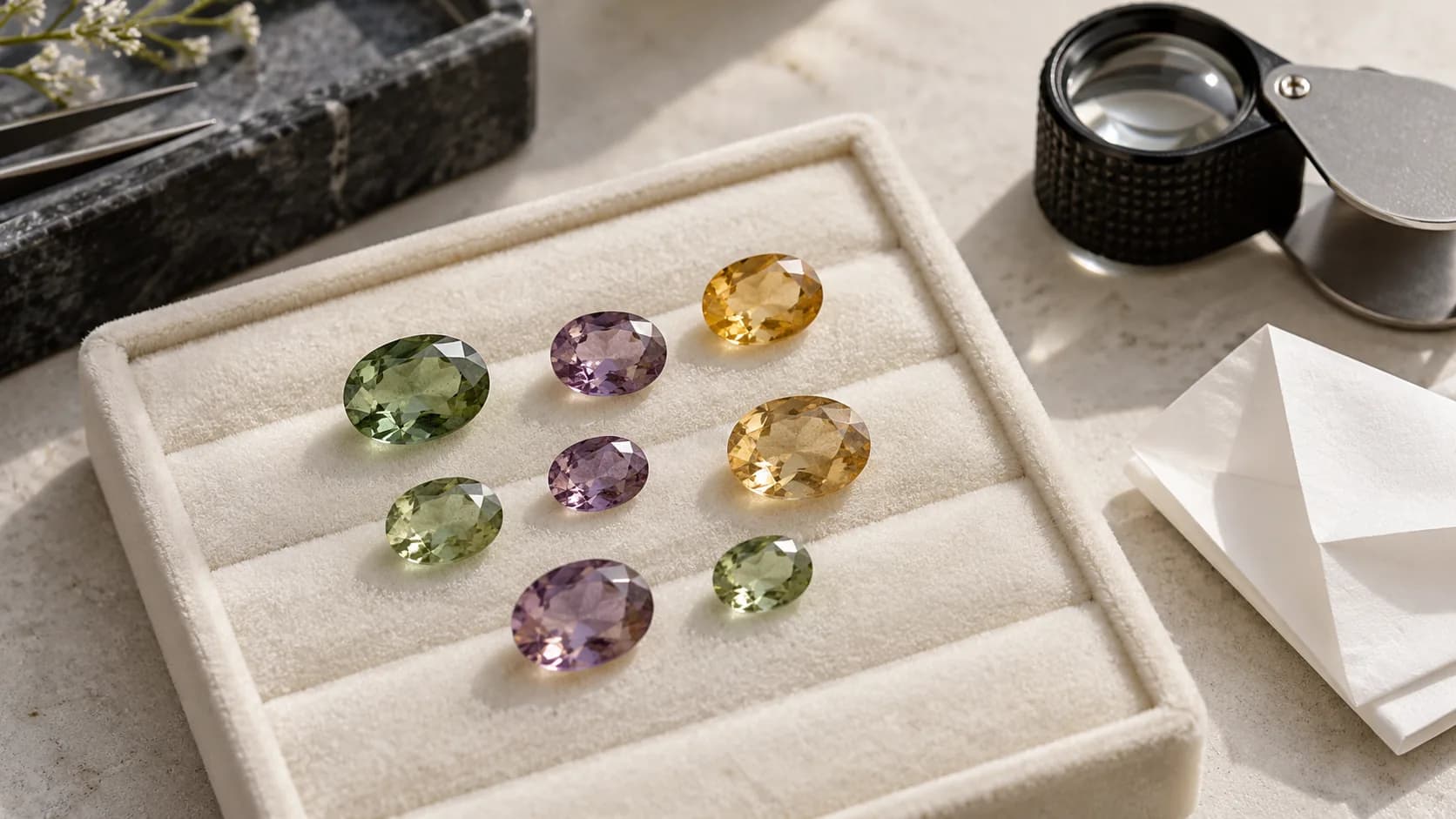
A natural gemstone specification checklist connects the appearance a brand wants with material that can be sourced, set and approved. A green oval in a reference image does not tell a supplier its species, treatment status, depth, acceptable variation or evidence requirements. Nor does one attractive stone define the matching range for earrings and a pendant. This guide is for brand buyers and product developers turning a colored-stone direction into a procurement record. It separates identification from appearance, a laboratory opinion from a supplier declaration, and a sample decision from batch acceptance. Use the worksheet to resolve the material questions before finalizing the setting and quotation, while keeping unknown claims visible rather than filling them from a photograph.
TL;DRThe short answer
Specify material identity and natural status separately from color. Record treatment and disclosure requirements, shape, dimensions, depth and setting interfaces, appearance references, pair or set matching, purchasing unit and evidence scope. Check the supplied stones against the agreed record and approve a setting sample before release. Keep lot identity and change authorization; natural variation does not justify an undeclared substitution or a claim unsupported by evidence.
Direct answer
What belongs in a natural gemstone specification for jewelry manufacturing?
Record the gemstone identity and natural status, treatments, shape and cut, dimensions and setting fit, appearance range, pair or set matching, quantity and pricing basis, evidence requirements and approval authority. Link the stones to their supplier and lot, match reports to the actual items, and agree incoming checks and substitution rules. Confirm unknowns before releasing the setting sample or order.
Decision summary
Key takeaways
- Natural status, species, treatment, geographic origin and responsible sourcing are separate questions.
- Specify dimensions and the setting interface, not only weight or a nominal stone size.
- Approve an appearance range and the matching relationship for a pair or complete set.
- Match a report to the actual stone; a sample report does not automatically cover a parcel.
- Control lot records, replacements and reorder changes before release.
Define the material before using the color or commercial name
Begin with a proposed material identity, whether it is natural or manufactured, and the evidence required to support that statement. A natural material is not automatically untreated. A synthetic counterpart is distinct from an imitation that resembles another material. Assembled products, fillers and coatings also need their own description. Keep a color direction such as violet or emerald green separate from a confirmed species or variety: an attractive adjective cannot identify a stone.
Terminology needs a dated reference. CIBJO's July 2026 notice announced use of synthetic for colored-stone counterparts from September, while U.S. FTC guidance also recognizes clearly qualified laboratory-origin terminology. These are not interchangeable sources of legal obligations: CIBJO's Blue Books are voluntary standards, and destination-market descriptions need separate review. Record the chosen nomenclature and edition, preserve the supplier's exact declaration and do not silently translate ambiguous trade names into a more valuable identity.
| Field | Question to resolve | Do not infer from |
|---|---|---|
| Species / variety | What material is supplied and on what evidence? | Color name or photograph |
| Natural / synthetic / imitation | What is the material's stated nature? | Price, cut or a retail-style title |
| Treatment / assembled material | What has been done, and what must be disclosed? | The word natural alone |
| Geographic origin | Is origin claimed, and who supports it? | Supplier address or cutting location |
| Responsible sourcing | What supply-chain statement and records are available? | An identification report alone |
Evidence: CIBJO; CIBJO; U.S. Federal Trade Commission
Record treatment, composite and care information explicitly
Ask for the treatment information relevant to the proposed material, including what is known, what was assessed and what remains undetermined. Heating, filling, dyeing, impregnation, irradiation and coating are examples of different processes, not a list that applies to every gem. Request meaningful written wording rather than accepting a code without its legend. If untreated status is essential, agree how it is to be supported before sourcing; a blank field is not evidence of no treatment.
Treatment can affect handling and care. In the United States, the Jewelry Guides call for disclosure when treatment is nonpermanent, creates special care requirements or significantly affects value, including appropriate online product descriptions. Check the rules for the actual destination rather than generalizing this to every market. Carry the confirmed information into manufacturing instructions and buyer-facing copy; do not approve a cleaning, heat or repair process simply because it worked on a different stone.
Evidence: GIA; eCFR / U.S. Federal Trade Commission
Specify shape, cut and the complete setting interface
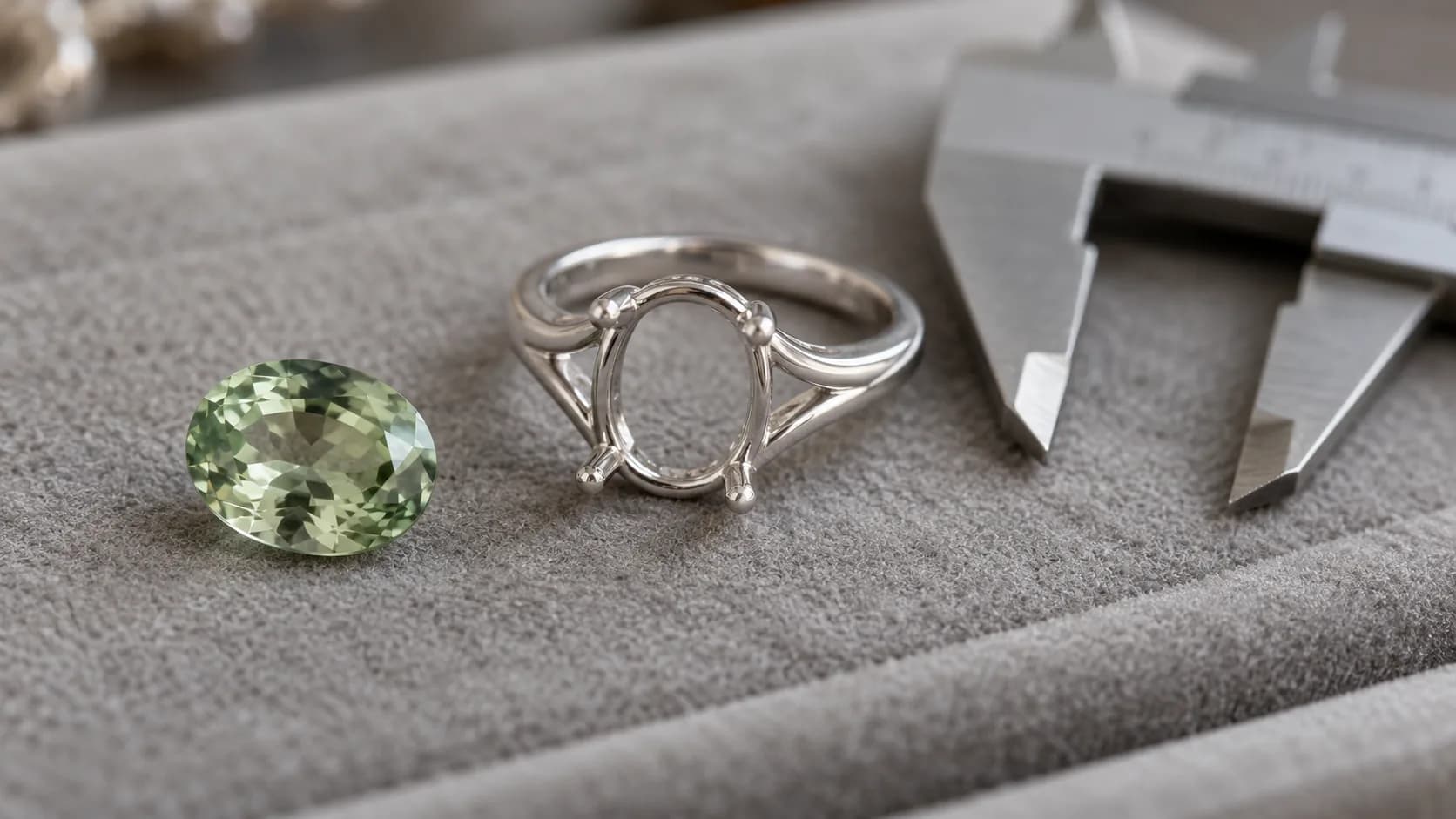
Record outline, cut style and orientation together with length, width, total depth and any girdle, profile or pavilion requirements that affect the setting. Choose a measurement method and project-specific acceptance range with the supplier and setter. A nominal face-up dimension is not a promise that every pavilion or corner will fit the same seat. Do not copy a tolerance from another material, vendor or setting style.
For calibrated supply, confirm what the supplier means by calibration and obtain representative stones or a sample parcel for fit review. For a one-off center stone, the actual stone may need to guide the setting instead. The two routes change the order of CAD and procurement decisions. Document who measures the material and when the setting is frozen. Use the CAD approval checklist for geometry review; this stone schedule supplies its inputs rather than replacing it.
Approve an appearance range for singles, pairs and complete sets
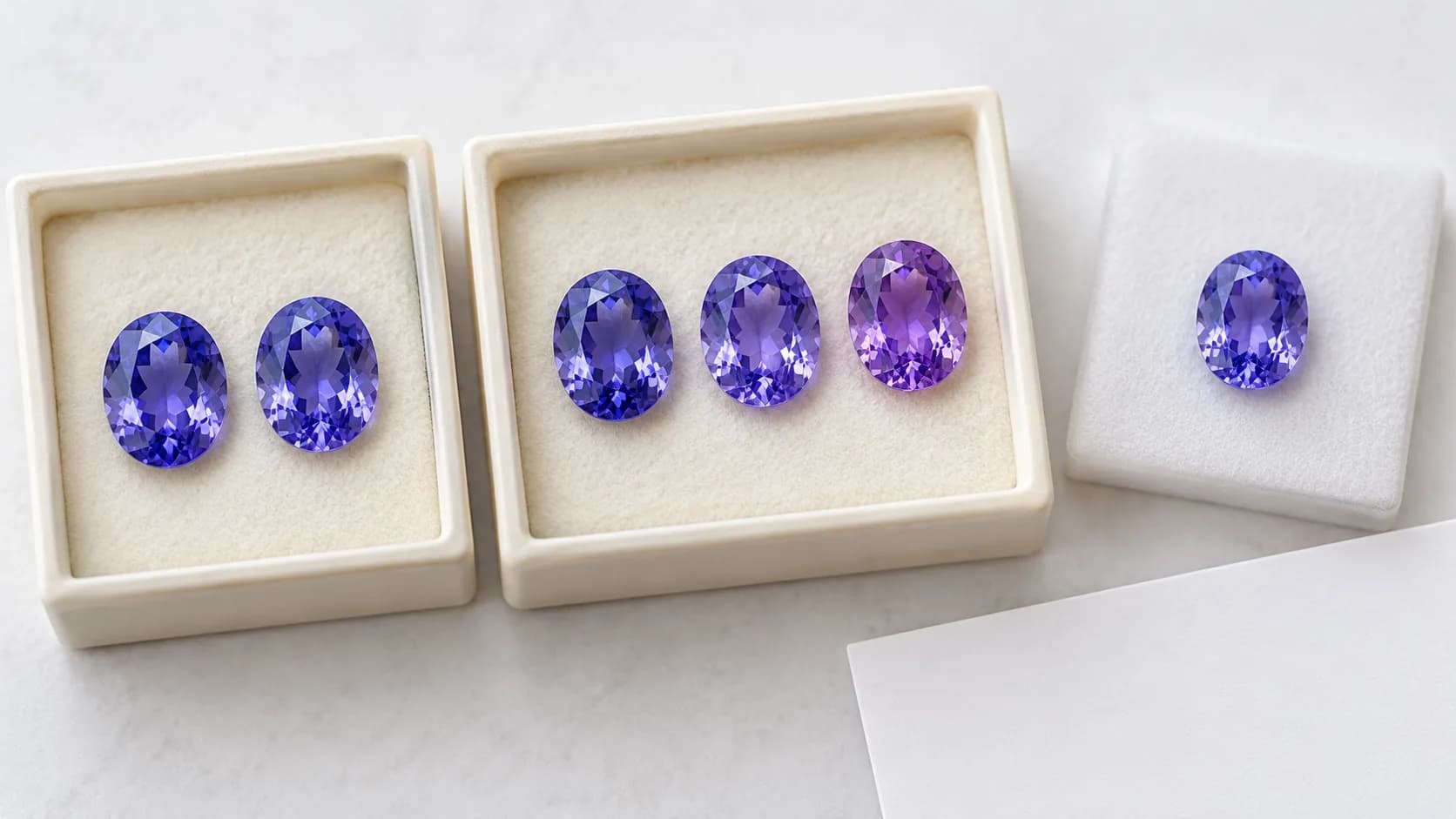
Define the appearance direction using physical references reviewed under agreed viewing conditions. Record hue and relative lightness, transparency, texture, visible inclusions, outline and face-up presentation at the scale used in the design. Photographs help communication but vary with lighting, camera and screen; keep them linked to the physical reference instead of treating one edited image as the acceptance standard. Avoid an unexplained AAA or similar label as though it were a universal grade.
A single center stone, two earrings and a pendant-ring-earring suite have different relationships to approve. Decide whether the pair must appear closely matched face-up and whether larger centers may differ from smaller accents within a recorded range. Specify whether a replacement must match its partner or the whole suite. Natural variation should be discussed and bounded through examples; it is not permission to ignore the agreed color direction or to promise every future stone will look identical.
- Appearance reference and viewing conditions: ___
- Acceptable range and excluded appearance: ___
- Matching unit: single / pair / set / other: ___
- Replacement matching rule and approver: ___
Make the purchasing unit and selection conditions comparable
State whether pricing is per stone, per pair, per matched set, by weight or another agreed unit. Identify currency, quantity, size range, selection basis, packing and quotation validity. For a weight-based proposal, confirm how stone count, dimensions and usable assortment are described; equal total weight does not define an equal number of stones that fit the design. For per-piece offers, confirm that the stated price applies to the required matching and evidence scope.
Ask how sample selection, sorting, rejected material, cutting or recutting, reports and transport are charged where relevant. Identify when selection becomes a purchase commitment and how shortages are resolved. Peer calibrated-stone articles are useful for spotting omitted quote fields, but their stock, tolerances and repeatability promises are supplier-specific. Keep the order's accepted sizes, matching range and substitution conditions in the written offer rather than inheriting them from a general web page.
Evidence: Thai Gems
Compare procurement routes without pretending they are equivalent
Choose the supply route around the collection's design and risk. Buying a selected center, a calibrated parcel or a matching suite shifts what needs to be approved and when. Neither approach establishes natural identity or treatment status by itself. The table is a planning aid; availability, prices, yields and lead times must come from the actual proposal.
If the design begins from a visual reference only, resolve material feasibility before promising the pictured color at the target quantity. A lower-cost alternative that changes species or natural status is a different proposal, not a silent equivalent. Put alternatives on separate lines and review their identity, disclosure, setting, appearance, price and timing consequences before selecting one.
| Route | Main approval question | Fit / matching implication | Commercial point to confirm |
|---|---|---|---|
| Selected single stone | Does this identified stone meet the brief? | Review setting around the actual geometry | Availability, reservation and report scope |
| Calibrated parcel | What range and selection apply to this lot? | Trial actual profiles in the proposed seats | Usable count, sorting and rejected pieces |
| Matched pair or suite | What relationship is approved across stones? | Compare all visible pieces together | Set pricing and replacement matching |
| Visual direction awaiting sourcing | Which material options can meet the intent? | Keep geometry provisional until reviewed | Separate proposals; no assumed identity |
Separate geographic origin, supplier location and responsible sourcing
Ask exactly what an origin statement means: geological origin, place of cutting, exporter location or a supplier's sourcing account. Record who made the statement, its evidence and the material covered. A laboratory origin opinion addresses a defined gemological question; it does not by itself establish the entire commercial chain or the social and environmental conditions of extraction. Do not turn a shipping address into a mine-origin statement.
Recent research reinforces the need for scoped evidence. GIA's October 15, 2026 Knowledge Session described research into copper-bearing paraíba tourmaline from Ethiopia and the analytical work behind source differentiation. The procurement lesson is not that a visually similar stone comes from Ethiopia: new source information makes unsupported geographic assumptions less defensible. Ask separately for the records supporting any responsible-sourcing claim, state gaps honestly and avoid describing an unknown chain as verified.
Match each declaration and report to the material actually delivered
Keep supplier declarations, laboratory identification, origin opinions and parcel sampling records distinct. Ask what material was examined, by whom, for which question and under what limitations. GIA describes identification reports and identification-and-origin reports as different services; origin service availability is material-specific. Do not assume every report establishes origin, treatment absence, grade or responsible sourcing, and do not treat the absence of a comment as a broader guarantee.
Verify a report number through the issuer's official channel where available, then reconcile the photograph, description, dimensions, weight where relevant and comments with the physical item. Resolve mismatches before approval. If only selected stones from a parcel were examined, preserve how they were selected and which conclusions apply to the remainder, if any. Zalson's COA library preserves historical document scope; none of those records automatically identifies the stones in a new custom set. See the certification guide for the broader distinction between an item report and organizational evidence.
Evidence: GIA
Build one versioned gemstone specification worksheet
Give the stone schedule a revision and connect each line to the jewelry style, stone position and quantity per piece or set. Use confirmed, proposed and open status labels so a sourcing suggestion cannot become an approved material by accident. The worksheet below is intentionally blank. Complete it from the supplier proposal, actual references and agreed evidence rather than inventing a universal tolerance, grade or treatment result.
Keep the declaration or report wording alongside the buyer's requirement. If the requirement and evidence do not agree, record the unresolved question and who will close it. A photograph of a green or violet custom catalog set may help describe the silhouette and matching relationship, but it cannot fill the natural-status or material-identity field. Confirm those fields independently for the intended order.
| Field | Buyer requirement | Supplier / evidence | Status and approval |
|---|---|---|---|
| Style / revision / position / quantity | ___ | Offer and stone line: ___ | Owner / date: ___ |
| Species, variety and natural status | ___ | Exact declaration / record: ___ | Confirmed / proposed / open: ___ |
| Treatment / assembly / disclosure | ___ | Known findings and limits: ___ | Approved wording: ___ |
| Shape, cut, dimensions, depth / profile | ___ | Method and agreed range: ___ | Fit trial / revision: ___ |
| Appearance and single / pair / set match | ___ | Physical reference and viewing: ___ | Accepted range: ___ |
| Purchasing unit and total quantity | ___ | Price basis and exclusions: ___ | Quote / validity: ___ |
| Origin / sourcing claims if requested | ___ | Statement scope / gaps: ___ | Claim approver: ___ |
| Reports and delivered lot connection | ___ | Numbers / items / selection: ___ | Verification action: ___ |
| Incoming checks / changes / care | ___ | Plan, restrictions, substitution rule: ___ | Release authority: ___ |
Connect incoming review, setting samples and batch records
On receipt, preserve supplier and lot identification and check the agreed count or purchasing unit, dimensions, condition, appearance range, matching and required documents. Keep questionable stones separate and record the finding, photographs and proposed action. Agree in advance who decides whether to return, replace, re-sort or obtain additional evidence. An appearance check cannot independently prove species, natural status or treatment; those questions need the appropriate evidence.
Before final approval, review a setting sample using the agreed stone route. Confirm seat and profile compatibility, orientation, clearances and the intended finished appearance with the manufacturer. Review when the stone enters the process and which heat, finishing, cleaning or repair restrictions apply to the confirmed material. Link the sample decision to the released CAD, stone schedule and quality plan. A successful trial supports that configuration; it does not remove the need for the agreed checks on the delivered lot.
Evidence: GIA
Reconfirm replacements and reorders instead of relying on a color name
When stock changes, ask for a new proposal that identifies the changed material, source information, treatment statement, size range, appearance, matching and evidence. Evaluate the effect on setting fit, care language, price and timing. Replacing a single lost earring stone may require matching its remaining partner rather than the original broad parcel range. Obtain approval before mixing new material into an accepted suite or lot.
For repeat orders, retain the reference, approved range, reports and lot history but reconfirm current availability and requirements. A familiar trade name does not establish the same material or treatment, and a new natural parcel need not reproduce the previous appearance perfectly. Use the reorder checklist to organize changes and the supplier evaluation checklist when the proposed source or production responsibilities change.
Move from visual direction to an approved stone-and-setting record
A useful request includes a design reference, proposed stone identity, size and color direction, quantities, matching unit, destination and evidence needs. Mark the fields that require a sourcing proposal. The gemstone materials page and the catalog references below can help start that discussion; their existing product information remains unchanged, and visual design references are not described here as identified natural gemstones.
Keep each decision linked to the next: material wording shapes the sourcing proposal, real dimensions inform the setting and the physical review establishes the approved configuration. The final record should identify who approved what, which evidence was considered and what remains outside scope. That is more useful for a brand's procurement team than a long list of attractive gem names with no connection to an order.
1. Visual direction
Define silhouette, color direction and intended matching relationship.
2. Material definition
Resolve identity, natural status, treatment and required evidence.
3. Supply proposal
Compare actual routes, dimensions, quantity and price basis.
4. Physical and evidence review
Check the stones, appearance range and report correspondence.
5. Setting sample
Review fit, process restrictions and finished appearance.
6. Approval
Release the specific revision with lot checks and change rules.
Catalog references
Related products
These real catalog products are visual and construction references for specification discussions. Their published product data is unchanged; they are not presented as the exact product used in this guide.
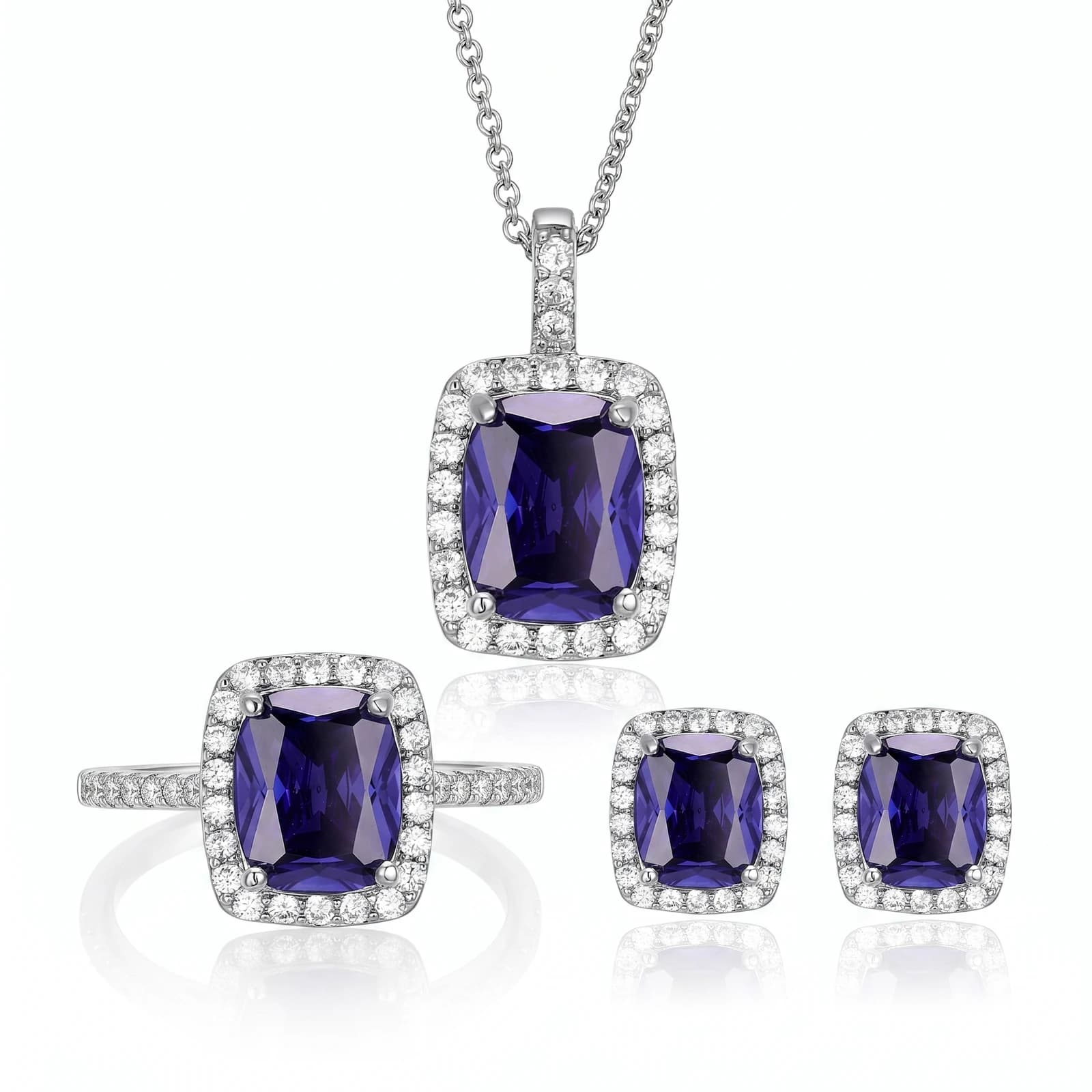
Violet Cushion Halo Jewelry Set
Silver-tone design reference; deep violet stone direction. Base metal, stone identity and finish specified to order.
View product →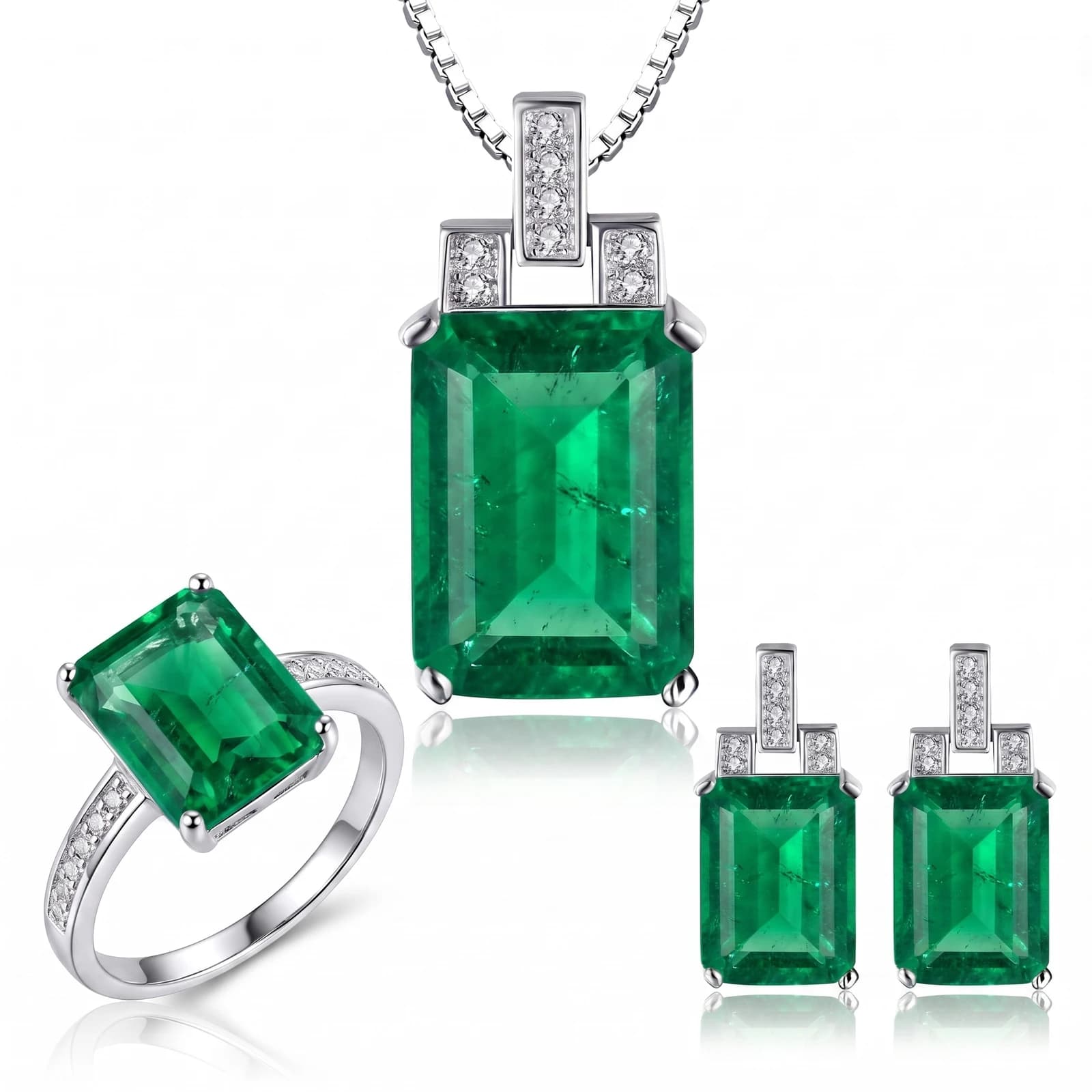
Green Step-Cut Architectural Jewelry Set
Silver-tone design reference; rich green stone direction. Base metal, stone identity and finish specified to order.
View product →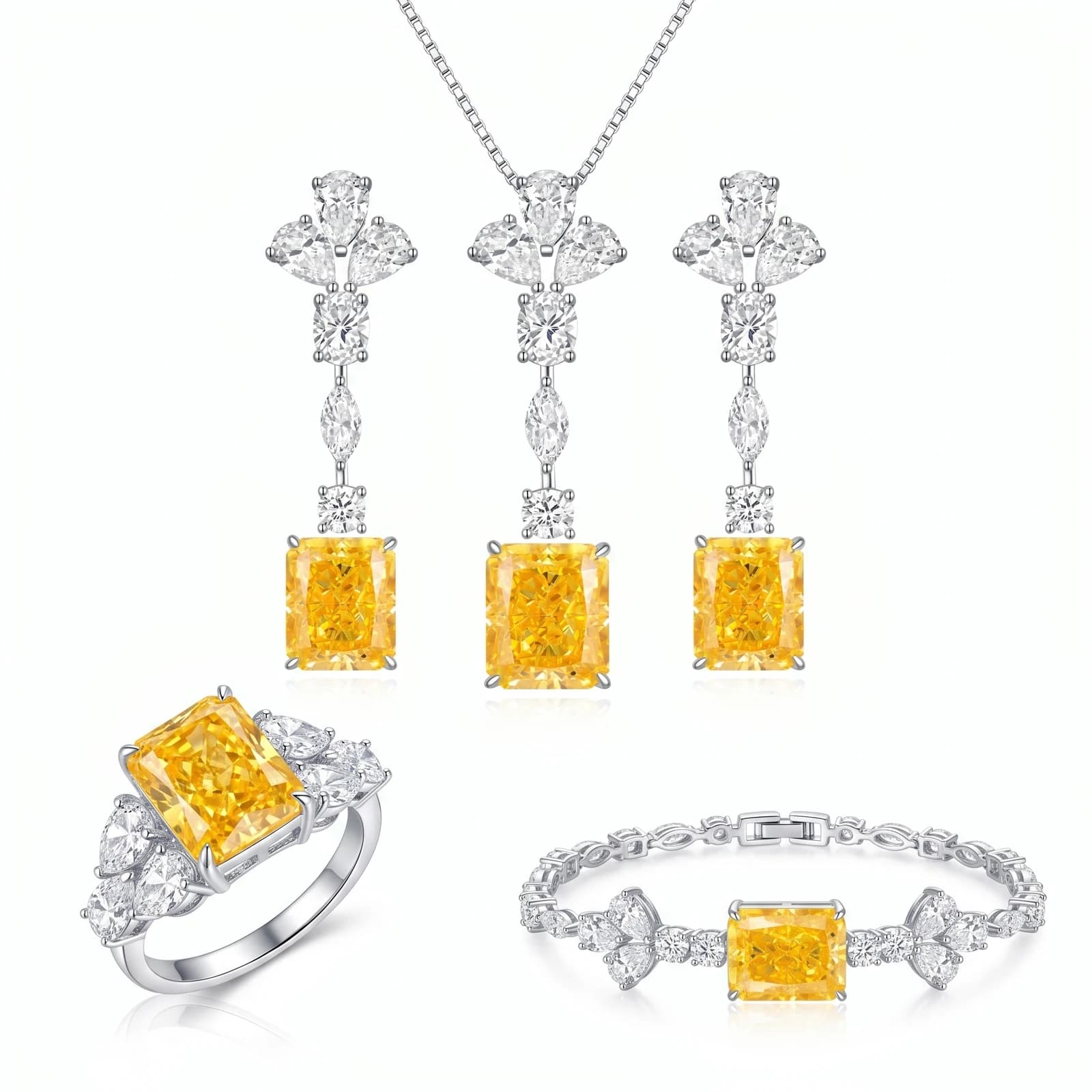
Yellow Floral Drop and Bracelet Jewelry Set
Silver-tone design reference; golden yellow with clear accents stone direction. Base metal, stone identity and finish specified to order.
View product →FAQ
Frequently asked questions
Does natural gemstone mean untreated gemstone?
No. Natural status and treatment are separate fields. Request a specific treatment statement and agree the evidence required for any untreated claim. Do not treat a missing comment or a photograph as proof that no treatment occurred.
Can a gemstone photograph establish identity or geographic origin?
No. A photograph can communicate visible color, shape and design direction, but cannot independently establish species, natural status, treatment or geographic origin. Those claims require evidence appropriate to the material and the question.
Is carat weight enough to specify a stone for a mounting?
No. Record shape, cut, length, width, depth and relevant profile or girdle requirements, then agree measurement and acceptance criteria for the actual setting. Stones with the same weight can have different geometries and fit.
Does one gemstone report cover an entire jewelry order?
Not automatically. Check the examined item or selected sample, report purpose and stated limitations. Match the report to the material and preserve any lot-selection record. Do not extend an individual identification result to unrelated stones or future batches.
How should matched stones be specified for earrings and sets?
Define whether the approval unit is a pair, a whole suite or an assortment. Agree physical appearance references, viewing conditions, size relationships, accepted variation and replacement matching rules. Review the actual stones together before approving the set.
Expert review
Zalson Jewelry Product Development & Quality Team
Technical editorial team
Editorial review covers buyer-side supplier selection, specification handoffs and the limits of gemstone evidence. This is procurement guidance, not an independent supplier audit, gem identification, legal opinion or laboratory report.
Zalson Jewelry is operated by Guangzhou Zalson Jewelry Co., Ltd., established in Guangzhou in 2017. Content is reviewed by the team rather than attributed to an individual spokesperson.
Sources and further reading
- 1CIBJO: The Blue Books — voluntary nomenclature and sourcing standards ↗
- 2CIBJO: July 2026 notice on colored gemstone language and announced September terminology ↗
- 3U.S. Federal Trade Commission: Accurate descriptions of mined, laboratory-created and simulated products ↗
- 4eCFR / U.S. Federal Trade Commission: 16 CFR 23.24 — Disclosure of Treatments to Gemstones ↗
- 5GIA: An Introduction to Gem Treatments ↗
- 6GIA: Colored Stone Reports and Services ↗
- 7GIA: October 15, 2026 Knowledge Session: Ethiopia's New Paraíba Tourmaline Source ↗
- 8Thai Gems: Calibrated Sapphires and Rubies — supplier purchasing perspective, not a universal tolerance ↗
Defining a colored-stone collection?