Supplier Selection
Jewelry Supplier Evaluation Checklist for Brand Buyers
A jewelry supplier evaluation checklist should help you decide who can take responsibility for your particular order, not produce a universal league table. An independent brand developing a stone-set capsule needs different evidence from a wholesaler buying an existing chain assortment. The useful comparison starts with the same product brief and ends with a written decision explaining what was checked, what remains unknown and what must happen before money or production is authorized. This guide provides interview questions, an evidence map and a blank comparison method for brand buyers evaluating a manufacturer, trading company or development partner. Apply it to every candidate, including Zalson, without treating a low price or an attractive sample as a substitute for unresolved essentials.

TL;DRThe short answer
Define the project first. Verify the contracting business and production responsibilities, compare responses to one brief, review a controlled sample and check the scope of quality and material evidence. Separate mandatory gates from preferences. Leave weights and evidence fields buyer-defined; never let a low quotation cancel a critical unresolved requirement. Record a proceed, conditional next-step or hold decision with an owner and review date.
Direct answer
How should a brand evaluate a jewelry supplier?
Evaluate a jewelry supplier against a shared project brief: verify business identity and responsibilities, test specification understanding, inspect development and sample records, check material and quality evidence, and reconcile the quotation and change terms. Use mandatory gates before a buyer-weighted comparison. Record missing evidence and closure actions; a sample or certificate only supports the scope it actually covers.
Decision summary
Key takeaways
- Write must-meet requirements before requesting supplier answers or prices.
- Tie each statement to an entity, location, product, sample or order and a date.
- Compare the same brief and development stage; missing evidence is not a zero-cost assumption.
- Approve the next step explicitly: shortlisting, sampling and bulk release are different decisions.
- Keep price and preferences separate from essential identity, material and responsibility gates.
Start with the order you need, not a generic factory checklist
Write a one-page evaluation brief naming the product categories, base material, stone direction, finish, key construction, quantities by variant, destination market and development stage. State which details are fixed and which need a proposal. An existing catalog purchase, a modified design and an original CAD project should not be assessed as though they require identical services. Give every shortlisted candidate the same revision and a way to log questions.
Choose the decision you are making now: permission to share more detail, pay for a sample, negotiate an order or release production. Identify the evidence necessary for that step and the person who can approve it. For example, a brand needing a matching necklace and earring set should ask about stone matching and component scale before comparing a unit price. Use the RFQ checklist to prepare the common enquiry instead of inventing a different request for each supplier.
- Product and construction: ___; material and finish: ___
- Order and variant quantities: ___; destination: ___
- Development stage and required deliverables: ___
- Must-meet requirements and decision owner: ___
Reconcile the legal entity, operating site and order responsibility
Create an identity record with the trading name, legal company, registration details, operating location, authorized contact, quotation issuer and proposed contracting party. Cross-check available official registration information and ask for an explanation when names or addresses differ. An exporter, payment recipient and producer can have different legitimate roles; the relationship must be understandable before you rely on it. Independently confirm sensitive changes through an already established contact channel.
Ask who performs design review, sample coordination, casting or forming, setting, finishing, inspection and packing for this project. Mark the activities performed at the proposed site and those managed through partners. Manufacturer, trading company and development partner are business arrangements, not quality grades. The evaluation question is who controls each requirement, who receives changes and who remains responsible when work moves between organizations. A process tour should relate to your proposed route, not imply every operation is in-house.
| Question | Information to request | Unresolved action |
|---|---|---|
| Who will contract with us? | Legal name, registration reference, authorized contact | Explain differences from quote or invoice |
| Where will the work happen? | Operating location and relevant production stages | Confirm which site or partner covers the project |
| Who coordinates outside work? | Stage owner, instructions and inspection handoff | Name the party responsible for deviations |
| Who can authorize a change? | Buyer and supplier approval contacts | Agree verification and escalation channels |
Give photographs, exhibitions and physical samples different jobs
A product photograph helps discuss visible form. It does not establish alloy composition, stone identity, ownership of the design or repeat-order control. A dated exhibition record can support participation and contact continuity; it is not a factory audit. A production image can show a particular activity, but needs context about place, date, permission and relevance. Ask for evidence that answers a defined question rather than a larger folder of unrelated images.
Use a relevant physical sample to discuss assembly, moving parts, appearance and finish, then record the exact sample and revision. Ask what the supplier contributed and which features differ from your planned build. Respect confidentiality: redacted examples and a scoped trial may be more appropriate than another client's drawings. In peer research, TY Jewelry and BJM both discuss evidence-led selection and common development inputs. Their examples are useful interview prompts, not independent verification of any candidate or transferable promises about Zalson.
Evidence: TY Jewelry; BJM Jewelry
Test specification understanding through a controlled development trial
Assess how a candidate responds to an incomplete specification. Does the response identify missing dimensions, stone sizes, attachment points, finish areas or packaging constraints? Ask the supplier to distinguish what it can quote now from what depends on review. A helpful response explains a proposed construction and its open decisions instead of silently substituting a convenient material or simplifying a difficult feature.
Agree the trial deliverables before paying a sample charge: drawing or CAD scope, proposed materials, revision rounds, physical sample, review evidence and an issue log. Link each correction to the next version. Review a ring's setting and shank, a bracelet's closure and movement, or a set's matching as appropriate; unrelated category experience is not enough. The CAD approval guide and sample approval checklist carry the detailed checks. Here, evaluate whether the supplier can keep that chain of decisions intelligible and transferable to production.
- Which requirement is not yet clear, and what do you need to resolve it?
- Show how one sample correction is connected to the revised file.
- Who confirms the stone, setting, finish and packaging before production?
- Which checks remain after CAD or appearance approval?
Check relevant workmanship and evidence scope separately
Request examples relevant to the actual material, setting, finish, clasp or packaging route. Review what was checked, at which stage, against which reference and with what outcome. Ask how incoming materials are connected to a lot, how nonconforming goods are held and who authorizes correction or release. A generic quality statement is a starting conversation, not the product-specific quality plan your order needs.
For a certificate or laboratory report, identify the issuer, named entity or item, site if relevant, standard or method, issue date, applicable status and limitations. Verify through the issuer's official channel where available and match the item description, photograph and measurements. A historical sample report cannot establish an unrelated production batch. CIBJO's 2026 gemmological report notice emphasizes laboratory-report integrity and harmonized practice; it does not establish a supplier's certification. Zalson's COA library likewise identifies the scope of published documents rather than certifying every catalog item.
Evidence: CIBJO
Normalize the quotation, MOQ and timing before comparing cost
Ask each supplier to state the brief revision, quantity basis, material and stone assumptions, currency, validity and exclusions. Separate unit price from CAD, sampling, tooling, testing, special packaging and freight where applicable. Record what triggers a price revision and whether a sample charge is credited, refundable or neither under the proposed agreement. The point is comparable scope, not a predetermined commercial arrangement.
Confirm MOQ by style and variant rather than treating the headline number as an unrestricted assortment. Separate sample timing from production timing and identify dependencies: material availability, approvals, packaging and capacity confirmation. Ask how the next order is priced and what happens if the original component is unavailable. Zalson's published starting point is 30 pieces per style; its typical sample and production timings remain subject to project confirmation. Do not convert those general references into a confirmed schedule for a new design.
Resolve sourcing claims, design rights and confidentiality before release
If responsible sourcing matters to the collection, specify the material, claim and supply-chain information required. Ask which records support the statement, what is unknown and how changes are communicated. OECD guidance treats due diligence as an ongoing risk-based activity; a broad ethical label is not a replacement for investigating the relevant supply-chain risks. Keep the assessment proportionate to the project and seek qualified advice for applicable obligations.
Before sending sensitive design files, agree permitted use, access, external sharing, retention and return arrangements. Clarify ownership or licensing of CAD, molds, tooling and modifications, including whether files or tools can be transferred after the relationship ends. WIPO identifies confidentiality and access measures as part of protecting trade secrets; a generic NDA does not settle every design right or guarantee enforcement everywhere. Have the actual contractual terms reviewed for the relevant jurisdictions rather than relying on this checklist as legal advice.
Interview for the difficult day, not only the first quotation
Use a specific hypothetical issue during the interview: the approved clasp is unavailable, a color does not match, or packaging arrives late. Ask who informs the buyer, what evidence is provided, which goods are held and who approves the proposed remedy. The answer should distinguish a supplier proposal from buyer authorization. Record response channels and escalation contacts without demanding an invented universal response-time guarantee.
Agree how defects, repairs, replacement, returns, inspection costs and timing disputes are handled under the order. Identify which information a complaint needs and who may approve a concession. Do not assume a favorable sample makes every later variation acceptable. A practical handover record should let a second person understand the problem, current version, approved action and remaining decision without reconstructing weeks of messages.
Use a blank, buyer-weighted comparison worksheet after mandatory gates
First write the conditions that must be supported before the current decision can proceed. These might include a resolved contracting identity, an acceptable material route, a defined sample scope and accountability for changes. Mark each gate supported, open or not met, with evidence and a closure action. A mandatory gap stays outside the preference score; do not multiply it away because the price looks attractive.
Then assign your own weights to preferences such as development fit, communication, packaging coordination, timing and comparable total cost. Define the meaning of any score before comparing candidates, and record the evidence stage. Leave unknowns blank and visible, not silently average. If you use numeric totals, compare only candidates that meet the same gates and have sufficient evidence; weights and scales are your method, not an industry standard. The worksheet below is deliberately unscored and names no real supplier.
| Criterion / gate? | Buyer weight | Evidence and scope | Unknown / action | Decision / owner |
|---|---|---|---|---|
| Identity and contracting responsibility / ___ | Gate or ___ | Record / date: ___ | Verify: ___ | Status / owner: ___ |
| Material and process fit / ___ | Gate or ___ | Sample / route: ___ | Open point: ___ | Status / owner: ___ |
| CAD and sampling control / ___ | ___ | Trial / revision: ___ | Next check: ___ | Score / reason: ___ |
| Quality and evidence scope / ___ | Gate or ___ | Plan / report scope: ___ | Missing evidence: ___ | Status / owner: ___ |
| Commercial scope and timing / ___ | ___ | Comparable quote: ___ | Exclusion / dependency: ___ | Score / reason: ___ |
| Change, rights and after-sales / ___ | Gate or ___ | Agreed terms: ___ | Approval needed: ___ | Status / owner: ___ |
Turn the shortlist into an accountable procurement decision
Keep the final recommendation short enough to use: candidate, project and revision, evidence reviewed, mandatory-gate status, comparison basis, open actions and the precise next step authorized. A conditional decision should name its condition, owner and deadline. Sampling permission is not bulk-production permission. Revisit the assessment when the material route, production site, partner or project scope changes.
To evaluate Zalson, begin with the company profile, manufacturing process and the relevant catalog references below. Ask the same project-specific questions you ask other candidates. For a stone-set project, the natural gemstone specification checklist helps separate visual direction from the material and report requirements that a supplier must address. Send those requirements with the intended quantities and market so the discussion produces decisions rather than another general capability presentation.
1. Shortlist
Set the project brief, must-meet gates and current decision.
2. Verify evidence
Reconcile identity, production responsibility and evidence scope.
3. Request comparable quotes
Send one revision; reconcile assumptions and exclusions.
4. Evaluate a sample
Review the agreed trial, physical sample and change record.
5. Close the gaps
Assign actions and resolve critical unknowns before approval.
6. Record the decision
Authorize a defined next step and preserve its evidence basis.
Catalog references
Related products
These real catalog products are visual and construction references for specification discussions. Their published product data is unchanged; they are not presented as the exact product used in this guide.
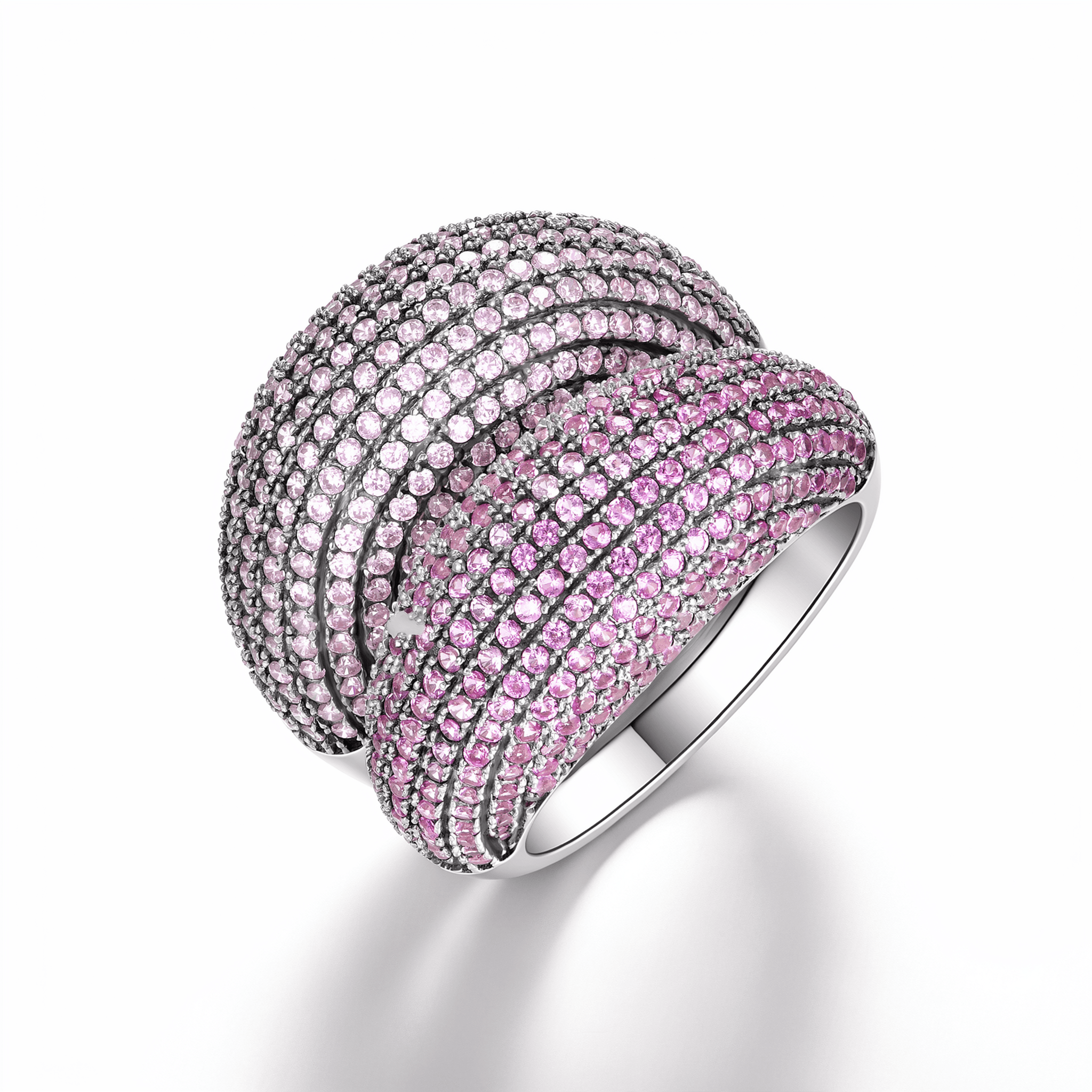
Pink CZ Swirl Twist Pave Cocktail Ring
S925 Sterling Silver, Rhodium Plated, Full Pave Pink CZ
View product →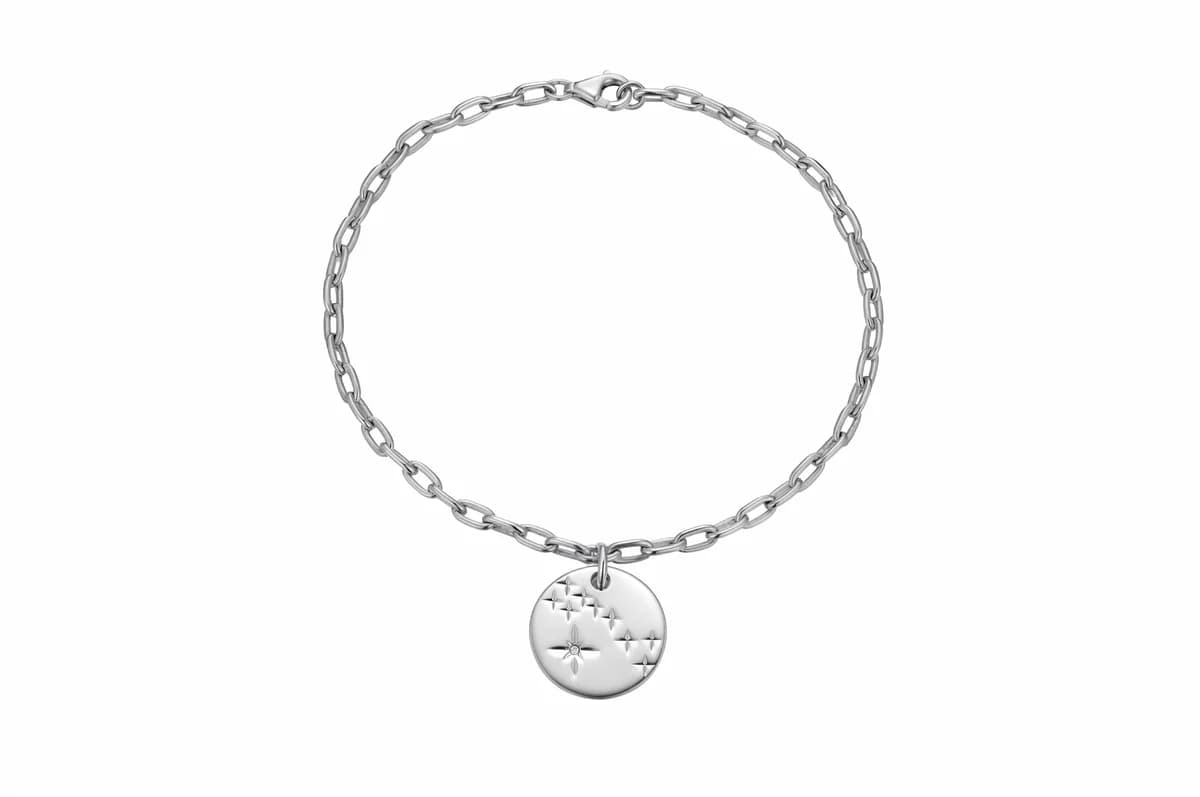
Thick Solid Starburst Embossed Disc Charm Paperclip Chain Clasp Solid Sterling Silver Bracelet
S925 Sterling Silver, Embossed Disc Charm, Paperclip Chain
View product →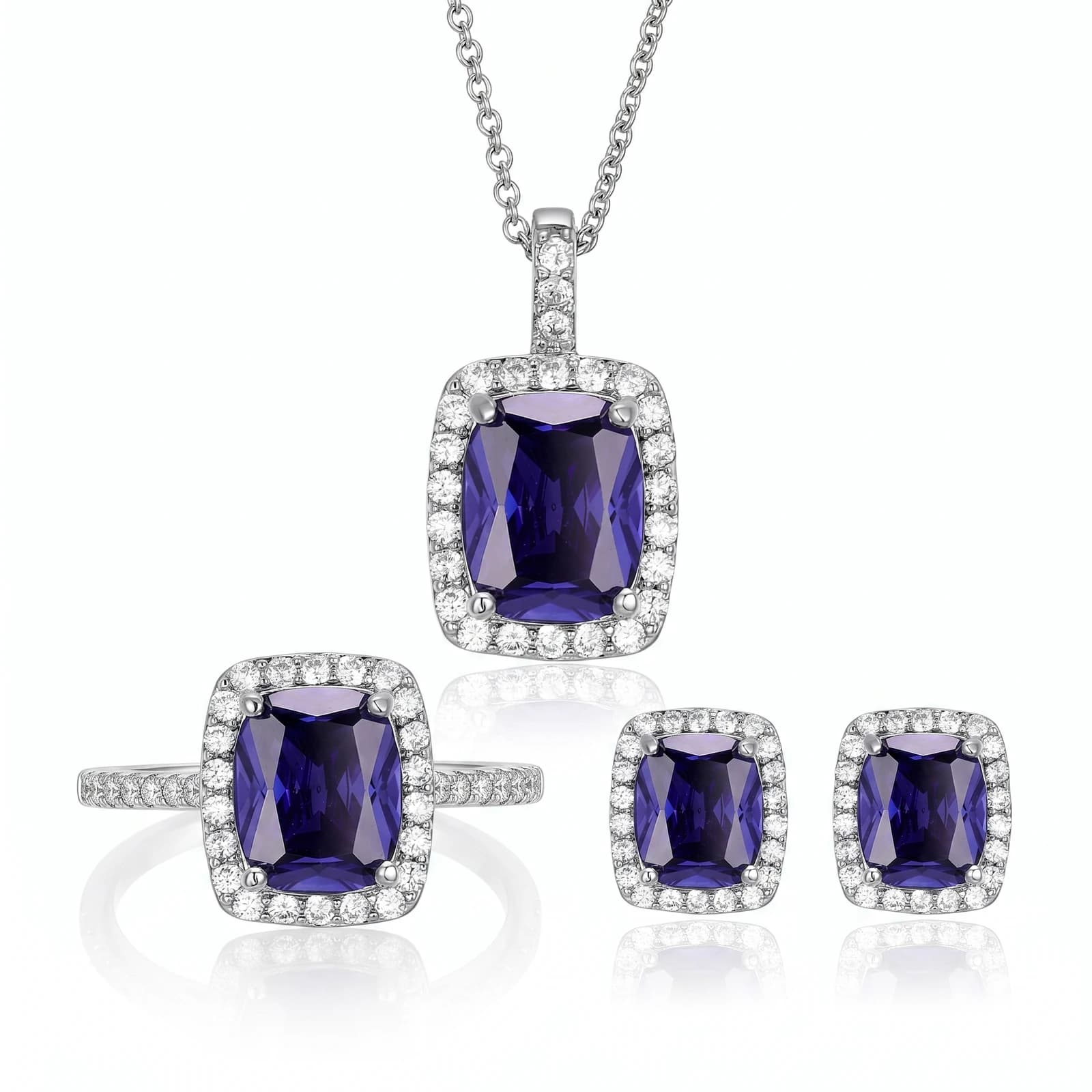
Violet Cushion Halo Jewelry Set
Silver-tone design reference; deep violet stone direction. Base metal, stone identity and finish specified to order.
View product →FAQ
Frequently asked questions
Is a manufacturer always preferable to a trading company?
No. Choose the arrangement that fits the order and provides clear responsibility. Ask who develops, produces, inspects and contracts, how outside work is controlled and who resolves deviations. The business label alone does not establish quality.
What evidence should I request before paying for a jewelry sample?
Request a reconciled business identity, a response to the project brief, defined sample deliverables and charges, revision terms, proposed material and process scope, and clear ownership and approval contacts. Record what remains open before authorizing the trial.
Can a laboratory report replace supplier evaluation?
No. A report addresses the submitted material, item or stated scope. It does not resolve contracting identity, production control, delivery responsibility or the quality of later batches. Verify the report and match it to the relevant item.
Which weights should a jewelry supplier scorecard use?
There are no universal weights. Buyers define priorities for their project and decision stage. Separate mandatory gates from preferences, define score meanings and preserve unknowns. Do not let price compensate for a critical requirement that has not been supported.
When should a shortlisted supplier be put on hold?
Hold the affected decision when a must-meet requirement remains unresolved, evidence is inconsistent or essential responsibilities are unclear. State the reason, closure action and owner. A hold can be reconsidered when the required information is verified.
Expert review
Zalson Jewelry Product Development & Quality Team
Technical editorial team
Editorial review covers buyer-side supplier selection, specification handoffs and the limits of gemstone evidence. This is procurement guidance, not an independent supplier audit, gem identification, legal opinion or laboratory report.
Zalson Jewelry is operated by Guangzhou Zalson Jewelry Co., Ltd., established in Guangzhou in 2017. Content is reviewed by the team rather than attributed to an individual spokesperson.
Sources and further reading
- 1TY Jewelry: China Jewelry Manufacturer Verification — peer interview perspective ↗
- 2BJM Jewelry: How to Choose a Custom Jewelry Manufacturer — peer development perspective ↗
- 3CIBJO: 2026 Gemmological Commission report notice: integrity of gem lab reports ↗
- 4OECD: Responsible Mineral Supply Chains ↗
- 5WIPO: How to Protect Trade Secrets ↗
Shortlisting a development partner?