Stone & Sample Procurement
Jewelry Stone Setting Specifications: A Buyer’s Checklist
A rendering can show a convincing halo or colored center stone while leaving the supplier to guess what stone was approved, how each seat relates to its mounting and which differences matter to the brand. In a first order, those gaps appear at CAD review, sample inspection or receiving—when a photograph is least useful as evidence. This guide translates the visual intent into a stone-position schedule, a setting-structure discussion and a traceable approval record. It addresses buyers preparing OEM, ODM and private-label jewelry rather than teaching bench-setting technique. The worksheet separates identity, geometry, appearance, function and evidence; it also states where a loose-stone report, a sample observation or a finished-item check can and cannot support a claim.
TL;DRThe short answer
Create a position-by-position stone schedule: identity and evidence scope, shape, measured dimensions, count, orientation and approved location. State the desired setting appearance separately from the proposed seat and retaining structure. Review CAD, physical sample and finished batch at different gates; define visual observations and any functional test method before accepting results. Reopen the affected stone, mounting, inspection and packing records when a substitution or size change occurs.
Direct answer
What belongs in a jewelry stone setting specification?
Identify each stone position and its stone reference, shape, measured dimensions, count and orientation. Define the intended visible setting and ask for a mounting proposal with the features that must be checked on CAD and a physical sample. Record visual acceptance separately from any agreed security test, with method and coverage. Attach the approval version and evidence scope so a replacement stone or seat change cannot inherit an unrelated sign-off.
Decision summary
Key takeaways
- Give every stone or repeated position an identifier and an approved reference.
- A visual style name is not a defined seat, contact or retention design.
- CAD, sample and finished production answer different approval questions.
- Separate appearance inspection from a documented functional or security check.
- A report applies to the identified item and stated scope, not every later piece.
Identify the stone and keep evidence item-specific
List the proposed stone identity or buyer-supplied reference, shape, dimensions, quantity, color direction and any treatment or origin claims that require evidence. Mark each field confirmed, proposed or unresolved. A photograph cannot establish species, treatment, origin or batch consistency. If one report accompanies a sample, record the report number and which item it actually describes; do not extend it automatically to alternative stones or later production. The separate gemstone-sourcing guide handles selection and commercial material claims in more detail.
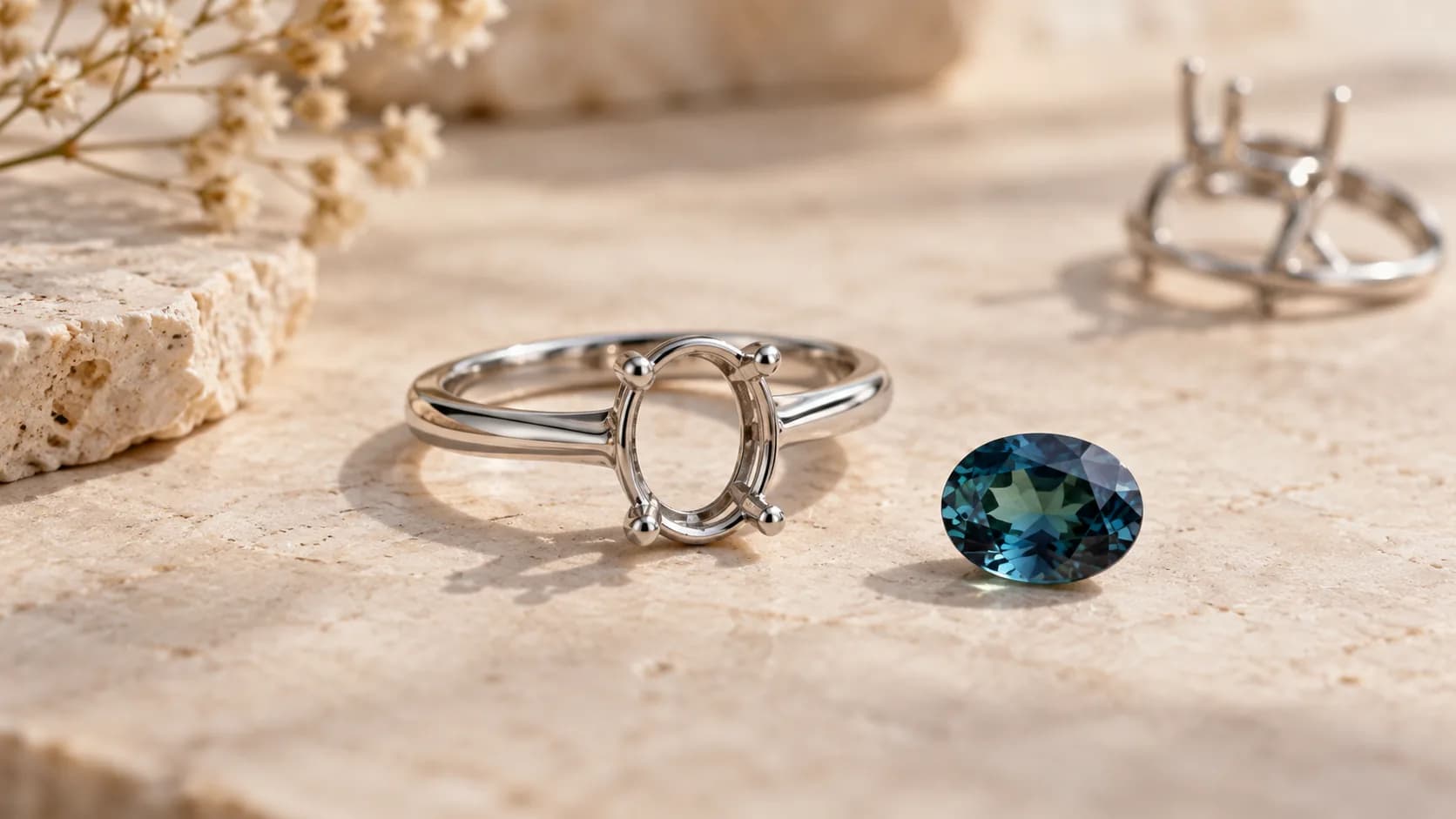
IGI explains that mounted jewelry reporting is constrained by what a mounting permits the laboratory to assess. That makes a historical report useful for its stated item but not a blanket manufacturing certificate. Ask which claims the buyer intends to publish, what evidence is available for the proposed stone supply, and who is responsible for any further review. Never treat the color visible in an AI editorial image or a CAD render as identification evidence.
Evidence: International Gemological Institute
Map shape, size, quantity and position before discussing a seat
Assign a code to the center, shoulder, halo, row or other stone group. State the intended count per finished item, shape or cut direction, dimension definition and permitted appearance variation only if agreed. A multi-stone pair should make left and right orientation explicit. Add a top and side location view with a version ID. If dimensions are supplier-proposed, leave the target as an open decision rather than substituting a common calibrated size from another collection.
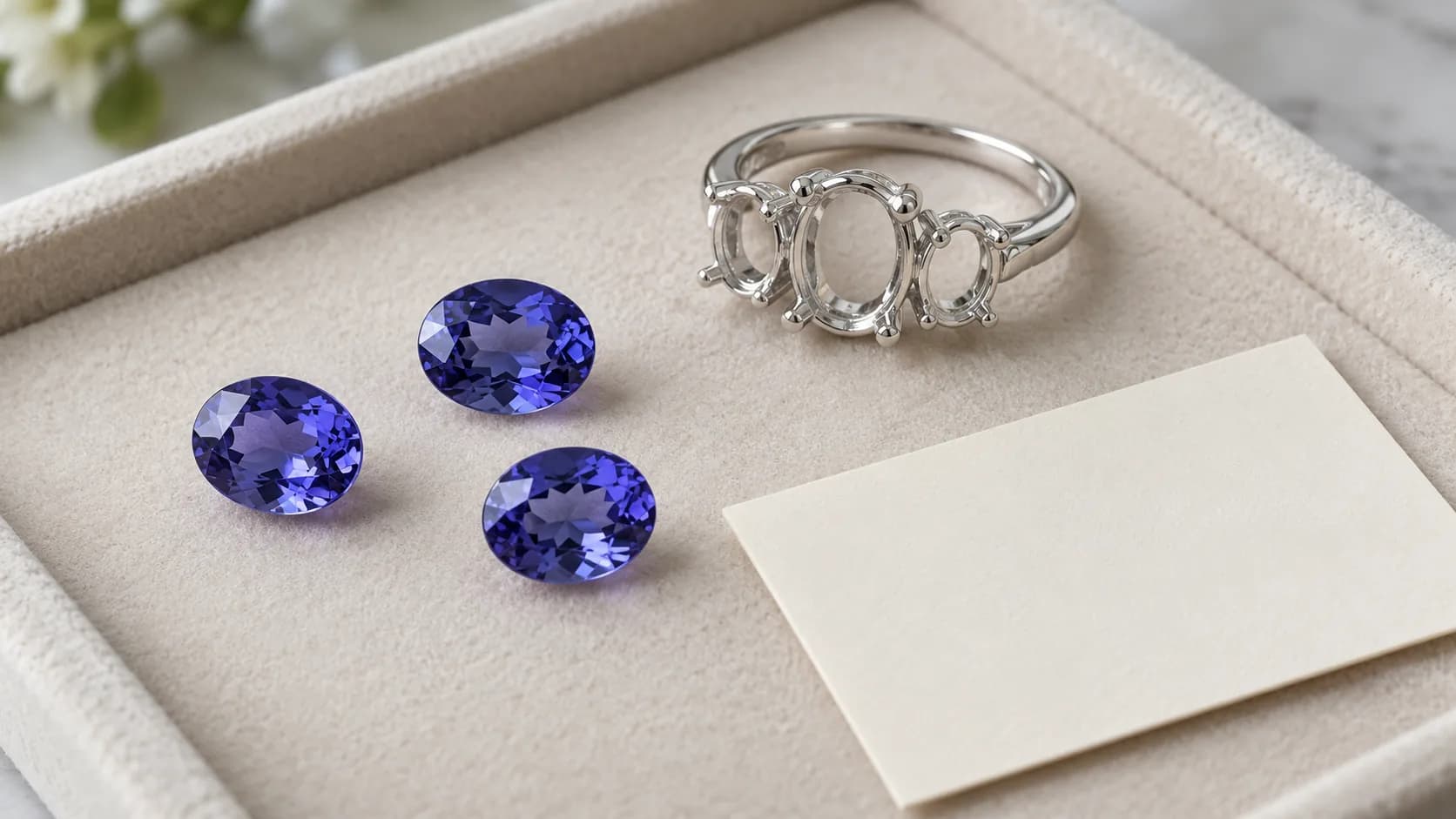
GIA's metrology overview shows why a measurement needs an identified method and reference. A mounting can hide edges or depth; do not assume a photograph of a mounted stone gives loose-stone dimensions. Record whether a dimension was measured on a loose stone, inferred from a supplier proposal, or observed on the assembled sample. The position map is a communication and acceptance baseline, not laboratory grading.
| Position | Stone input | Drawing / review reference |
|---|---|---|
| Center or focus | Identity; shape; loose dimensions ___ | Orientation; top/side callout ___ |
| Repeated row | Count; size group; allowed variation ___ | Sequence and spacing points ___ |
| Matched pair | Left/right quantities and appearance ___ | Mirror or intentional asymmetry ___ |
| Alternative supply | Candidate identity and evidence scope ___ | Seat and approval impact ___ |
Evidence: Gemological Institute of America
Separate desired appearance from actual retaining structure
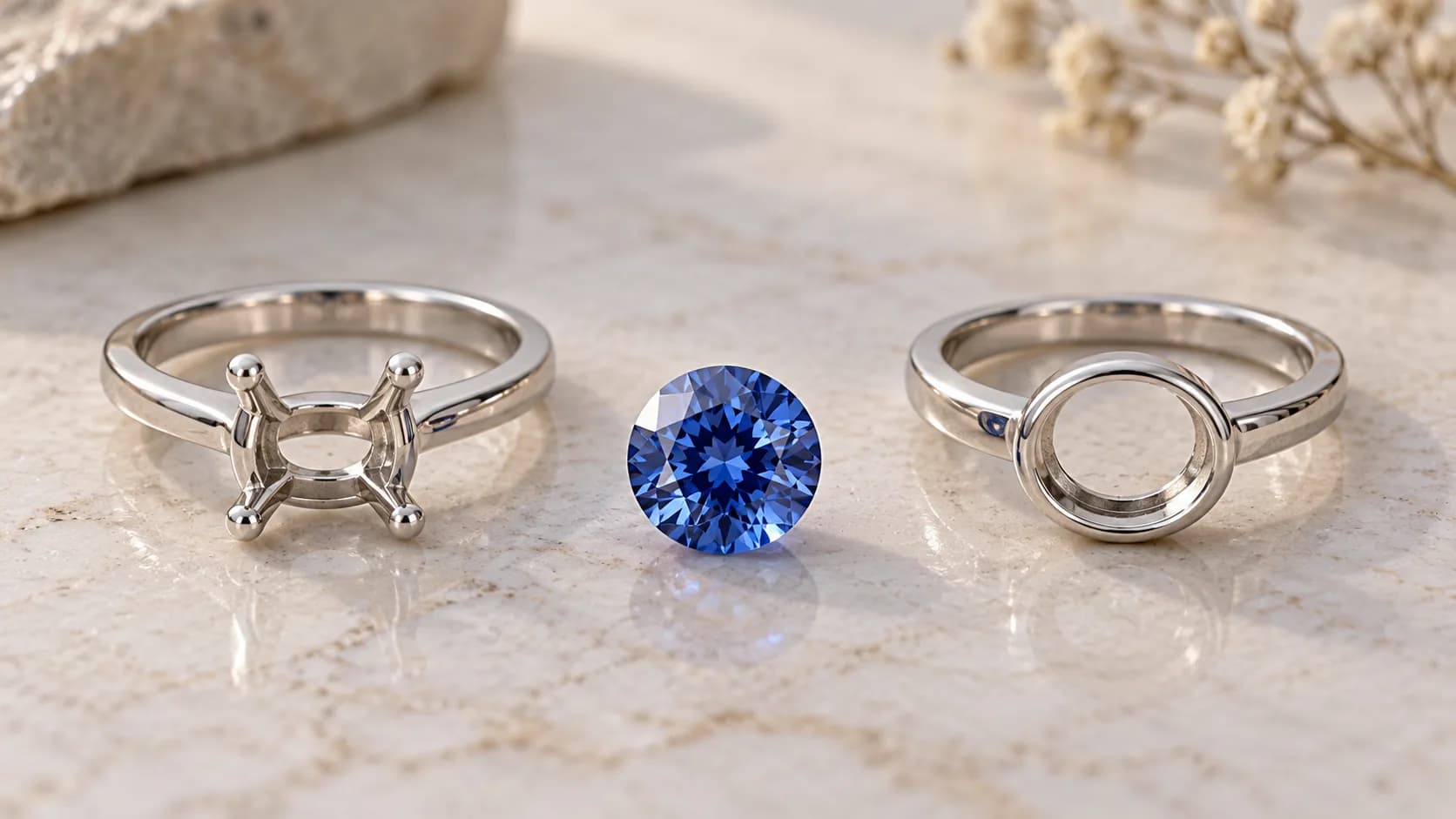
Terms such as prong, bezel, channel or pavé help describe a visual direction but do not by themselves settle seat geometry, contact, access or manufacturing feasibility. Ask which visible metal features the brand wishes to preserve and which structural features the supplier proposes to retain the particular stone. For a prong concept, discuss count, placement, alignment, contact and finish as project-specific questions. For a bezel concept, discuss rim continuity, coverage, profile and visual edge. Do not invent a universal thickness, pressure or loss rate.
Stuller's bench guide distinguishes setting families and their structural choices; its examples are not Zalson technical specifications. GIA's public setting guide similarly explains differences between style and actual setting. Compare the proposed mounting to the selected stone and intended wear context with an appropriately qualified setter. An appealing silhouette can still leave the seat or corner protection unresolved, so request a section view and a physical sample before approving the production version.
Evidence: Stuller; Gemological Institute of America
Define orientation, height, spacing and symmetry as checkable questions
State which view controls each dimension: face-up spacing between stones, side elevation from an agreed base, stone orientation relative to the band or link, and symmetry about a stated centerline. Distinguish a desired appearance from a measured acceptance point. On irregular stones or intentional asymmetry, name the reference sample or drawing that represents the approved effect instead of saying every edge must be identical. For a pair or set, identify which features are expected to match and which are intentionally different.
Ask who checks the resulting geometry after CAD and after setting. CAD can communicate intended seats and clearances; it does not prove that the selected physical stones fit or remain in place. A finished sample can reveal visual and handling issues that a render conceals, but one sample does not certify an entire batch. Keep the stone schedule, drawing revision and physical sample ID together so a changed stone diameter cannot silently keep the old seat drawing.
Give CAD, sample and finished output different approval gates
At CAD review, confirm the mapped positions, proposed setting family, visible profile and any unresolved engineering questions. At physical sample review, identify the actual stones and mounting, compare the visible result to the approved references and record observations of handling or function under an agreed method. At production review, verify the approved version on the planned scope of finished units. Label each decision clearly: concept accepted, sample accepted with conditions, or production release. Silence or a marketing photo is not a release.
A buyer should also identify who can authorize a stone or setting change. If a proposed alternative alters dimensions, position, seat, surface treatment, price or lead time, request its comparison and the affected quantity before approval. Supplier or laboratory evidence may need renewal for the replacement. The design-change guide handles the broader request/status process; this article identifies the stone and mounting fields that should be reopened.
Do not confuse a visual check with a security test
Appearance review can inspect count, orientation, level, visible spacing, matching, finish and obvious damage under stated lighting or magnification. A functional or stone-retention claim requires a different method. Define the exact item and configuration, fixture or handling conditions, sample coverage, acceptance criterion and record before testing. An informal movement observation is not a measured force result, and no single reading should be called a universal durability guarantee.
GIA's quality-assurance benchmark discusses particular traditional angled-prong examples, not a mandatory value for all stones or settings. Stuller's four-prong article includes a post-setting inspection, but its bench-specific numerical techniques are not imported as project tolerances. Ask a qualified setter or test specialist what method is appropriate for the stone and assembly. Tie every result to the tested sample or batch and record any repair or retest separately.
Evidence: Gemological Institute of America; Stuller
Check cleaning, pairing and transport protection
Cleaning and final polish should be reviewed for the proposed gemstone and mounting, not assigned from a generic stone-name shortcut. The buyer should ask which cleaning route is suitable and whether it can affect treatments, coatings, adhesives or nearby parts. Inspect the finished setting after the agreed cleaning step. For earrings and coordinated sets, state the visual matching reference and the number of pieces or stones per selling unit. For a multi-stone bracelet, revisit count and spacing whenever the size version changes.
The inner pack should restrain the finished item without forcing exposed stones or metal edges against another component. Inspect an actual packed sample for movement, contact and completeness. A soft pouch in an editorial image is not transport-performance evidence. Record damage, missing stones or count discrepancy with item ID, pack condition, photographs and disposition; decide whether that triggers additional review of the affected scope. The packaging article covers broader pack specification, while this guide focuses on stone protection and traceability.
Use a blank position-and-setting worksheet
Complete the following fields for each style or repeated group. The buyer may provide a target, ask for a supplier proposal or mark a question unresolved, but should not fill an unknown value from a photograph. Link the worksheet to the technical drawing, stone-source record and actual approval sample. If a report is available, specify the item/report relation rather than writing 'certified' across the whole product family.
The final release row should name the people who approved the stone identity or description, the visible arrangement, the structural proposal and the check method. These may be different reviewers. Keep the old version for traceability when a stone supply or mounting changes, then notify purchasing, production, inspection and packing of the accepted replacement scope.
| Record | Buyer target / open question | Supplier proposal / approval |
|---|---|---|
| Identity | Style, SKU, revision, market ___ | Sample and stone references ___ |
| Stone group | Position code; count; shape; size ___ | Supply and evidence scope ___ |
| Geometry | Orientation; spacing; height; symmetry ___ | Drawing views and measurement points ___ |
| Setting | Desired visible prong/bezel/other effect ___ | Seat and contact proposal ___ |
| Verification | Appearance / function question ___ | Method, coverage, criterion, result ___ |
| Release | Pair/set, cleaning and pack need ___ | Decision, owner, date, affected units ___ |
Compare three purchase situations
A single center stone invites careful attention to its individual orientation and seat. A repeated row needs count, spacing and consistency across positions. A matched earring pair requires a left/right map and a pairing decision. A substitute stone can reopen all three, depending on its shape and dimensions. The table below identifies review work; it does not prescribe a universal engineering solution or a gemstone grade.
The existing product cards are catalog references to real forms and design vocabulary only. They are not evidence that a particular hidden seat, gem species, dimensions, test outcome or manufacturing method exists. Request the product-specific stone schedule and physical sample for any order. A style that can be quoted visually may still need an approved stone and setting baseline before bulk production is authorized.
| Scenario | Record first | Reopen when changed |
|---|---|---|
| Single focus stone | Identity, shape, orientation and seat proposal | Stone dimensions or mounting |
| Repeated stone row | Position map, count and visible spacing | Size, count or carrier length |
| Matched pair | Left/right references and appearance match | One side or one supply lot |
| Alternative stone | Old/new identity, evidence and affected units | Seat, check, cost or release version |
Approve the stone, the seat and the evidence as one controlled version
Begin with a style and stone-position map. Ask the supplier to confirm the stone reference and propose a mount, identifying uncertainty rather than hiding it in a render. Review the CAD views and then a physical sample containing the proposed stones. Agree appearance and any functional checks before judging results. Record the approved version, report scope, sample ID, SKU and affected order units. The final inspection plan should compare finished goods with that released version.
If a stone or setting changes, stop using the old approval as shorthand. Ask what has already been made, which seats and packs are affected and whether another sample or qualified review is needed. This avoids treating an attractive photograph or a historical laboratory document as a repeat-production guarantee. Send the actual design brief and target quantities to request a project-specific stone-setting proposal.
- Identify every stone position, count and intended appearance.
- Separate verified stone evidence from a visual reference.
- Ask for the seat and retention proposal, not just a setting-style label.
- Approve CAD intent and physical sample in distinct steps.
- Define visual checks separately from project-specific functional tests.
- Reopen evidence, packing and version when stone or mounting changes.
1. Map
Give each stone group a position and supply reference.
2. Propose
Review stone dimensions and proposed mounting structure.
3. Visualize
Check CAD views and unresolved questions.
4. Sample
Inspect the actual stone-set configuration.
5. Verify
Apply agreed appearance and functional methods.
6. Release
Record sample, evidence scope, SKU and change control.
Catalog references
Related products
These real catalog products are visual and construction references for specification discussions. Their published product data is unchanged; they are not presented as the exact product used in this guide.
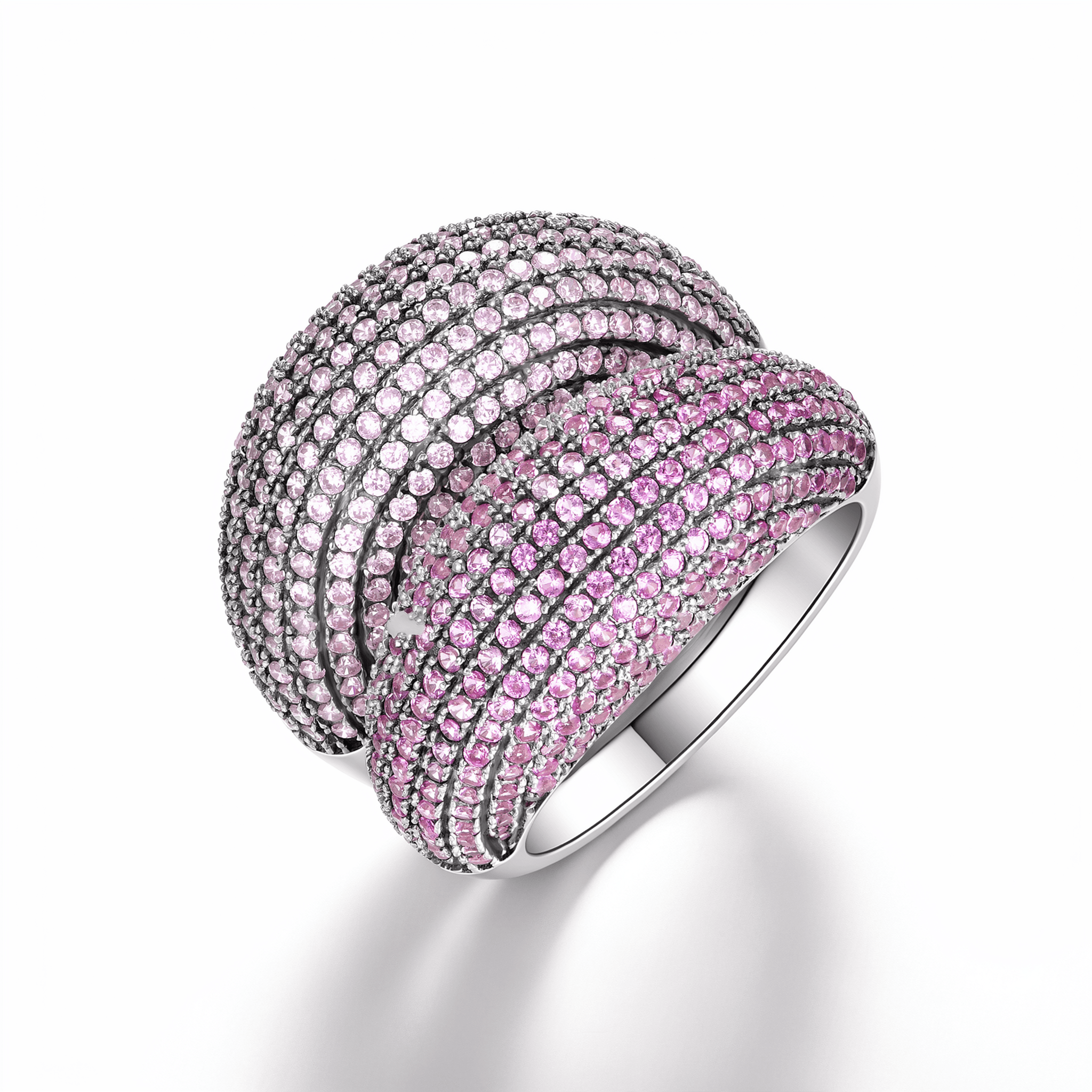
Pink CZ Swirl Twist Pave Cocktail Ring
S925 Sterling Silver, Rhodium Plated, Full Pave Pink CZ
View product →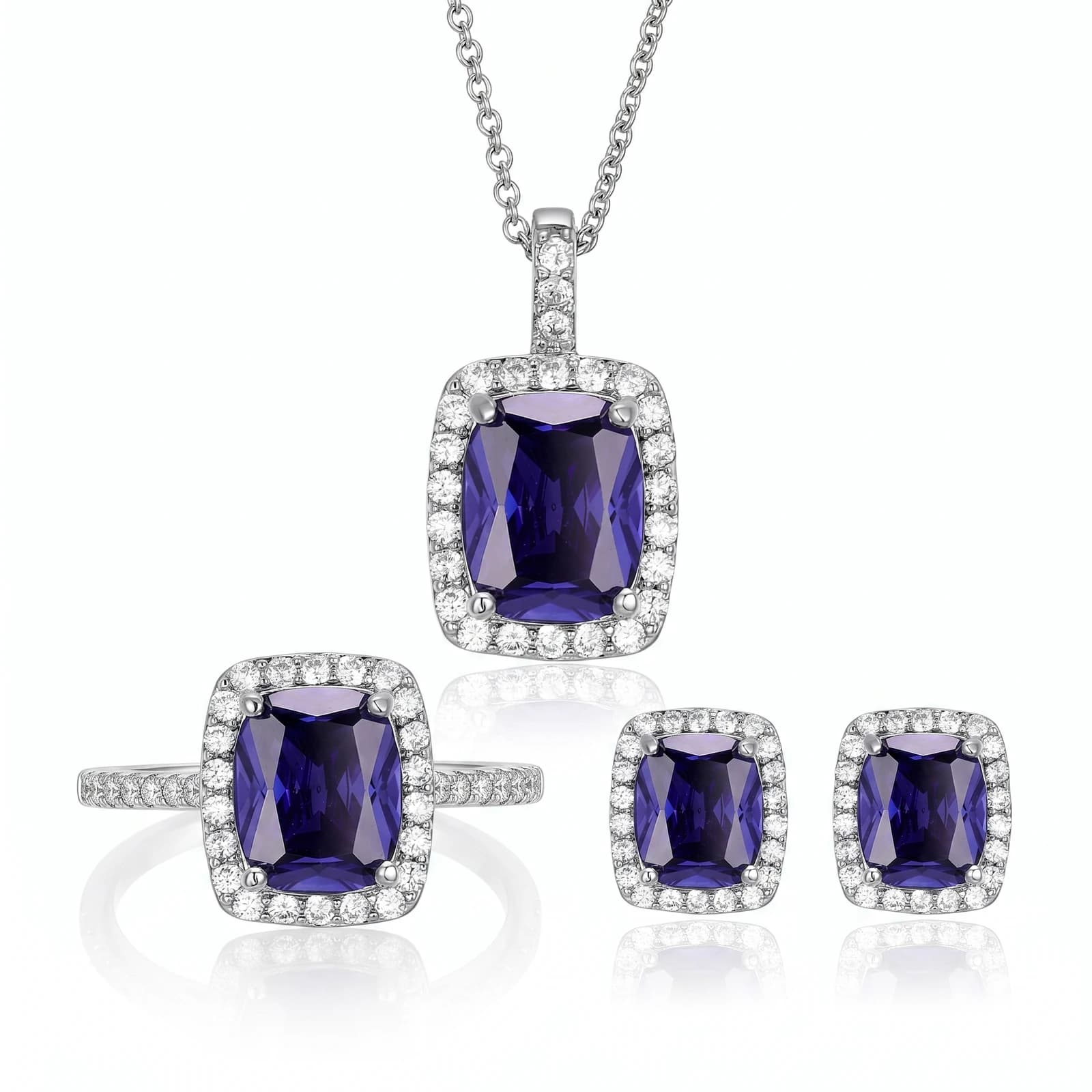
Violet Cushion Halo Jewelry Set
Silver-tone design reference; deep violet stone direction. Base metal, stone identity and finish specified to order.
View product →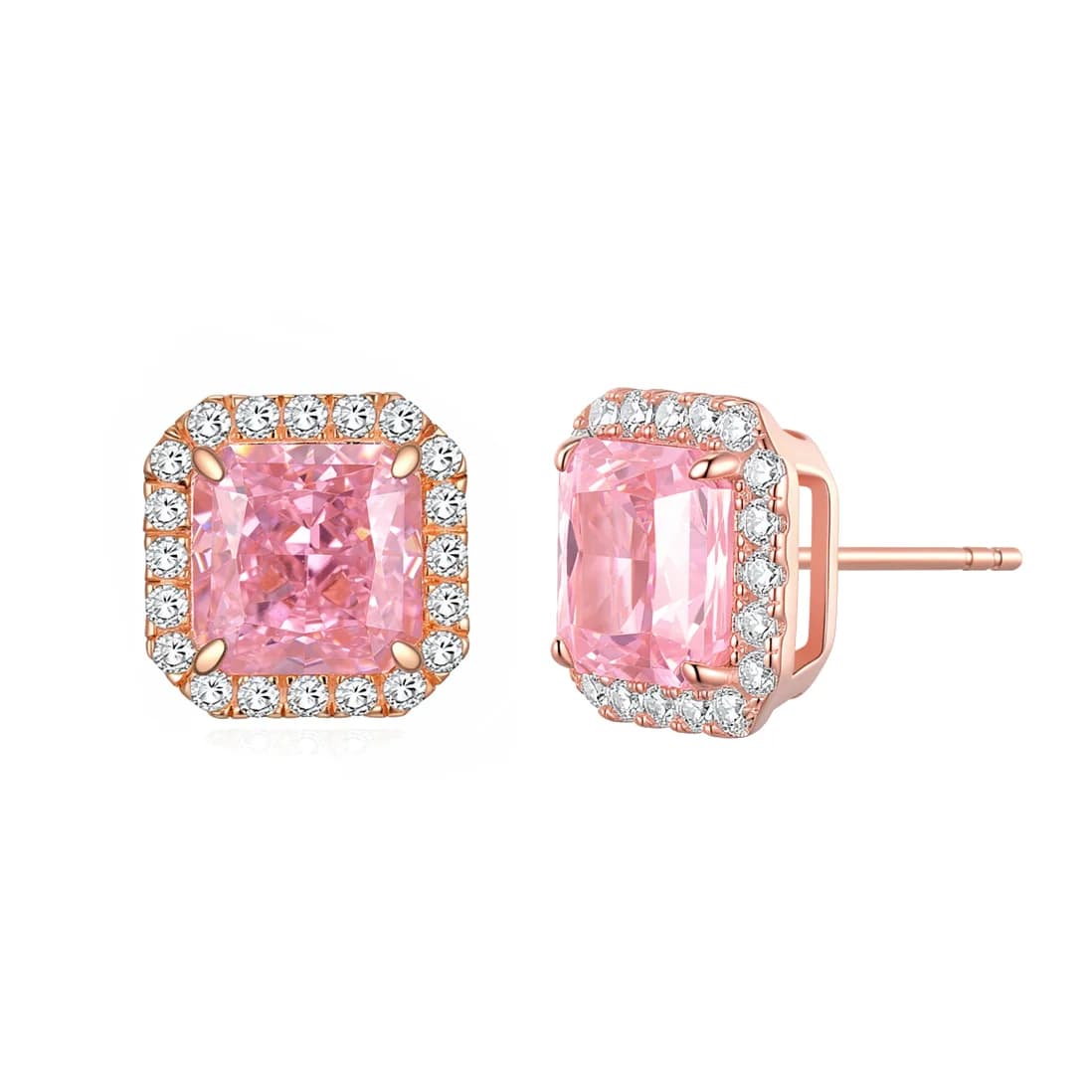
Cushion Sakura Pink Halo Rose Gold 4-Prong Studs
S925 Sterling Silver, Full Thick 18K Rose Gold Plating, Sakura Pink CZ, Round Pave CZ Halo
View product →FAQ
Frequently asked questions
Does a CAD rendering approve the actual stone setting?
No. CAD can approve intended positions and a proposed structure, but the physical stone, seat, appearance and agreed functional checks require review on an identified sample before production release.
Is a prong or bezel style name enough for a specification?
No. Define the visible goal and request the actual mounting proposal, stone dimensions, position, contact and sample checks. Do not import a universal prong thickness or retention rule from a generic illustration.
Can a report on one gemstone cover future production?
Not automatically. Check the report's identified item and stated scope, then obtain evidence appropriate to the proposed stone supply and claim. A mounted report may be limited by what the setting allows the laboratory to observe.
How should stone security be checked?
Agree the actual configuration, appropriate method, conditions, sample coverage and acceptance criterion with a qualified reviewer before testing. A visual or one-time handling check is not a universal durability or loss-rate guarantee.
What must be reviewed when a stone size changes?
Revisit the position map, seat and contact, visible alignment, CAD views, physical sample, inspection method, evidence, price and affected units. Release a new version only after the relevant decisions are recorded.
Expert review
Zalson Jewelry Product Development & Quality Team
Technical editorial team
Buyer-side specification and sample-record editorial review. This is not a product measurement, gemstone identification, laboratory result, fit guarantee or legal opinion.
Zalson Jewelry is operated by Guangzhou Zalson Jewelry Co., Ltd., established in Guangzhou in 2017. Content is reviewed by the team rather than attributed to an individual spokesperson.
Sources and further reading
- 1International Gemological Institute: Jewelry Reports — item and mounted-assessment scope ↗
- 2Gemological Institute of America: Metrology at GIA — measurement and method context ↗
- 3Stuller: A Jeweler’s Guide to Common Jewelry Settings — bench construction overview ↗
- 4Gemological Institute of America: GIA Guide to Engagement Ring Settings — setting versus style ↗
- 5Gemological Institute of America: Avoid Stone Loss with Quality Assurance Benchmarks — example, not a universal requirement ↗
- 6Stuller: Stone Setting: Gems in Four-Prong Mountings — bench process and final inspection ↗
- 7SSJew: How to Communicate Jewelry Design Requirements — current manufacturer brief perspective ↗
Developing a stone-set style?