Artwork & Placement Approval
Jewelry Logo and Engraving Specifications: A Buyer’s Checklist
A logo that looks clear on a presentation slide may become crowded on a small clasp or difficult to read on a curved ring. Sending the right file is only the beginning: the brand also needs to define where the mark belongs, which direction it faces and what the finished sample must show. This guide helps independent brands, buyers and product developers turn artwork into a reviewable jewelry marking brief. It connects the authorized source file to the actual surface, keeps decorative branding separate from regulated marks, and records the decisions needed for sampling and repeat orders. The worksheet deliberately leaves process limits and dimensions for the proposed construction, rather than inventing a minimum letter size or promising that every catalog piece can be engraved.
TL;DRThe short answer
Supply an authorized artwork version and an orientation view of the actual piece. Define the marked region, reference points, proposed size, visible result and features to preserve. Ask the supplier to confirm the method and access, then approve readability and the surrounding finish on an identified physical sample. Keep decorative branding, legal marking review and production release as distinct decisions.
Direct answer
What belongs in jewelry logo engraving specifications?
Identify the authorized artwork, file version and exact text or symbol, then define the product region, position references, orientation and proposed dimensions. Link the mark to the actual material, surface and construction, with supplier-confirmed feasibility. Approve an identified physical sample for readability, placement and surrounding finish, while recording legal-marking review separately. Retain the master, approval owner and revision history for repeat orders.
Decision summary
Key takeaways
- Approve the rights and source artwork before marking work begins.
- A file extension does not prove that a logo contains editable paths.
- Define position and reading direction on the actual article.
- Review the mark and surrounding finish on a physical sample.
- Keep decorative artwork approval separate from regulated-marking review.
Send editable artwork and a separate appearance reference
Supply the best available source file and ask which format the proposed supplier can use. Clean vector paths help preserve shapes when artwork is resized, but a PDF or SVG filename alone does not establish editable geometry. Confirm whether text is outlined or whether the exact font and permissions are supplied; identify filled areas, open paths and intentional gaps. Include a simple appearance reference so the supplier can compare the imported result with the intended mark, rather than relying on a file opening without an error.
925 Pro’s file guide recommends clean vector artwork and physical-sample confirmation. Gravotech’s equipment guide distinguishes software and marking options across different technologies. Neither establishes a universally supported file package or a process available on every Zalson design. If only a raster reference exists, request a redrawn proof and record any changed letterforms or spacing. Keep the production artwork, visual proof and product CAD as linked but distinct files; approving the product geometry does not silently approve a reconstructed logo.
Draw position references and reading direction on the actual piece
Mark the intended region on an orientation view and identify the reference feature used to locate it: a centerline, edge, seam or another agreed feature. State how position is measured along a curved surface if that matters, rather than leaving the reviewer to choose between a surface path and a straight projection. Show which side is the front and how the lettering should read when the piece is worn, opened or turned over. ‘At the back’ is incomplete for a movable pendant or a reversible component.
Define the proposed marking envelope and the nearby features that must remain clear. Identify edges, stone seats, moving parts and existing marks without inventing clearance values. For a pair, decide whether the marks share one reading direction or mirror each other, then show both pieces. HonHo’s manufacturer page connects location with wear orientation and actual scale; those questions are useful even when the proposed process differs. The earring and chain component guides retain their detailed interface specifications, which the placement view should reference rather than overwrite.
Evidence: HonHo Jewelry
Resolve curved surfaces, small details and the proposed marking route
Ask the supplier to assess the actual construction, material, surface treatment and accessible area before confirming the method. A broad flat reverse, a narrow inner band and a small clasp do not present the same working space. Show the required visual result, such as an unobtrusive outline or a more visible contrast, and record whether it remains a proposal or has been demonstrated on the sample. Do not specify an unsupported universal letter height, line width or engraving depth from another supplier’s example.
Stuller’s personalization page shows that fonts, drawings and finished jewelry are considered together, while Gravotech’s guide presents mechanical and laser technologies with different applications. These sources help frame questions, not select equipment for Zalson. A supplier may suggest simplifying the authorized mark, relocating it or evaluating a separate tag where the main piece is unsuitable. Each alternative needs buyer approval for shape, position, movement and appearance. Keep the feasibility answer tied to the proposed design, not a blanket promise that any catalog item can be marked.
Approve readability together with the surrounding finish
Review the actual marked sample at its intended scale and in the agreed viewing setup. Identify the lighting, viewing direction, sample condition and any separate aided inspection. Compare the exact content, letter shapes, spacing, orientation and boundaries with the approved proof. Rotate a reflective or curved piece through relevant views; a close photograph from one favorable angle should not settle a mark that the buyer expects to read during normal handling. Record what the reviewer actually observed rather than substituting the artwork preview for the finished result.
Check the neighboring surface for unintended visible changes and confirm the proposed sequence relative to polishing, coating and assembly. The surface finish guide handles regional sheen and texture, and the plating guide handles its separate specification. HonHo’s sample discussion highlights reflection and contrast; AVIANO also notes that construction and surface sequence matter. Do not infer coating thickness, composition, corrosion resistance or engraving life from the mark’s color in a photograph. Where a performance check is requested, agree its scope independently from visual legibility approval.
Evidence: HonHo Jewelry; AVIANO
Keep decorative branding separate from regulated marks
Give decorative logos and any proposed fineness, sponsor, assay or other regulated marks separate rows and review owners. The British Hallmarking Council’s publicly accessible principles distinguish decorative logos from the marks making up an approved hallmark; a logo’s potential use within that system is subject to the relevant approval. The document is UK-specific guidance, not a worldwide permission to stamp a precious-metal claim. Obtain current advice for the actual destination and article before releasing a regulated marking instruction.
Keep the design view clear about which marks are proposed, which are already present and which require another decision. Do not place branding where it obscures or damages an existing mark, or describe an ordinary decorative engraving as independent verification of metal content. This editorial checklist gives no legal determination for a particular item, market or shipment. The buyer’s artwork sign-off records the visual decision; retain any separate qualified assessment and its product scope before treating the complete marking schedule as released.
Evidence: British Hallmarking Council
Complete a blank artwork and placement worksheet
Use one row for each marked location and identify all linked versions. Blank process or dimension fields remain questions to resolve, with an owner and review date. Attach the actual-scale proof and orientation views, then link the physical sample that represents the proposed finished surface. If the mark changes across sizes or components, name the affected variants explicitly; resizing a logo file does not establish that the smallest version is legible on metal.
At review, separate content accepted, placement accepted, physical appearance accepted and production released. A conditional approval should identify the remaining issue and the quantity or variant it affects. Retain the supplier’s response and the authorized final artwork rather than only a screenshot of a message. The sample approval checklist handles the broader status record. Keep brand permission, any applicable marking assessment and the visual sample record together without allowing one approval to imply that all other questions were closed.
| Field | Buyer input | Supplier proposal / approved record |
|---|---|---|
| Authority / content | Owner or authorized contact ___ / exact content ___ | Source file ___ / version ___ / permitted changes ___ |
| Article / region | Style ___ / SKU ___ / front / reverse / inside ___ | Sample ___ / drawing ___ / actual surface ___ |
| Placement | Datum ___ / reading direction ___ / envelope ___ | Location method ___ / paired orientation ___ |
| Artwork / route | Paths or raster reference ___ / outlined text ___ | Imported proof ___ / feasible method ___ |
| Physical review | Light ___ / view ___ / readability goal ___ | Content, placement and finish observations ___ |
| Other marks | Decorative / regulated marking schedule ___ | Separate qualified review owner / scope ___ |
| Release / repeat | Quantity / variants ___ / decision owner ___ | Master ID ___ / status ___ / actual date ___ |
Compare placement decisions across common purchase situations
For a pendant reverse, define the front reference and how the piece turns during handling. For an inner ring, identify the ring size, inner surface and reading direction. For a small connector, ask whether the available area can carry the authorized mark without crowding its function. For personalized content, preserve the item-to-entry mapping. These scenarios help choose the next sample question; they do not supply undisclosed catalog dimensions or confirm that the pictured products already support an engraving option.
Keep the real catalog references below as discussion starting points. Ask for feasibility on the intended version before requesting a process commitment. A tag, packaging print or changed logo is an alternative with its own approval implications, not an automatic substitute for the agreed mark on the jewelry. The packaging branding checklist controls that separate artwork route. When the proposed mark changes material removal or nearby geometry, have the supplier assess any dependent product and weight specification rather than presuming the effect is negligible.
| Situation | Define | Question before approval |
|---|---|---|
| Pendant reverse | Front reference, region and viewing direction | Does the mark read as intended when turned over? |
| Ring interior | Size, inner profile, content and direction | Is the actual-scale mark readable on the proposed curve? |
| Small clasp / connector | Available area and features to preserve | Should the authorized mark be simplified or relocated? |
| Individual personalization | Exact entry assigned to an item | Do content, placement and item mapping all match? |
| Changed wordmark | New file and affected variants | Which samples and existing stock need a new decision? |
Retain the master and control artwork changes on repeat orders
Give the accepted physical sample a master ID, custodian and condition record, linked to the approved source file and placement drawing. Preserve the finished state used for review and record any replacement of a damaged or lost reference. The reorder should name that version and disclose changes to the artwork, product, surface or marking route. A familiar filename or an old photograph is not enough to show which letter spacing and location were approved for a new order.
Use the design change request to define affected regions, SKUs, quantities and work already completed. Confirm the resampling and commercial impact before authorizing a revised baseline, and connect it to the production lead-time plan. The quality control plan can then reference the accepted content, placement and appearance checks. Send the team your real product reference, authorized artwork and open location questions; the next useful step is a project-specific proposal and an identifiable sample, not a promise based on a blank editorial prop.
- Confirm authorized content, source file and version.
- Show the region, datum, envelope and reading direction.
- Resolve actual surface, access and marking-route feasibility.
- Approve legibility and surrounding finish on the physical sample.
- Record decorative and regulated-mark decisions separately.
- Retain the master and release changes by affected SKU and quantity.
1. Authorize
Identify the owner, exact content and source version.
2. Locate
Show the region, orientation and position references.
3. Assess
Confirm a feasible proposal on the actual construction.
4. Sample
Review content, readability, placement and finish.
5. Release
Close the scoped decisions and identify the master.
6. Repeat
Assess changes before replacing the approved version.
Catalog references
Related products
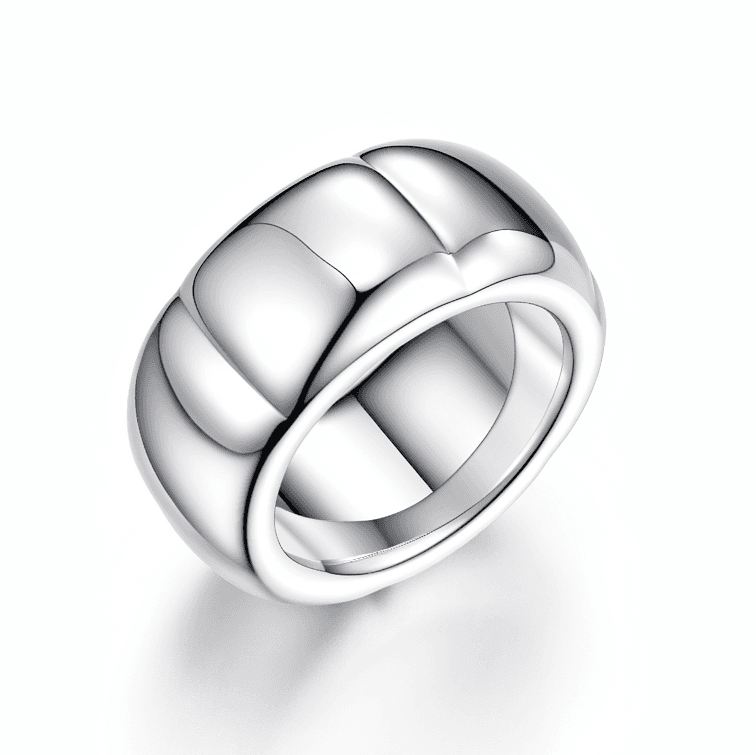
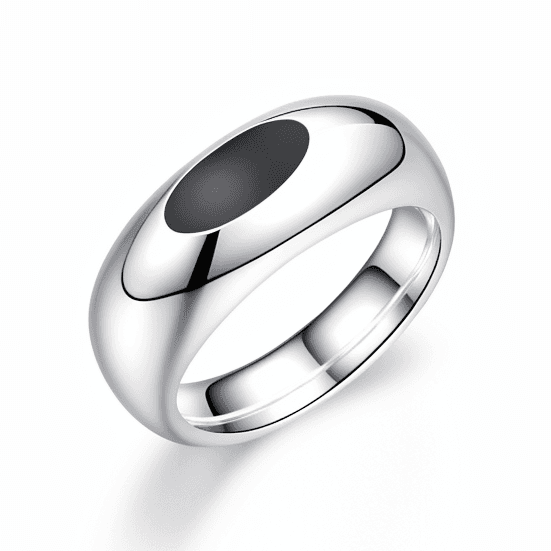
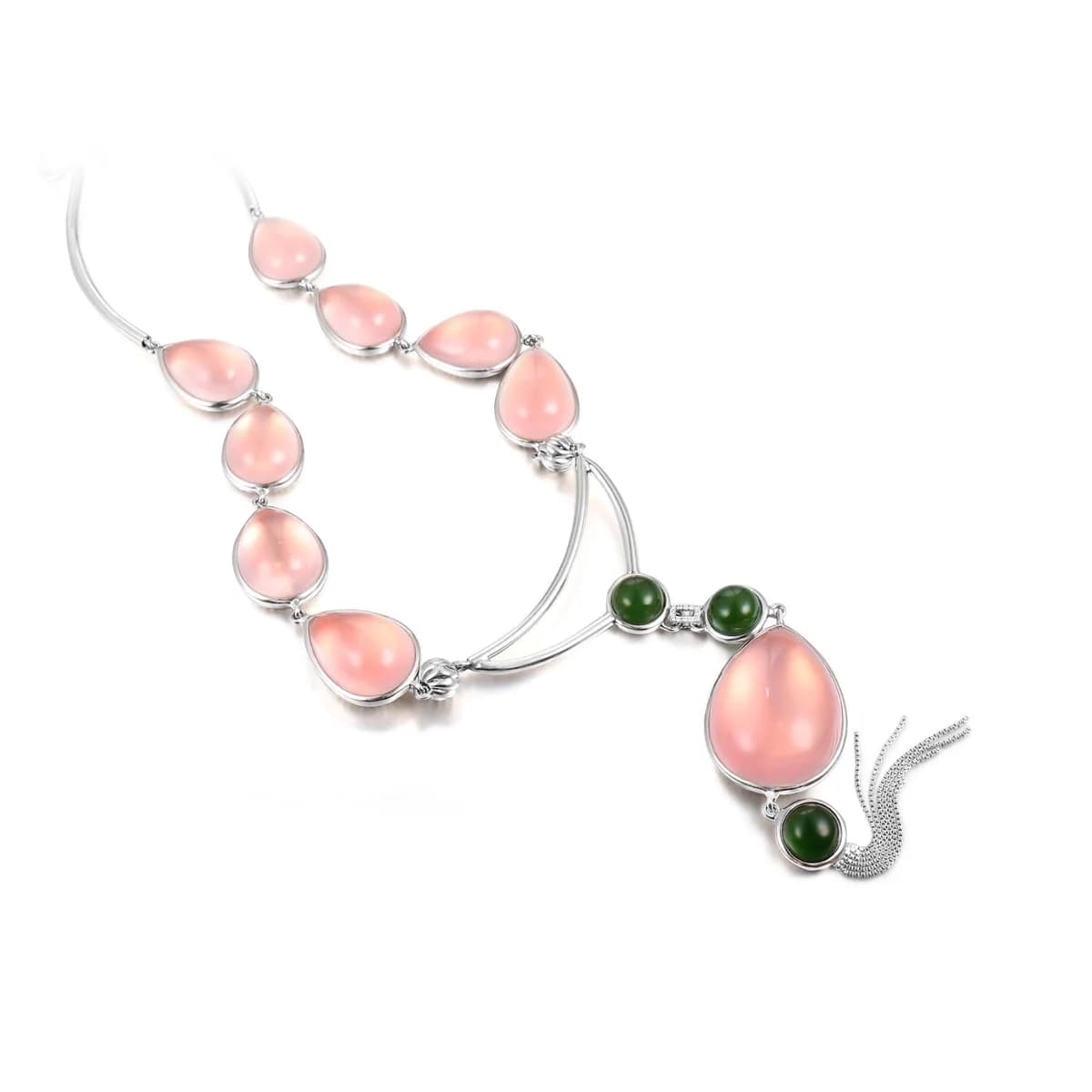
These real catalog products are visual and construction references for specification discussions. Their published product data is unchanged; they are not presented as the exact product used in this guide.
FAQ
Frequently asked questions
What file should a brand send for jewelry logo engraving?
Send the authorized source artwork, its version and an appearance reference. Clean editable vector paths are helpful when available; confirm the supplier’s supported format and how lettering is preserved. A PDF or SVG extension alone does not establish editable artwork or approval for production.
How should logo position and direction be specified?
Identify the marked region on an orientation view, name the position references and proposed marking envelope, and show the reading direction on the actual piece. Define curved-surface measurement where relevant and show both pieces of a pair if their orientation differs.
Is there a universal minimum engraving size or depth?
This guide supplies none. Feasibility depends on the authorized artwork, material, curve, surface, accessible area and proposed route. Ask for a project-specific proposal and approve the actual-scale result on an identified physical sample before releasing that version.
Does an engraved brand logo count as a hallmark?
Decorative branding approval does not establish an approved hallmark or metal-content verification. Applicable marks and approvals depend on the destination and article. Keep the proposed decorative and regulated marks separately identified and obtain current qualified review for the actual project.
What should be retained for an engraving reorder?
Retain the authorized artwork version, placement views, material and finish references, physical master ID, observations and release decision. Disclose changes to content, construction or marking route, identify affected SKUs and quantities, and approve any replacement reference explicitly.
Expert review
Zalson Jewelry Product Development & Quality Team
Technical editorial team
Buyer-side specification, sample-reference and release-record editorial review. The article reports no actual weighing, engraving trial, laboratory result, legal assessment or approved production sample.
Zalson Jewelry is operated by Guangzhou Zalson Jewelry Co., Ltd., established in Guangzhou in 2017. Content is reviewed by the team rather than attributed to an individual spokesperson.
Sources and further reading
- 1925 Pro: CAD and Artwork File Requirements — files, placement and physical samples ↗
- 2HonHo Jewelry: Custom Logo & Engraving — actual scale, location and sample review ↗
- 3Gravotech: Jewelry Engraving Selection Guide — technologies and applications ↗
- 4Stuller: Jewelry Engraving and Personalization Services ↗
- 5AVIANO: Laser Engraving and Personalization — October 23, 2026 update ↗
- 6British Hallmarking Council: Principles and Guidance on Sponsors’ Marks, Logos and Town Marks — UK scope ↗
Connect artwork to the actual piece